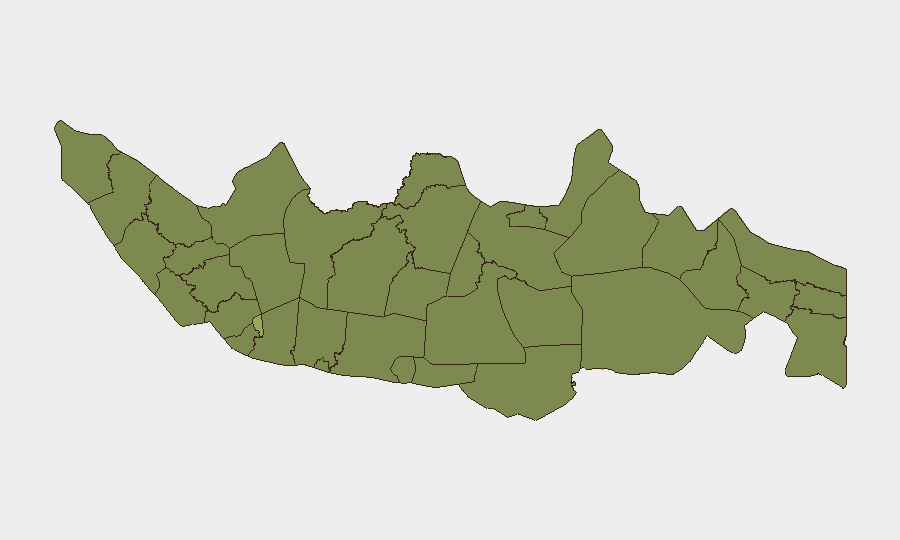
Situation Summary
Indonesia remains at composite threat rank #51 globally with moderate, diffuse risk concentrated in urban centers and specific provinces. The past 24–48 hours have yielded no reliably documented security incidents in globally indexed open sources or major security feeds, indicating either genuine stability or a data-reporting lag typical of the region. Underlying structural risks—terrorism, kidnapping, and localized communal/political violence—persist in Jakarta, Papua provinces, and major cities, but no acute trigger events are confirmed in the current window.
Key Developments
No specific security or unrest incidents with verified timestamps in the last 24–48 hours are available in open-source feeds or indexed security briefs. GeoBit's event signal logs show recent activity tags (arrests, police statements, small-arms combat) dated 2026-07-18 to 2026-07-20, but underlying incident details, locations, and actors are not resolved in available materials. Open-source intelligence for Indonesia typically lags 48–72 hours; real-time incident confirmation remains limited outside government or wire-service channels. Duty-of-care teams should treat the absence of reported incidents as incomplete reporting rather than confirmed safety.
Highest-Risk Areas
Jakarta (composite risk 54.8) dominates the risk profile, driven by dense population, political concentration, and historical terrorism/protest activity. South Sulawesi (35.7), Central Java (34.1), and Yogyakarta (33.2) reflect ongoing communal tensions and localized violence. Papua provinces (South Papua, 26.7) remain elevated due to armed separatist activity and kidnapping risk, despite lower headline incident frequency. East Java, Bali, and North Sumatra round the top ten, indicating that risk is geographically dispersed across population centers rather than confined to a single hotspot; corporate presence in any major city or tourism zone warrants active monitoring.
How GeoBit Would Assist
Area-of-Interest (AOI) monitoring with persistent alerting enables security teams to maintain continuous watch on Jakarta offices, manufacturing sites, or regional headquarters and receive automated alerts on arrests, protests, or security-force activity near those coordinates. Multi-language OSINT fusion (local news, social media, Telegram, radio SIGINT) fills the gap left by English-language open sources and detects emerging unrest, kidnapping threats, or militant activity before Western wire services report. Conflict & actor network analysis maps police–prosecutor tensions, separatist group movements, and criminal networks operating in high-risk provinces, enabling risk-informed staffing and travel decisions.
7-Day Outlook
No imminent acute security events are signaled in available forecasting data; near-term trajectory remains stable but diffuse. Seasonal patterns, political calendar dates, and religious observances should be cross-checked against historical incident clusters in July–August. Teams should assume baseline structural risk (terrorism, kidnapping in Papua; protest/political friction in Jakarta) persists and maintain duty-of-care protocols without escalation unless new incident data or intelligence emerges.
Next Update: 2026-07-22 (or upon alert)
Data Confidence: Medium (reporting lag typical for Indonesia; real-time incident gaps common)
Highest-Risk Areas — Ranked
| # | State / Region | Risk |
|---|---|---|
| 1 | Special capital Region of Jakarta | 54.8 |
| 2 | South Sulawesi | 35.7 |
| 3 | Central Java | 34.1 |
| 4 | Special Region of Yogyakarta | 33.2 |
| 5 | East Java | 31.3 |
| 6 | Bali | 30.2 |
| 7 | North Sumatra | 29.3 |
| 8 | West Java | 28.9 |
| 9 | Central Kalimantan | 28.6 |
| 10 | Aceh | 28.3 |
| 11 | South Papua | 26.7 |
| 12 | Riau | 26 |
Sources
Previous Daily Briefs
A new Indonesia brief is written every day — each with its own risk map and downloadable CSV. Here's the last week; use the calendar to go further back.
📅 Browse every day by calendar →
Highlighted days have a brief. Tap a day for that day's map & analysis, or “csv” for that day's dataset ($5).
Atlas — our AI intelligence desk — emails them this snapshot personally. Nothing else, no list.