Situation Summary
Italy's composite threat environment remains moderate (global rank #117; threat score 7), but acute infrastructure-security vulnerabilities and elevated espionage activity are creating compound risks for operations and travel. A coordinated pattern of critical-infrastructure sabotage—particularly targeting rail networks—has emerged alongside an active Russian intelligence operation and sustained criminal cable theft, creating cascading disruption across both northern and southern regions. Terrorism vigilance remains elevated nationally, and petty-crime risk persists in major transport hubs, warranting heightened duty-of-care protocols for corporate personnel and asset movements.
Key Developments
- Calabria rail sabotage (July 13–14, 2026): Unknown perpetrators cut fiber-optic and copper cables at multiple points on the Tyrrhenian line (San Lucido–Longobordo, Cosenza province) and Jonica line (Cutro–Isola di Capo Rizzuto, Crotone province), disabling safety systems and paralyzing rail traffic. Prosecutors are treating the incident as planned infrastructure sabotage targeting critical transport corridors. Southern Italy remains effectively isolated from the rest of the country as of July 14.
- Northern Italy cable-attack pattern (pre-July 13–14, 2026): Similar deliberate cable-cutting incidents on multiple northern railway lines in the days immediately preceding the Calabria attack indicate a series of coordinated or copycat strikes against signalling and communications infrastructure, suggesting a broader organized campaign rather than isolated theft.
- Russian espionage operation and expulsions (July 9–12, 2026): Italian authorities arrested two individuals in Rome on espionage and unauthorized-access charges linked to alleged Russian intelligence targeting of Italian state systems. The government ordered expulsion of two Russian military attachés. Italian and European security channels have issued amplified cyber-espionage and critical-infrastructure protection warnings over the last 24–48 hours, elevating vigilance across government and strategic sectors.
- Alpine wildfire and emergency-services strain (active through July 12–14, 2026): A major wildfire in northern Italy's forested/alpine zone has burned hundreds of hectares within the last 24 hours, straining regional firefighting capacity and degrading air quality. Secondary impact on other emergency-response availability in northern regions is anticipated.
- U.S. military convoy movement (recent, Arcugnano, Veneto): A nighttime convoy of U.S. military vehicles transited residential streets near Vicenza to the Fontega site, escorted by Carabinieri. The movement reflects heightened military-logistics activity near the U.S. Army presence and indicates elevated police/military coordination.
- Elevated terrorism posture (national, July 13–14, 2026): Italian security authorities have publicly warned of general terrorist-attack risk and tightened security measures, with heightened focus on crowded urban areas and religious locations.
Highest-Risk Areas
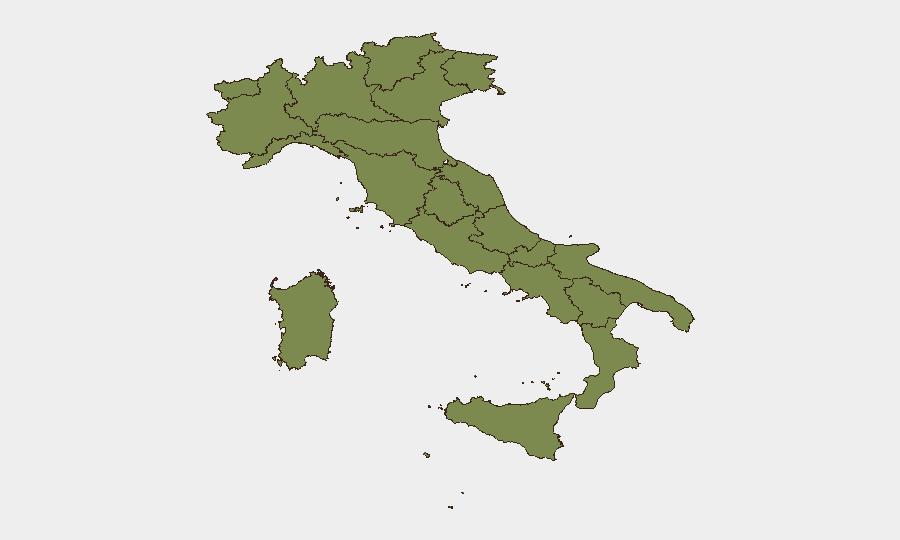
Umbria (31.9) and Lazio (29.5) drive the national composite risk—Lazio's rank reflects the espionage/counter-intelligence activity centered in Rome, while Umbria's elevated score points to cumulative organized-crime and infrastructure-security concerns. Lombardy (20.6) and Sicily (10.9) carry significant secondary risk, with Sicily's score linked to criminal activity and Lombardy reflecting northern infrastructure vulnerabilities now validated by the cable-attack pattern. The Calabria sabotage, though not in the top-ranked regions, has created acute transport and supply-chain isolation affecting southern operations.
How GeoBit Would Assist
Intel Sweep and OSINT fusion would corroborate the cable-attack pattern across northern and southern lines, mapping perpetrator networks and identifying next-target vulnerability. AOI Monitoring & Early Warning on rail corridors, espionage-linked facilities, and transport hubs would provide persistent threat detection and alerting. Routing & Network Analysis would generate verified alternative journey and logistics routes circumventing sabotaged lines, mitigating supply-chain and personnel-movement delays.
7-Day Outlook
Infrastructure sabotage and cable theft are likely to continue in the near term, with follow-on disruptions expected on secondary rail corridors. Espionage-related security sweeps and counter-intelligence operations will remain active in Rome and strategic sectors, potentially triggering additional travel delays or access restrictions. Elevated terrorism vigilance and petty-crime risk will persist across major transport hubs through mid-week; corporate teams should maintain heightened situational awareness for personnel in transit and reinforced protocols for sensitive facility access.
Highest-Risk Areas — Ranked
| # | State / Region | Risk |
|---|---|---|
| 1 | Umbria | 31.9 |
| 2 | Lazio | 29.5 |
| 3 | Lombardy | 20.6 |
| 4 | Sicily | 10.9 |
| 5 | Marche | 5 |
| 6 | Tuscany | 4.7 |
| 7 | Veneto | 3.5 |
| 8 | Friuli – Venezia Giulia | 3.1 |
| 9 | Sardinia | 2.1 |
| 10 | Emilia-Romagna | 2.1 |
| 11 | Apulia | 2.1 |
| 12 | Campania | 2.1 |
Sources
Previous Daily Briefs
A new Italy brief is written every day — each with its own risk map and downloadable CSV. Here's the last week; use the calendar to go further back.
📅 Browse every day by calendar →
Highlighted days have a brief. Tap a day for that day's map & analysis, or “csv” for that day's dataset ($5).
Atlas — our AI intelligence desk — emails them this snapshot personally. Nothing else, no list.