Situation Summary
Mauritius maintains a stable security environment with no confirmed incidents, civil unrest, or infrastructure disruptions reported in the last 24–48 hours. The country's global threat rank of #91 (composite score 12) reflects low baseline risk; web and social monitoring confirm routine activity only across all districts. Recent event signals show isolated political and institutional tensions—including government-police disagreements, prosecutorial concerns, and prime ministerial scrutiny—but no active security events translating to measurable risk to corporate operations or personnel.
Key Developments
No location-specific security, crime, civil-unrest, conflict, or infrastructure incidents meeting corporate security criteria were identified in Mauritius during 16–17 July 2026 (last 24–48 hours).
Open-source and social-media monitoring covering Port Louis, Plaines Wilhems, and countrywide districts confirms baseline activity only; no dated, specific incidents requiring duty-of-care escalation were documented.
Institutional event signals (disapprovals, demands, investigations) flagged on 15–16 July appear diffuse and non-localized; no corroborating operational security or travel risk events were confirmed by independent web research.
Foreign-ministry travel advisories describe the internal political situation as calm, with no active demonstrations or unrest referenced in current reporting windows.
Port Louis, though ranked highest in sub-national risk (92), shows no acute incident activity; elevated score reflects baseline vulnerability profile rather than current threat escalation.
Corporate personnel and assets in lower-risk districts (Rodrigues, Saint Brandon, Agaléga) face negligible near-term operational impact; routine security postures remain appropriate.
Highest-Risk Areas
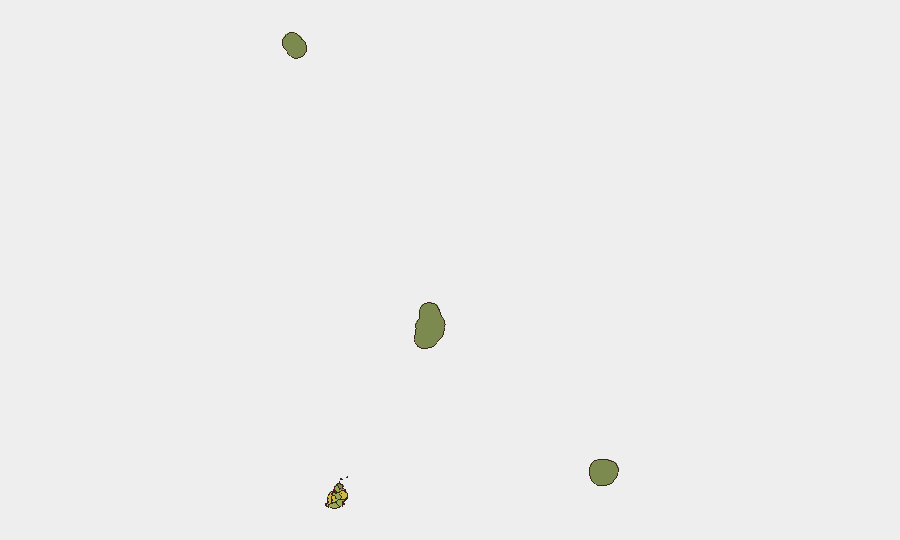
Port Louis (risk 92) dominates the sub-national ranking and reflects the capital's density, financial-sector concentration, and typical urban-crime baseline; no current spike is evident. Plaines Wilhems (68), Black River (65), and Flacq (62) form a secondary tier, likely driven by port infrastructure, logistics hubs, and transient-population exposure; again, no acute events are confirmed. The ranking is structural, not event-driven—corporate teams should maintain standard protocols in Port Louis and major commercial zones but need not escalate posture in response to current developments. Outer islands (Rodrigues, Saint Brandon, Agaléga) carry negligible risk.
How GeoBit Would Assist
Teams with personnel or assets in Mauritius should employ AOI Monitoring & Early Warning (persistent watch on Port Louis, port facilities, and key commercial districts) combined with Intel Sweep and multi-language OSINT to detect emerging civil, political, or security signals before they mature into incidents. Network & Actor Analysis and sentiment analysis of Mauritius political and institutional discourse would contextualize the recent event signals (government-police tensions, prosecutorial concerns) and flag escalation thresholds. Routing & Network Analysis can pre-position alternative logistical and personnel-movement corridors should localized disruptions occur.
7-Day Outlook
No escalation of security risk is forecast for the next seven days. Institutional tensions may persist but lack structural drivers for rapid mobilization into street-level unrest. Seasonal conditions and baseline crime patterns will likely remain the primary duty-of-care variables; standard business-continuity and personnel-safety protocols remain fit for purpose.
Highest-Risk Areas — Ranked
| # | State / Region | Risk |
|---|---|---|
| 1 | Port Louis | 92 |
| 2 | Plaines Wilhems | 68 |
| 3 | Black River | 65 |
| 4 | Flacq | 62 |
| 5 | Grand Port | 58 |
| 6 | Moka | 52 |
| 7 | Savanne | 48 |
| 8 | Pamplemousses | 45 |
| 9 | Rivière du Rempart District | 38 |
| 10 | Rodrigues | 22 |
| 11 | Saint Brandon | 8 |
| 12 | Agaléga | 5 |
Sources
Previous Daily Briefs
A new Mauritius brief is written every day — each with its own risk map and downloadable CSV. Here's the last week; use the calendar to go further back.
📅 Browse every day by calendar →
Highlighted days have a brief. Tap a day for that day's map & analysis, or “csv” for that day's dataset ($5).
Atlas — our AI intelligence desk — emails them this snapshot personally. Nothing else, no list.