Situation Summary
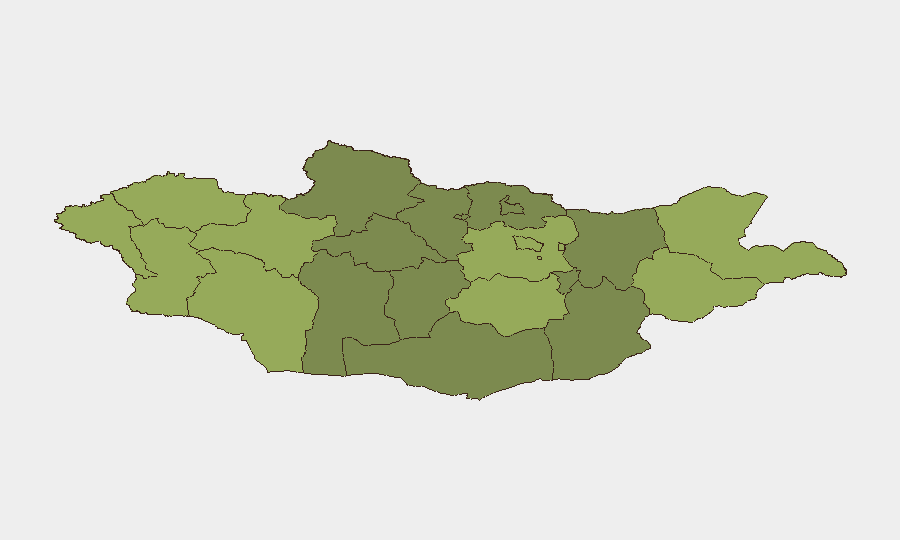
Mongolia remains a low-threat environment globally (composite score 2) with no discrete security events recorded in the current tracking window. However, sub-national risk concentrations in the eastern and western border regions—particularly Dornod, Sükhbaatar, and Uvs—reflect persistent vulnerabilities associated with cross-border activity, remote terrain, and limited state capacity. The capital, Ulaanbaatar, ranks seventh among aimags at risk score 45, indicating manageable but non-negligible exposure for personnel and assets in-country. The overall trajectory is stable with localized friction points rather than systemic instability.
Key Developments
No discrete security events have been recorded in the last 24–48 hours.
*Note on recent context (outside current window):* A July 13 incident involved an armed attack on Israeli tourists at a northern Mongolia campsite, resulting in injuries and diplomatic intervention. While this represents a rare violent incident, it falls outside the current 24–48-hour reporting window and should be considered historical context for threat pattern analysis rather than an active development.
Routine monitoring of eastern and western border zones continues; no active alerts or escalations have been flagged.
Highest-Risk Areas
Dornod (risk 58) and Sükhbaatar (risk 55) in eastern Mongolia drive the sub-national risk ranking, reflecting proximity to the Russian border, limited law-enforcement footprint, and historical cross-border trafficking and smuggling activity. Western aimags—Uvs (52), Khovd (50), and Bayan-Ölgii (48)—face analogous pressures from the Kazakhstan and Russia borders. Ulaanbaatar and central aimags register moderate but lower risk, reflecting better infrastructure, state presence, and security services concentration. Remote border zones present elevated exposure to organized crime, irregular migration, and petty violence; urban centers, while safer, remain subject to localized incidents and standard crime.
How GeoBit Would Assist
Security teams with personnel or assets in Mongolia should deploy AOI Monitoring & Early Warning on Dornod, Sükhbaatar, and Uvs to enable persistent watch and real-time alerting on cross-border activity and crime indicators. Multi-language OSINT and Telegram/X intelligence can track informal networks, smuggling routes, and emerging incidents in remote regions where formal reporting is sparse. Routing & Network Analysis supports alternative journey planning for teams transiting high-risk border zones, and satellite imagery analysis can identify informal settlement and trafficking hubs. Combined with regular Intel Sweep and regional event-feed monitoring, these tools enable early warning and informed duty-of-care decisions.
7-Day Outlook
No material escalation is anticipated over the next seven days. Border-zone activity and low-level transnational crime are expected to continue at baseline levels. Security teams should maintain routine monitoring protocols and refresh travel advisories for staff in Dornod, Sükhbaatar, and western aimags; the July 13 tourist incident, while isolated, reinforces the need for situational awareness in remote northern and western areas. Domestic political developments and any shifts in Russian or Chinese regional posture should be monitored as potential second-order risks.
Highest-Risk Areas — Ranked
| # | State / Region | Risk |
|---|---|---|
| 1 | Dornod | 58 |
| 2 | Sükhbaatar | 55 |
| 3 | Uvs | 52 |
| 4 | Khovd | 50 |
| 5 | Bayan-Ölgii | 48 |
| 6 | Govi-Altai | 46 |
| 7 | Ulaanbaatar | 45 |
| 8 | Zavkhan | 44 |
| 9 | Töv | 42 |
| 10 | Dundgovi | 40 |
| 11 | Darkhan-Uul | 38 |
| 12 | Ömnögovi | 37 |
Sources
Previous Daily Briefs
A new Mongolia brief is written every day — each with its own risk map and downloadable CSV. Here's the last week; use the calendar to go further back.
📅 Browse every day by calendar →
Highlighted days have a brief. Tap a day for that day's map & analysis, or “csv” for that day's dataset ($5).
Atlas — our AI intelligence desk — emails them this snapshot personally. Nothing else, no list.