Situation Summary
Oman remains a low-threat environment (global rank #135, composite score 6) with no credible reports of major civil unrest, terrorism, or infrastructure disruption on domestic soil in the past 24–48 hours. However, the security picture is increasingly shaped by regional maritime tensions in adjacent waters—specifically disputes over Strait of Hormuz administration, transit tolls, and U.S. enforcement actions—which directly affect shipping, commercial operations, and travel corridors connected to Omani ports. Domestic governance tensions and regime-opposition reporting (reflected in recent event signals around administrative sanctions, journalist/activist assault, and prison incidents) remain contained but warrant monitoring.
Key Developments
- Strait of Hormuz enforcement action (Gulf of Oman, 5 July 2026): U.S. Central Command disabled an oil tanker for alleged blockade violation against Iran. This increases short-term maritime security risk for all vessels transiting waters adjacent to Oman's coast and serving Omani ports.
- Japanese commercial vessels depart Strait (5 July 2026): Multiple vessels linked to Japanese interests left the Hormuz corridor in response to heightened tensions over Iranian charges and U.S. enforcement. Reflects immediate commercial risk aversion affecting regional shipping lanes.
- Iran–Oman Strait administration talks (Beijing statement, 5 July 2026): Iran's ambassador confirmed ongoing collaboration with Oman on new Hormuz "arrangements," including proposed service fees for security and environmental measures. Signals evolving regulatory and cost conditions for maritime transit near Omani territorial waters.
- Oman formally rejects transit tolls (late June–early July, ongoing): Oman's foreign minister publicly opposed mandatory Strait transit fees as "illegal," distinguishing them from legitimate paid services. Indicates policy instability in governance of a critical chokepoint to Oman's economy, though no direct territorial confrontations reported.
- Hormuz navigation mechanism finalized (status current): Iran and Oman have reportedly agreed on a joint Hormuz navigation mechanism, with Tehran emphasizing exclusion of U.S. involvement. Affects strategic control and commercial traffic management around Omani waters.
- Recent domestic tensions (4–5 July 2026): Event signals indicate administrative sanctions, violent repression in prisons, and physical assaults on journalists and activists. No mass unrest reported, but signaling deteriorating governance environment.
Highest-Risk Areas
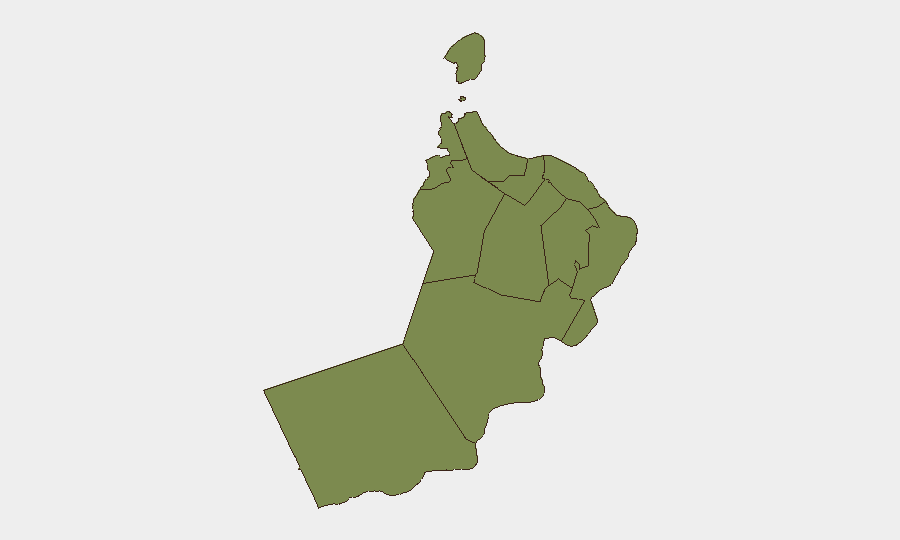
Musandam Governorate (risk 31.5) and Al Wusta Governorate (risk 20.4) dominate sub-national threat rankings, with all other governorates clustered at 1.5. Musandam's elevated risk reflects its position as a maritime chokepoint adjacent to the Strait of Hormuz—exposure to regional naval tensions, trafficking, and potential maritime enforcement actions. Al Wusta's risk profile likely reflects maritime piracy and smuggling networks in deeper Gulf waters. Muscat and other population centers remain at baseline risk; domestic security incidents are isolated rather than systemic.
How GeoBit Would Assist
Corporate security teams should employ AOI Monitoring & Early Warning on Musandam and key Omani ports (Salalah, Sohar, Duqm) to detect maritime incidents, port disruptions, or enforcement actions in real time. Maritime & Aviation tracking and Intel Sweep (X/Twitter, Telegram, regional sources) provide early signal of shipping delays, vessel seizures, or route diversions affecting supply chains and personnel travel. Routing & Network Analysis identifies alternative air and overland corridors if maritime corridors become unstable.
7-Day Outlook
Near-term risk trajectory is stable domestically but elevated maritimely. The Strait of Hormuz administration dispute will likely continue as a policy-level negotiation (rather than kinetic escalation) over the next week. Commercial shipping will remain risk-averse, and insurance costs may rise. Personnel traveling to/from Oman should expect potential port congestion and shipping delays but face low risk of direct security incidents on land.
Highest-Risk Areas — Ranked
| # | State / Region | Risk |
|---|---|---|
| 1 | Musandam Governorate | 31.5 |
| 2 | Al Wusta Governorate | 20.4 |
| 3 | Muscat Governorate | 1.5 |
| 4 | Al Buraymi Governorate | 1.5 |
| 5 | Ad Dhahirah Governorate | 1.5 |
| 6 | Al Batinah North Governorate | 1.5 |
| 7 | Al Batinah South Governorate | 1.5 |
| 8 | Ad Dakhiliyah Governorate | 1.5 |
| 9 | Ash Sharqiyah North Governorate | 1.5 |
| 10 | Ash Sharqiyah South Governorate | 1.5 |
| 11 | Dhofar Governorate | 1.5 |
Sources
Previous Daily Briefs
A new Oman brief is written every day — each with its own risk map and downloadable CSV. Here's the last week; use the calendar to go further back.
📅 Browse every day by calendar →
Highlighted days have a brief. Tap a day for that day's map & analysis, or “csv” for that day's dataset ($5).
Atlas — our AI intelligence desk — emails them this snapshot personally. Nothing else, no list.