Situation Summary
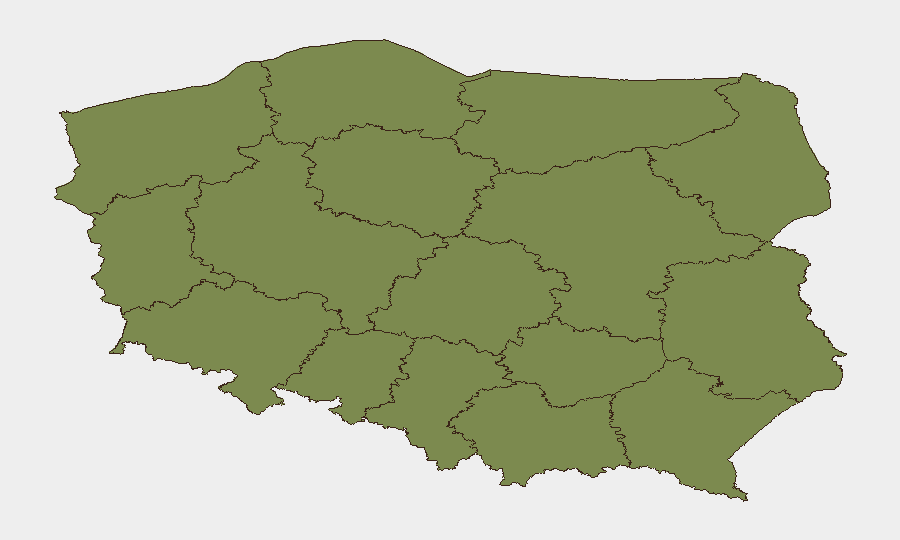
Poland faces a composite threat score of 11 (global rank #90) with 69 tracked events, reflecting elevated security volatility driven by xenophobic violence, infrastructure-targeting cyber operations, and civil unrest. The past 48 hours have seen a marked spike in violence targeting foreign nationals—particularly Ukrainians—alongside a failed Russian cyberattack on critical energy infrastructure that was neutralized before operational impact. Masovian Voivodeship (Warsaw region) dominates the national risk profile at 31.8, more than 50% higher than Łódź, indicating concentration of threat activity in Poland's capital corridor and surrounding urban centers. The trajectory suggests sustained exposure to cross-border tensions, homegrown extremism, and state-level cyber aggression.
Key Developments
- Bytów (Pomeranian Voivodeship) – Fatal assault, 15 July 2026. Three Ukrainian nationals allegedly beat a married couple in the town center on 13 July; the 36-year-old male victim died in hospital 15 July. All three suspects detained in three-month pre-trial custody. Incident widely reported as triggering wider anti-Ukrainian sentiment.
- Poznań (Greater Poland) – Kindergarten attack threat neutralized, 15 July 2026. Central Bureau for Combating Cybercrime detected an online post describing a planned attack on three local kindergartens and arrested the suspect within hours. Suspect faces up to 15 years imprisonment under District Prosecutor's Office supervision.
- Łódź – Xenophobic assault, 15 July 2026. A Polish man assaulted another resident, mistaking him for Ukrainian, and verbally abused him with anti-Ukrainian rhetoric. Incident reported as part of escalating xenophobic violence following the Bytów killing.
- Poznań (Greater Poland) – Assault on city president, 14–15 July 2026. Perpetrators threw a cake/tort at Poznań's president Jacek Jaśkowiak during a public appearance and face charges of assault on a public official carrying up to three years imprisonment.
- Warsaw West Station – Attack on Belarusian dissident athlete, mid-July 2026. Belarusian swimmer Aliaksandra Herasimenia reportedly struck in the head by an assailant at Warszawa Zachodnia railway station. Case framed as attack on high-profile political dissident on Polish soil.
- Poland-wide – Failed cyberattack on energy infrastructure, 13 July 2026. Russian FSB Centre 16 conducted destructive cyberattack on Polish electrical grid that failed to interrupt supply but could have affected ~500,000 people during winter. UK and EU imposed simultaneous cyber sanctions on Russian military and influence entities on 13 July.
- Rybnik (Silesian Voivodeship) – Nazi graffiti and deportation, July 2026. A 22-year-old Ukrainian citizen detained for repeatedly spray-painting Nazi symbols on school fence; expulsion proceedings initiated.
- Swarzędz (Greater Poland) – Fuel station incident and evacuation, 15 July 2026. Police ordered precautionary evacuation of nearby buildings at fuel station site; significant police presence and emergency response measures deployed.
Highest-Risk Areas
Masovian Voivodeship (Warsaw region) represents 60% of Poland's tracked composite threat, driven by political instability, urban crime, and presence of critical national infrastructure. Łódź Voivodeship (risk 20.1) shows secondary vulnerability, with reported xenophobic assaults contributing to civic tension. The gap between the top two regions and all others (maximum 2.1) indicates threat concentration in Poland's two largest metropolitan areas. Infrastructure targets in Masovian remain attractive to state-level actors, while xenophobic violence tied to Ukrainian displacement is a distributed urban risk across major cities.
How GeoBit Would Assist
Security teams should deploy AOI Monitoring & Early Warning on Masovian and Łódź voivodeships to catch extremist threats before operational execution, as demonstrated by the kindergarten case. Network & Actor Analysis combined with OSINT fusion (X/Twitter, Telegram, multi-language search) will identify xenophobic organizing and rhetoric escalation in real time. Intel Sweep and cyber sanctions tracking will maintain visibility on Russian FSB capabilities targeting Polish energy infrastructure.
7-Day Outlook
Xenophobic violence linked to Ukrainian nationals is likely to sustain or escalate over the near term given the Bytów fatality's media amplification and political reaction. Russian cyber reconnaissance of Polish critical infrastructure will persist as part of ongoing strategic competition. Expect further law-enforcement action against online extremist organizing and possible civil-order incidents in major urban centers.
Highest-Risk Areas — Ranked
| # | State / Region | Risk |
|---|---|---|
| 1 | Masovian Voivodeship | 31.8 |
| 2 | Łódź Voivodeship | 20.1 |
| 3 | Lubusz Voivodeship | 2.1 |
| 4 | Greater Poland Voivodeship | 2.1 |
| 5 | Opole Voivodeship | 2.1 |
| 6 | Warmian-Masurian Voivodeship | 1.8 |
| 7 | Subcarpathian Voivodeship | 1.8 |
| 8 | Podlaskie Voivodeship | 1.8 |
| 9 | Lublin Voivodeship | 1.8 |
| 10 | West Pomeranian Voivodeship | 1.8 |
| 11 | Lower Silesian Voivodeship | 1.8 |
| 12 | Pomeranian Voivodeship | 1.8 |
Sources
Previous Daily Briefs
A new Poland brief is written every day — each with its own risk map and downloadable CSV. Here's the last week; use the calendar to go further back.
📅 Browse every day by calendar →
Highlighted days have a brief. Tap a day for that day's map & analysis, or “csv” for that day's dataset ($5).
Atlas — our AI intelligence desk — emails them this snapshot personally. Nothing else, no list.