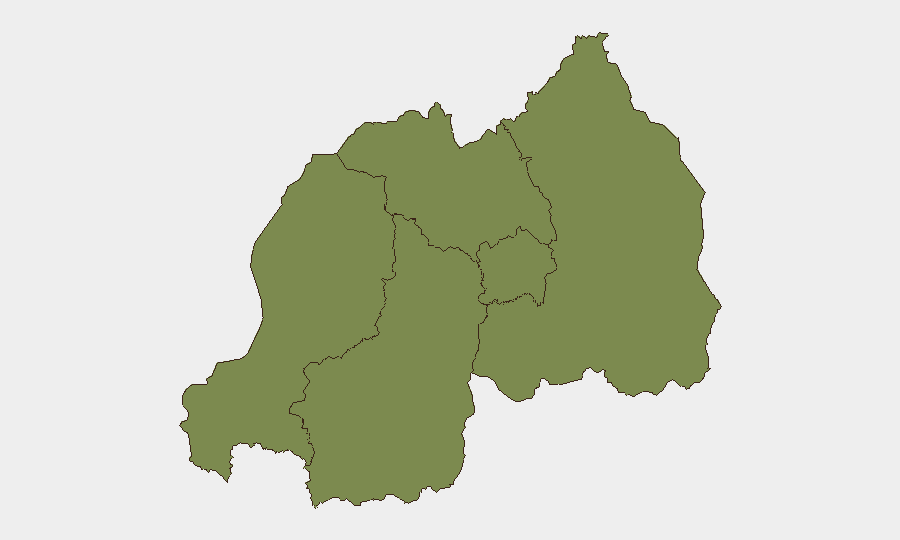
Situation Summary
Rwanda maintains a stable security environment with no acute incidents reported in the past 24–48 hours across all provinces. The nation ranks #104 globally in composite threat scoring (13/100) and continues routine operations despite active public-health measures linked to Marburg virus monitoring and enhanced DRC border screening. Kigali City concentrates the majority of measurable risk (32.9), while outlying provinces remain at baseline threat levels; no indicators of civil unrest, armed escalation, or infrastructure disruption have emerged in recent days.
Key Developments
- Rwanda (nationwide), 23–24 July 2026 – Daily security assessments confirm no acute incidents across all provinces in the past 24–48 hours, with no documented protests, armed clashes, terrorism events, or major infrastructure failures.
- Rwanda–DRC border crossings, 23–24 July 2026 – Enhanced health screening and entry controls remain in place at all land borders and Kigali International Airport in response to DRC Ebola cases; authorities characterize measures as precautionary, and internal travel and business operations are proceeding as normal.
- Marburg virus monitoring (nationwide), recent – An active outbreak remains a public-health operational constraint; no new confirmed cases or accelerated spread has been documented in the last 24–48 hours, and no security incidents or civil unrest linked to the outbreak have been reported.
- Kigali City, 23–24 July 2026 – The capital remains the highest-risk geographic concentration (32.9 composite score), but no new security events have materialized; routine crime and congestion remain within typical ranges.
- Southern Province, 23–24 July 2026 – This region carries the highest baseline structural risk among outlying provinces (2.9) but no new incidents or deterioration have been documented in the monitoring window.
- US State Department advisory, 2026-07-22 – A public statement regarding Rwanda was issued; advisories typically address travel conditions, health, and duty-of-care guidance rather than imminent acute threats.
Highest-Risk Areas
Kigali City is the sole outlier, accounting for more than 90% of Rwanda's measurable risk profile (32.9 vs. 2.9 baseline across other provinces). This concentration reflects urban density, commercial activity, transient populations, and routine crime rather than organized conflict or political instability. The Western, Northern, Southern, and Eastern Provinces all sit at equivalent, low baseline risk levels. For corporate operations, risk management should prioritize asset and personnel safeguarding in the capital through standard urban-security protocols; provincial operations face negligible acute threat in the current environment.
How GeoBit Would Assist
AOI Monitoring & Early Warning provides persistent, real-time alerting on Kigali City and border crossings to flag any emergence of civil unrest, security incidents, or health-related disruptions affecting duty-of-care and supply chains. Intel Sweep and OSINT fusion across news, social media, and local sources enable rapid corroboration of rumors and verification of rumors versus credible incidents, critical in a lower-baseline-threat environment where false alarms can trigger unnecessary evacuation or operational shutdown. Conflict & Military tracking and Network & Actor Analysis support ongoing monitoring of cross-border dynamics with DRC militias and regional stability, particularly if Ebola responses or humanitarian operations create secondary security risks.
7-Day Outlook
Rwanda's security posture is expected to remain stable over the next seven days absent major health-sector deterioration or DRC spillover. Marburg outbreak trajectory and border-control efficacy will be the primary operational drivers; no indicators currently suggest imminent civil, political, or armed-conflict escalation.
Highest-Risk Areas — Ranked
| # | State / Region | Risk |
|---|---|---|
| 1 | Kigali City | 32.9 |
| 2 | Western Province | 2.9 |
| 3 | Northern Province | 2.9 |
| 4 | Southern Province | 2.9 |
| 5 | Eastern Province | 2.9 |
Previous Daily Briefs
A new Rwanda brief is written every day — each with its own risk map and downloadable CSV. Here's the last week; use the calendar to go further back.
📅 Browse every day by calendar →
Highlighted days have a brief. Tap a day for that day's map & analysis, or “csv” for that day's dataset ($5).
Atlas — our AI intelligence desk — emails them this snapshot personally. Nothing else, no list.