Situation Summary
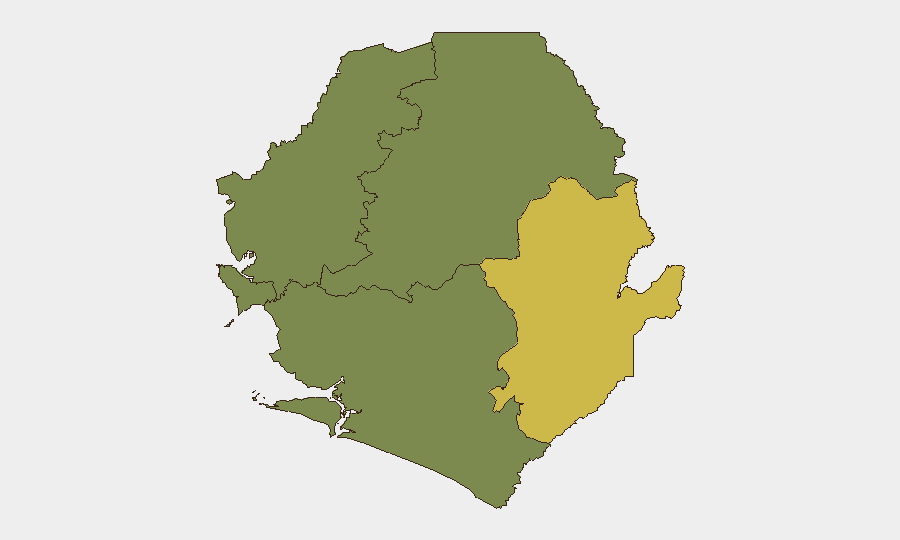
Sierra Leone remains at global threat rank #115 with a composite threat score of 8, reflecting a relatively stable security environment with no acute incidents detected in the last 24–48 hours across open-source monitoring. The information environment is currently quiet, with no credible reports of significant new security, conflict, civil unrest, crime, or infrastructure disruption. Risk concentration is heavily sub-national, with the Eastern Province accounting for the majority of tracked threat activity. The overall trajectory remains stable absent new destabilizing events.
Key Developments
No specific security, conflict, civil unrest, crime, political instability, infrastructure, or travel-risk incidents meeting corroboration and timing criteria (last 24–48 hours) have been identified in Sierra Leone during this reporting window. Open-source feeds, social media monitoring, and regional intelligence suggest an absence of reportable acute events. Two platform event signals were recorded on 2026-06-26 (a public statement in Freetown and a voter appeal regarding political parties), but these do not constitute security incidents and lack sufficient detail to assess operational impact. Neighboring Liberia similarly reported no acute security incidents in a comparable recent window, suggesting broader regional stability. Continued monitoring of the Eastern Province remains warranted given its elevated composite risk score (68).
Highest-Risk Areas
The Eastern Province dominates Sierra Leone's sub-national risk profile with a composite score of 68—nearly double the Western Area's score of 35—and accounts for the majority of GeoBit's 15 tracked events in-country. The Western Area, which includes the capital Freetown and surrounding urban zones, remains the second-highest-risk region and typically correlates with urban crime, political activity, and infrastructure vulnerabilities. The Northern Province, North West Province, and Southern Province each register a composite score of 0 in current tracking, indicating minimal detected threat activity. Personnel and assets concentrated in Freetown should maintain standard duty-of-care protocols; those operating in or transiting the Eastern Province warrant elevated situational awareness and contingency planning.
How GeoBit Would Assist
Security teams monitoring Sierra Leone should leverage AOI (Area-of-Interest) Monitoring & Early Warning to establish persistent watch on the Eastern Province and Freetown, with automated alerting on new event signals and sentiment spikes. Intel Sweep, global event feeds, and X/Twitter OSINT provide real-time detection of emerging incidents, political statements, and civil unrest across multiple languages and platforms. GIS & Spatial Analysis combined with conflict and crime search capabilities enable mapping of incident clusters and temporal patterns to inform route planning, meeting location selection, and movement timing for personnel in higher-risk zones.
7-Day Outlook
No acute security threats are forecast for the next seven days based on current open-source monitoring and the absence of pre-event indicators. The political-party activity flagged on 2026-06-26 should be monitored for escalation into public unrest, though current data does not suggest imminent risk. Routine monitoring of the Eastern Province and standard duty-of-care measures remain appropriate.
Highest-Risk Areas — Ranked
| # | State / Region | Risk |
|---|---|---|
| 1 | Eastern Province | 68 |
| 2 | Western Area | 35 |
| 3 | North West Province, Sierra Leone | 0 |
| 4 | Northern Province, Sierra Leone | 0 |
| 5 | Southern Province, Sierra Leone | 0 |
Previous Daily Briefs
A new Sierra Leone brief is written every day — each with its own risk map and downloadable CSV. Here's the last week; use the calendar to go further back.
📅 Browse every day by calendar →
Highlighted days have a brief. Tap a day for that day's map & analysis, or “csv” for that day's dataset ($5).