Situation Summary
Togo remains a stable West African state with a composite threat score of 20 (rank #53 globally), characterized by low levels of discrete security incidents in the immediate 24–48-hour window. The country faces chronic underlying risks—including organized crime in urban centers, illicit weapons trafficking via northern border routes, and persistent terrorism threats in the Savanes region—but no major escalation or incident has been documented in the past two days. The security environment is steady, with routine law-enforcement operations ongoing but no acute destabilization indicators.
Key Developments
No verified incidents meeting 24–48-hour recency criteria have been identified in the current reporting window (31 July – 1 August 2026).
The most recent confirmed operations—dismantling of burglary networks in Grand Lomé and interdiction of illicit explosives originating from Kétao (northern Togo) but seized in Benin—occurred between 26–29 July 2026 and predate the strict 24–48-hour threshold. A temporary traffic restriction on the Anfoin–Vogan axis (Maritime Region) coinciding with a political meeting occurred on 26 July 2026. Absent newly published incident reports or alert signals from law enforcement or civil authorities, the brief reflects the current absence of acute developments rather than security improvement.
Highest-Risk Areas
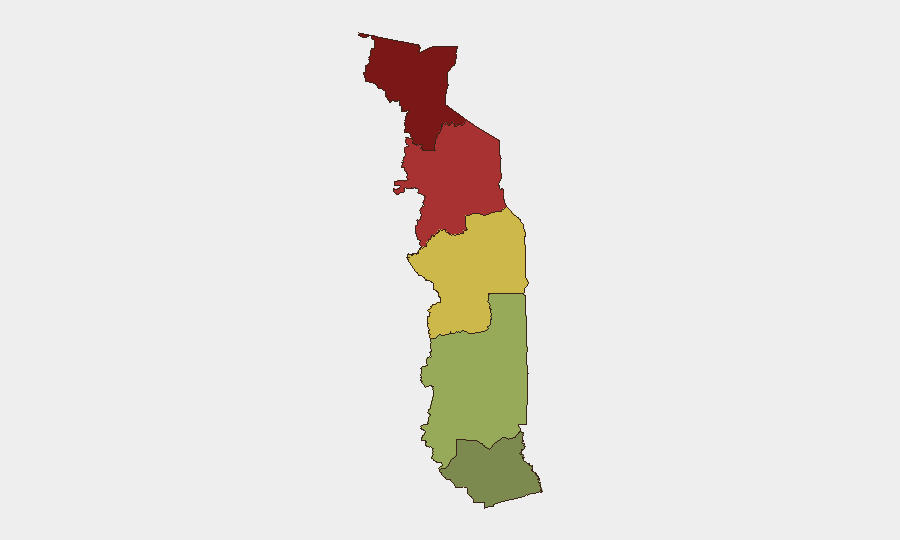
The Savanes Region (risk score 92) remains the dominant threat driver, owing to recurring terrorism incidents linked to transnational jihadist groups and persistent banditry along the Mali and Burkina Faso borders. The Kara Region (risk 78) follows, positioned as a transit corridor for illicit weapons, narcotics, and explosive materials, and as a secondary terrorism concern. The Centrale Region (risk 65) carries moderate risk tied to organized crime and resource-related tensions. The Maritime (28) and Plateaux (45) regions present substantially lower composite threat levels, though urban crime (particularly in Grand Lomé) remains a routine corporate security concern. Risk in the north is structural and sustained; southern risk is primarily petty-to-organized crime.
How GeoBit Would Assist
Organizations with personnel or assets in Togo should employ AOI Monitoring & Early Warning to track the Savanes and Kara regions for terrorism-related activity, weapons movement, and cross-border incursions, with automated alerting on new incidents. Multi-language OSINT and entity extraction across French and local-language news sources, social media, and Telegram networks would provide earlier visibility into emergent unrest or criminal operations than English-language press alone. Routing & Network Analysis capabilities support secure journey planning around high-risk northern zones and identified trafficking corridors, enabling real-time alternative-route recommendations for staff mobility.
7-Day Outlook
No acute deterioration is indicated for the coming week. Routine law-enforcement operations and political/civil-society engagement (such as the late-July CNCC meeting) will likely continue without major incident. Northern border zones (Savanes, Kara) warrant sustained monitoring for seasonal terrorism or trafficking activity, but no specific trigger events or alerts have emerged to suggest an imminent spike in the next 7 days.
Highest-Risk Areas — Ranked
| # | State / Region | Risk |
|---|---|---|
| 1 | Savanes Region | 92 |
| 2 | Kara Region | 78 |
| 3 | Centrale Region | 65 |
| 4 | Plateaux Region | 45 |
| 5 | Maritime Region | 28 |
Sources
Previous Daily Briefs
A new Togo brief is written every day — each with its own risk map and downloadable CSV. Here's the last week; use the calendar to go further back.
📅 Browse every day by calendar →
Highlighted days have a brief. Tap a day for that day's map & analysis, or “csv” for that day's dataset ($5).
Atlas — our AI intelligence desk — emails them this snapshot personally. Nothing else, no list.