Situation Summary
Trinidad and Tobago remains a lower-tier global security concern (rank #148, composite score 2.1) but continues to experience fragmented operational risks spanning cyber intrusions, crime, and civil tensions. The most significant near-term development is confirmed government cyber compromise affecting multiple ministry and state agency websites, disclosed 11–12 July, which exposes users to downstream fraud and data-leakage risk. All 12 highest-risk sub-national areas carry identical composite scores (1.5), indicating distributed rather than geographically concentrated threat activity; underlying drivers include persistent violent crime, governance friction, and emerging cyber vulnerabilities.
Key Developments
- Nationwide (Government Ministries & Agencies) – 11–12 July 2026: Multiple government websites compromised in confirmed cyber incidents; authorities report no evidence of data exfiltration to date, but cybersecurity experts have publicly flagged unpatched vulnerabilities that could be exploited for phishing, credential harvesting, and secondary intrusions. Increases risk for corporate users relying on government portals for licensing, permits, or compliance reporting.
- Port of Spain (CARPHA HQ) – 12 July (reporting date, event outcome from June 2026 regional meeting): Caribbean Public Health Agency published outcomes of 2nd Joint Regional Health Security coordination meeting, reaffirming cross-border health-threat surveillance and pandemic preparedness posture. Relevant to duty-of-care teams: indicates active institutional monitoring of infectious-disease risks that could affect personnel or supply-chain continuity.
- San Juan-Laventille, Diego Martin, Chaguanas, San Fernando, and other urban centers: Ongoing civil and activist public statements (7–12 July) reflect underlying social friction related to governance, religious/communal tensions, and judicial process criticism; no acute incidents reported in the 24–48-hour window, but sentiment monitoring indicates sustained dissatisfaction that can lower threshold for street-level confrontation.
Highest-Risk Areas
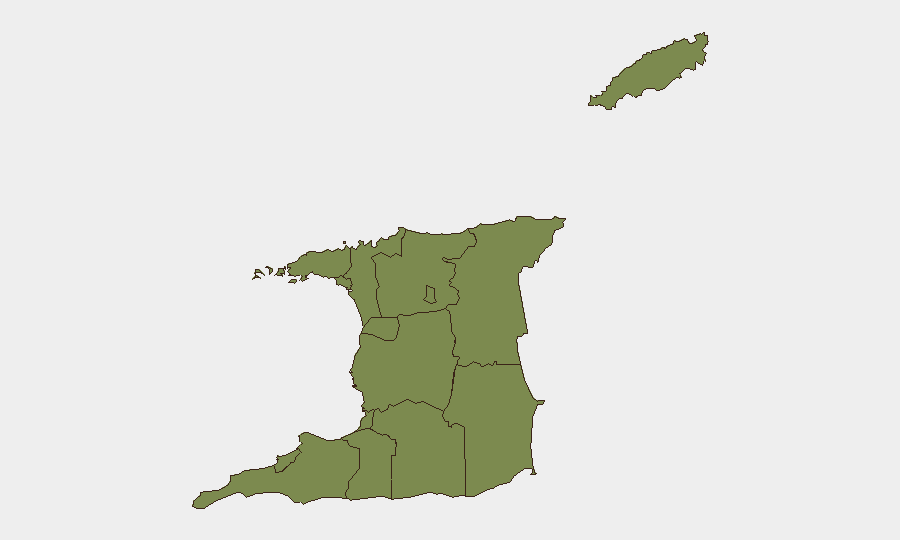
All 12 tracked sub-national zones register identical composite risk (1.5), a pattern suggesting distributed vulnerability rather than a single hotspot. Port of Spain, Diego Martin, and San Juan-Laventille—the capital and adjacent urban/semi-urban zones—concentrate government, corporate, and financial assets and therefore carry operational concentration risk despite equal statistical scores. Tobago, the southern peninsula (Point Fortin, Siparia, Penal-Debe), and central/eastern corridors (Arima, Chaguanas, Tunapuna-Piarco) show persistent violent crime and opportunistic criminal activity; the cyber breach now extends institutional risk across all zones that depend on government digital services.
How GeoBit Would Assist
Security teams should deploy AOI Monitoring & Early Warning on government websites and critical online infrastructure, coupled with OSINT feeds (X/Twitter, Telegram, local news) to detect follow-on phishing campaigns or exploit sales by threat actors. Cyber-incident search and trending analysis, combined with sentiment and temporal analysis of civil/activist commentary, will provide leading indicators of escalation in street-level risk or organized cyber activity targeting corporate assets or supply chains. Multi-language OSINT fusion capturing local reporting, regulatory updates, and dark-web chatter will help teams distinguish baseline operational friction from acute threats requiring duty-of-care response.
7-Day Outlook
Government cybersecurity teams are expected to issue vulnerability-remediation guidance within 48–72 hours; corporate exposure will persist until patches are deployed. Civil tensions around governance and religious/communal issues will likely remain at current levels without a triggering incident; no organized labor action or major public event is scheduled in the immediate term. Overall threat trajectory is stable but with elevated cyber-fraud and information-security risk for the next 7–10 days pending remediation completion.
Highest-Risk Areas — Ranked
| # | State / Region | Risk |
|---|---|---|
| 1 | Tobago | 1.5 |
| 2 | Diego Martin | 1.5 |
| 3 | Port of Spain | 1.5 |
| 4 | San Juan-Laventille | 1.5 |
| 5 | Chaguanas | 1.5 |
| 6 | Tunapuna-Piarco | 1.5 |
| 7 | Arima | 1.5 |
| 8 | Point Fortin | 1.5 |
| 9 | Siparia | 1.5 |
| 10 | San Fernando | 1.5 |
| 11 | Penal-Debe | 1.5 |
| 12 | Couva-Tabaquite-Talparo | 1.5 |
Sources
Previous Daily Briefs
A new Trinidad and Tobago brief is written every day — each with its own risk map and downloadable CSV. Here's the last week; use the calendar to go further back.
📅 Browse every day by calendar →
Highlighted days have a brief. Tap a day for that day's map & analysis, or “csv” for that day's dataset ($5).
Atlas — our AI intelligence desk — emails them this snapshot personally. Nothing else, no list.