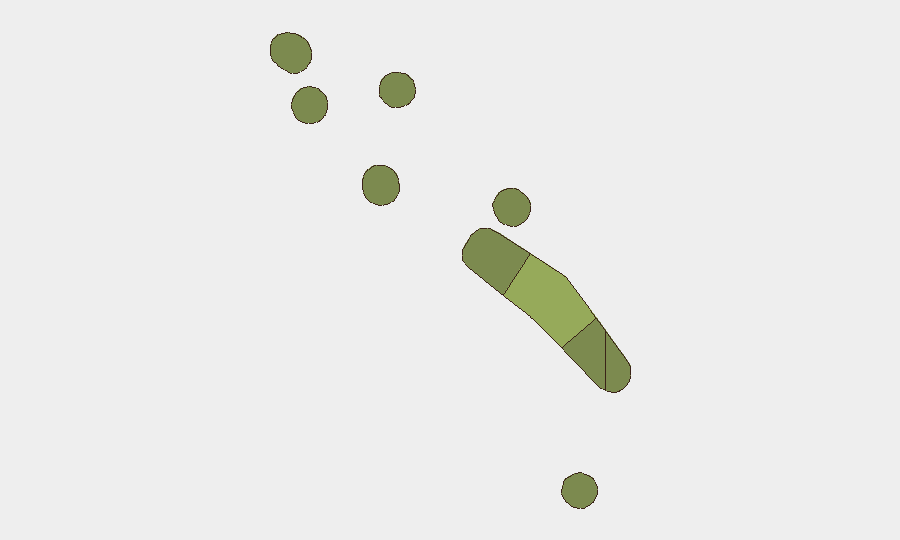
Situation Summary
Tuvalu remains in a stable security environment with no reported incidents, civil unrest, crime spikes, or infrastructure disruptions in the past 24–48 hours. The country ranks #186 globally (composite threat score 2) and continues to benefit from low baseline political volatility and minimal organized crime activity. Current regional monitoring confirms no cascading security or travel-risk developments affecting the nation, though geopolitical activity in the broader Central Pacific—including China's early-July missile test near Tuvalu's EEZ—remains a background strategic consideration.
Key Developments
No discrete security, conflict, civil-unrest, crime, or acute travel-risk incidents have been reported in Tuvalu during the 24–48-hour monitoring window (July 27–29, 2026). Open-source news feeds, regional security briefs, and government travel advisories contain no flag warnings or incident alerts specific to the country.
*Note: The most recent notable regional event—China's dummy-warhead missile test in early July, which landed in international waters near Tuvalu's EEZ—occurred outside the current reporting window and generated no in-country disruption or direct security incident.*
Highest-Risk Areas
Funafuti (capital, risk score 45) remains the highest-risk atoll and is the primary focal point for corporate personnel and assets. Its elevated composite score reflects population density, concentration of government and commercial infrastructure, and port/transport activity rather than acute security incidents. Secondary concern areas—Vaitupu (risk 28) and Nui (risk 25)—are materially lower-risk but warrant standard duty-of-care monitoring given their role in inter-atoll transport and fishing-industry operations. Remaining atolls (Niutao, Nanumanga, Nanumea, Nukulaelae) carry minimal risk scores and see limited corporate activity.
How GeoBit Would Assist
Teams with personnel or assets in Tuvalu should use GeoBit's Intel Sweep and multi-language OSINT feeds to monitor for emerging political, labor, or infrastructure developments; AOI Monitoring & Early Warning configured for Funafuti and secondary atolls to flag any shift in baseline stability; and Regional Event Feeds cross-referenced with Pacific Island state reporting to catch any cascading disruptions. Maritime & Aviation tracking and Routing & Network Analysis are operationally relevant given Tuvalu's dependence on inter-atoll shipping and air transport; disruptions elsewhere in the Pacific can affect supply chains and personnel mobility. Geopolitical and regime-stability search capabilities help maintain awareness of longer-term strategic trends (e.g., China-Pacific tensions, climate-migration policy) that may influence Tuvalu's risk trajectory.
7-Day Outlook
No acute security developments are forecast for the next 7 days; Tuvalu's stability profile is expected to remain consistent. Monitoring should continue to focus on indirect risks—regional shipping disruptions, weather-related infrastructure impacts, and geopolitical statements—rather than in-country political or crime dynamics. Standard duty-of-care protocols and periodic OSINT checks remain proportionate to the current threat level.
Highest-Risk Areas — Ranked
| # | State / Region | Risk |
|---|---|---|
| 1 | Funafuti | 45 |
| 2 | Vaitupu | 28 |
| 3 | Nui | 25 |
| 4 | Nukufetau | 22 |
| 5 | Niutao | 20 |
| 6 | Nanumanga | 18 |
| 7 | Nanumea | 15 |
| 8 | Nukulaelae | 12 |
Sources
Previous Daily Briefs
A new Tuvalu brief is written every day — each with its own risk map and downloadable CSV. Here's the last week; use the calendar to go further back.
📅 Browse every day by calendar →
Highlighted days have a brief. Tap a day for that day's map & analysis, or “csv” for that day's dataset ($5).
Atlas — our AI intelligence desk — emails them this snapshot personally. Nothing else, no list.