Situation Summary
The United Arab Emirates remains a relatively low-threat environment (#85 globally), with no credible reports of significant domestic unrest, terrorism, or violent crime in the last 48 hours. However, acute maritime security risk has emerged in the Strait of Hormuz—a critical waterway for UAE energy exports and regional commerce—following a drone strike on a merchant vessel and Iranian warnings against non-Iranian-designated shipping routes. UAE federal officials have publicly signaled concern that the strait "cannot become a prize of war," indicating elevated diplomatic and strategic anxiety despite a measured domestic security posture.
Key Developments
- Strait of Hormuz, 25 June 2026: The merchant vessel *Ever Lovely* was struck by a drone while transiting the strait off UAE and Oman coasts; the UN International Maritime Organization subsequently suspended organized evacuation convoys due to security concerns, directly affecting shipping lanes adjacent to UAE territory.
- Strait of Hormuz, 25 June 2026: Multiple Maersk-operated container and oil vessels, including tankers using a new UN-endorsed alternative route, transited near UAE and Omani coasts; Iran's Islamic Revolutionary Guard Corps Navy issued a public warning that violators of Iran-designated routes "will be dealt with."
- UAE Federal Level, 25 June 2026: UAE officials made public statements rejecting any attempt to impose new geopolitical realities in the Strait of Hormuz and warning that the waterway "cannot become a prize of war," signaling heightened concern over potential Iranian leverage and regional maritime control.
- Abu Dhabi and Dubai Ports, 25 June 2026: UAE crude exports have rebounded to approximately 85% of pre-war levels according to International Energy Agency data, indicating partial normalization of energy flows through UAE ports despite ongoing regional insecurity.
- Regional Diplomacy, 25 June 2026: U.S. Secretary of State Marco Rubio's ongoing Gulf tour highlighted continued Gulf Arab—including UAE—concern over Iranian missile and drone capabilities and anxiety about exclusion from U.S.–Iran security arrangements.
- UAE–Philippines Immigration Policy, 25 June 2026: The UAE announced visa-on-arrival eligibility for Philippine ordinary passport holders, effective immediately, representing a policy liberalization with modest operational relevance to travel conditions.
Highest-Risk Areas
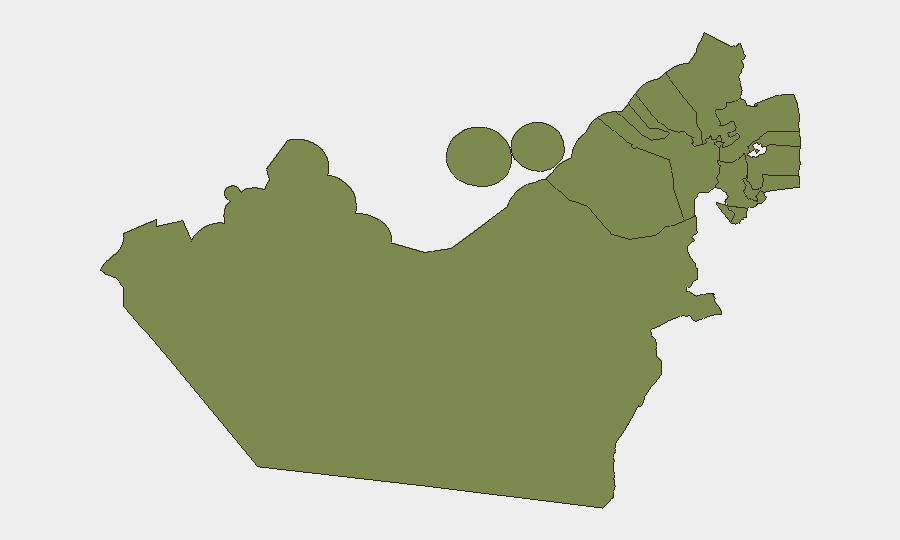
Abu Dhabi Emirate (composite risk 31.9) and Dubai (21.4) drive the majority of tracked risk in the UAE, substantially above other emirates. This concentration reflects these emirates' status as hubs of federal governance, international commerce, energy infrastructure, and maritime trade—particularly vulnerability to maritime disruption in the Strait of Hormuz and exposure to regional diplomatic and military tensions. The remaining five emirates (Sharjah, Ajman, Ras al-Khaimah, Fujairah, Umm al-Quwain) register near-baseline risk (1.9 each), indicating localized or negligible threat activity.
How GeoBit Would Assist
Security teams monitoring UAE personnel and assets should deploy Maritime & Aviation tracking and AOI Monitoring & Early Warning on the Strait of Hormuz and UAE-linked shipping corridors to detect vessel disruptions and Iranian activity patterns in real time. Network & Actor Analysis focused on Iranian Revolutionary Guard Corps Navy messaging and OSINT fusion of regional diplomatic statements will provide early detection of escalation rhetoric and intentions. Economic & Trade monitoring of UAE crude export routes and port activity will allow duty-of-care teams to anticipate supply-chain and logistics disruptions affecting corporate operations.
7-Day Outlook
Maritime risk in the Strait of Hormuz will remain elevated over the next seven days as alternative shipping routes are tested and Iranian warnings persist; no immediate de-escalation is signaled by current diplomatic or military posture. Domestic UAE security is expected to remain stable. Monitoring of U.S.–Iran negotiation progress and Iranian response to continued non-Iranian-designated route usage will be critical to predicting whether drone or naval harassment escalates.
Highest-Risk Areas — Ranked
| # | State / Region | Risk |
|---|---|---|
| 1 | Abu Dhabi Emirate | 31.9 |
| 2 | Dubai | 21.4 |
| 3 | Sharjah Emirate | 1.9 |
| 4 | Ajman Emirate | 1.9 |
| 5 | Ras al-Khaimah | 1.9 |
| 6 | Fujairah Emirate | 1.9 |
| 7 | Umm al-Quwain | 1.9 |
Sources
Previous Daily Briefs
A new United Arab Emirates brief is written every day — each with its own risk map and downloadable CSV. Here's the last week; use the calendar to go further back.
📅 Browse every day by calendar →
Highlighted days have a brief. Tap a day for that day's map & analysis, or “csv” for that day's dataset ($5).