Situation Summary
Yemen's composite threat score remains elevated at 99 (rank #13 globally), driven by concurrent security pressures across political, military, and humanitarian domains. A sharp escalation in Sana'a rhetoric and military posturing over the past 24 hours, coupled with ongoing civil unrest in southern governorates and persistent explosive remnants of war (ERW) hazards, indicates a security environment under stress on multiple fronts. Diplomatic engagement through UN Special Envoy Hans Grundberg's 24 June London meetings signals potential de-escalation channels, but on-the-ground violence and humanitarian impact remain acute.
Key Developments
- Al-Raibi village, Al-Dhalea governorate – 22 June (reported 23–24 June): An unexploded war remnant detonated while being handled by children, resulting in 4–5 confirmed deaths and 8–13 injured; the wounded were evacuated to Sanah Field Hospital. This incident underscores the critical ERW contamination risk in rural areas, with MASAM data showing over 568,961 hazards cleared but widespread contamination persisting.
- Aden, Mukalla, Seiyun – mid- to late June (documented 24 June): Security forces deployed live ammunition and tear gas to disperse "hunger uprising" civil protests in Crater and Al-Mualla districts of Aden, resulting in at least 2 fatalities and 5 injuries. Simultaneous night raids across Saudi/UAE-held southern areas resulted in arrests of over 14 activists during the 22–24 June period.
- Sana'a – 24 June (last 24 hours): Houthi leader Abdul-Malik al-Houthi issued threats of military action while the internationally recognized government raised security alerts, signaling sharp escalation in political and military rhetoric within the past day.
- Red Sea regional posture – 24 June: Yemeni armed forces announced ballistic missile attacks against Israeli targets in Yafa, marking continued participation in regional hostilities within the last 24 hours and reflecting persistent alignment with Iran-led regional dynamics.
- Diplomatic engagement – 24 June: UN Special Envoy Hans Grundberg concluded meetings in London with UK officials on de-escalation measures and implementation of an agreement to release over 1,600 conflict-related detainees, representing an active conflict-management track affecting Yemen's trajectory.
- Southern law-and-order degradation – last ~20 days (reported 24 June): YPA documented 11 criminal and "mysterious" killings across southern provinces, including a girl found dead in an Aden hotel under unclear circumstances, reflecting ongoing security and investigative failures in the south.
Highest-Risk Areas
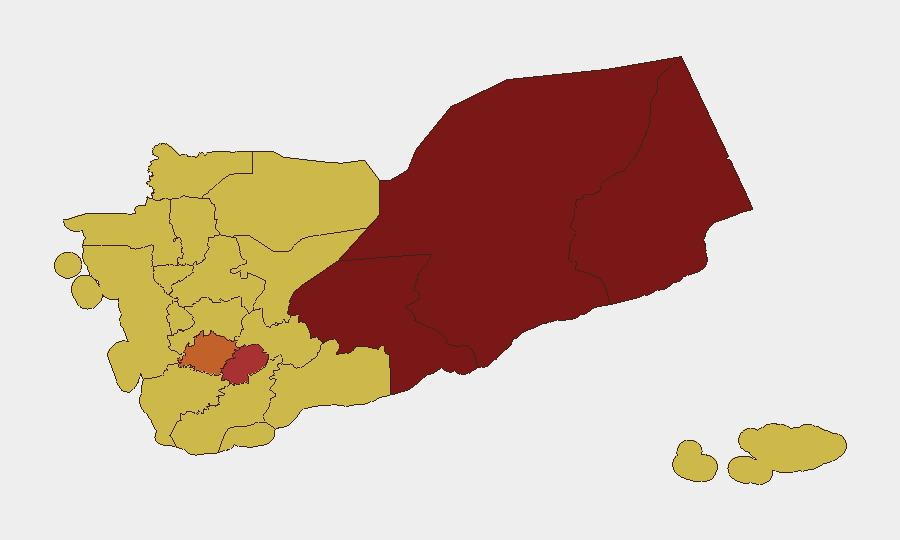
Amanat Al Asimah (Sana'a, risk 99) dominates the threat landscape, driven by political fragmentation, military mobilization, and the concentration of state apparatus and non-state armed groups. The eastern and southeastern governorates—Hadramaut (84.6), Shabwah (84), and Al Mahrah (82.9)—carry elevated risk from ERW contamination, criminal activity, and residual conflict dynamics. Southern coastal areas (Aden region) face compounded risk from civil unrest, security-force response, and governance gaps. Together, these zones account for the majority of reported incidents and humanitarian impact in the past 24–48 hours.
How GeoBit Would Assist
Organizations with personnel or assets in Yemen would employ AOI Monitoring & Early Warning to track Sana'a, Aden, and Hadramaut for real-time escalation signals and protest activity. Conflict & Military and Network & Actor Analysis capabilities would map the composition and intent of Houthi and southern security forces to assess imminent risk to fixed or mobile teams. Humanitarian & NGO data integration would flag ERW incident clusters and medical-system strain (e.g., Sanah Field Hospital capacity) to inform evacuation and duty-of-care decisions.
7-Day Outlook
Rhetorical escalation in Sana'a and military posturing suggest elevated risk of incident escalation or cross-border action within 7 days, though UN diplomatic channels remain active. Southern civil unrest is likely to continue as economic and service-delivery grievances persist, with security forces maintaining restrictive postures. ERW casualty risk remains baseline-high across rural governorates, particularly in recently contested territory.
Highest-Risk Areas — Ranked
| # | State / Region | Risk |
|---|---|---|
| 1 | Amanat Al Asimah | 99 |
| 2 | Hadramaut Governorate | 84.6 |
| 3 | Shabwah Governorate | 84 |
| 4 | Al Mahrah Governorate | 82.9 |
| 5 | Ad Dali' Governorate | 77.7 |
| 6 | Ibb Governorate | 75.9 |
| 7 | Al Hudaydah Governorate | 69.6 |
| 8 | Marib Governorate | 69.6 |
| 9 | Sa'dah Governorate | 69 |
| 10 | Hajjah Governorate | 69 |
| 11 | Al Mahwit Governorate | 69 |
| 12 | 'Amran Governorate | 69 |
Sources
Previous Daily Briefs
A new Yemen brief is written every day — each with its own risk map and downloadable CSV. Here's the last week; use the calendar to go further back.
📅 Browse every day by calendar →
Highlighted days have a brief. Tap a day for that day's map & analysis, or “csv” for that day's dataset ($5).