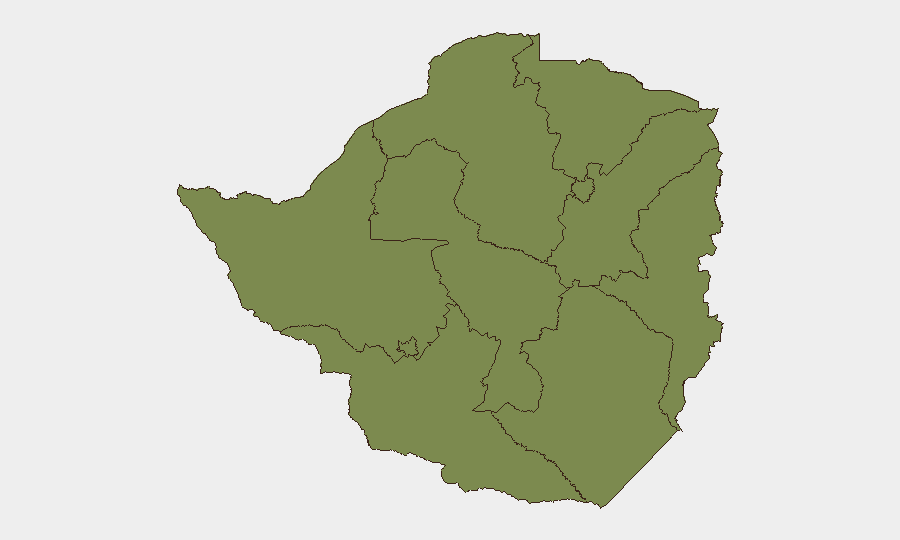
Situation Summary
Zimbabwe remains at composite threat level 6 (global rank #128) with 929 tracked events on the GeoBit platform. Open-source monitoring over the last 24–48 hours has identified no independently verified security incidents, civil unrest, crime spikes, or infrastructure disruptions. The threat landscape is dominated by structural risks in Harare and the Midlands Province rather than acute, location-specific events; political and legal activity signals detected by the platform (public statements, arrests, and investigations) require ongoing corroboration and do not yet constitute confirmed incidents.
Key Developments
No specific, location-dated security or civil-unrest incidents meeting verification criteria have been reported in Zimbabwe for 13–15 July 2026 based on live web research, social-media monitoring, and news aggregation.
Note on signal activity: GeoBit's event feeds flagged several actors and statement-level signals (presidential statements, embassy positions, regional investigations, and detention activity) between 13–15 July. None of these have been corroborated by independent news sources or social platforms as discrete incidents affecting personnel, assets, or travel safety. Such signals remain under monitoring and should be tracked for escalation, but do not constitute actionable developments at present.
Highest-Risk Areas
Harare (risk score 31.5) dominates the country's threat profile and accounts for the majority of tracked events. The capital's concentration of political institutions, media, security-force activity, and diplomatic presence generates persistent baseline risk tied to governance, law-enforcement interactions, and civic tensions. The Midlands Province (risk 18) is the second-priority area; its context reflects economic stress, informal-sector vulnerability, and historical resource-competition patterns. All other provinces fall substantially below these two, with composite scores below 10, indicating that geographic risk is heavily skewed to the capital and central corridor. Corporate teams with personnel or assets in Harare should maintain heightened situational awareness; those operating outside the capital face markedly lower sub-national risk.
How GeoBit Would Assist
Security teams monitoring Zimbabwe should deploy AOI (Area-of-Interest) Monitoring & Early Warning on Harare and Midlands Province to detect emerging incidents in near-real-time, paired with Intel Sweep and multi-language OSINT to capture local-language social-media activity, broadcast statements, and civic narratives not yet visible in English-language news. Network & Actor Analysis and Entity Extraction capabilities enable tracking of key political, security, and judicial figures whose movements or statements correlate with risk escalation. For duty-of-care teams, Routing & Network Analysis supports alternative-journey planning in high-risk areas, while continuous Sentiment & Temporal Analysis of social feeds can flag shifts in public mood preceding unrest.
7-Day Outlook
No imminent security deterioration is forecast for the next seven days based on current signal decay and open-source trends. However, the flagged activity around legal proceedings, presidential statements, and regional investigations should be monitored closely for corroboration or escalation; any confirmed incident would most likely manifest first in Harare. Teams should maintain standard duty-of-care protocols and rely on continuous platform monitoring rather than reactive response.
Highest-Risk Areas — Ranked
| # | State / Region | Risk |
|---|---|---|
| 1 | Harare | 31.5 |
| 2 | Midlands Province | 18 |
| 3 | Masvingo Province | 9 |
| 4 | Matabeleland South Province | 7.5 |
| 5 | Manicaland Province | 3 |
| 6 | Mashonaland West Province | 1.5 |
| 7 | Matabeleland North Province | 1.5 |
| 8 | Bulawayo Province | 1.5 |
| 9 | Mashonaland Central Province | 1.5 |
| 10 | Mashonaland East Province | 1.5 |
Sources
Previous Daily Briefs
A new Zimbabwe brief is written every day — each with its own risk map and downloadable CSV. Here's the last week; use the calendar to go further back.
📅 Browse every day by calendar →
Highlighted days have a brief. Tap a day for that day's map & analysis, or “csv” for that day's dataset ($5).
Atlas — our AI intelligence desk — emails them this snapshot personally. Nothing else, no list.