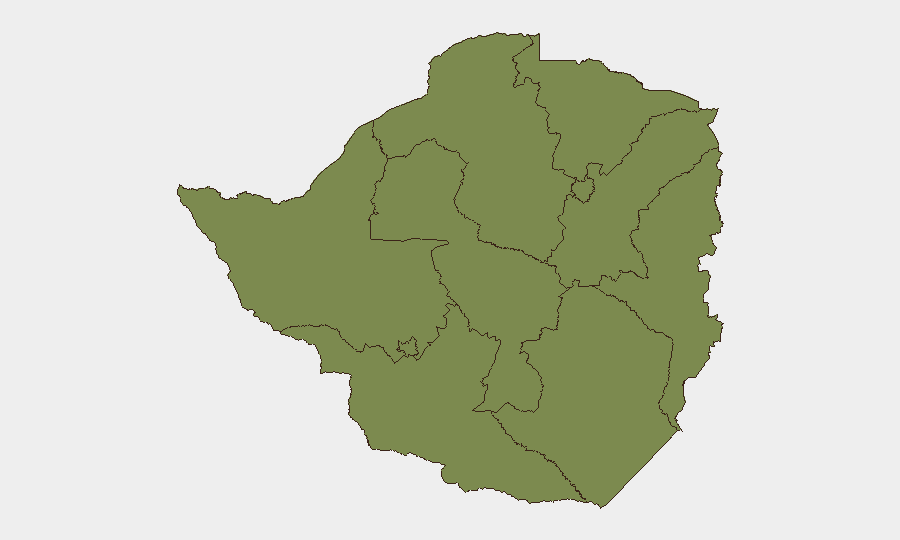
Situation Summary
Zimbabwe remains a composite threat rank #89 globally with 1,141 tracked events, reflecting chronic institutional fragility, economic strain, and periodic civil unrest. The security environment is heavily concentrated in Harare (risk score 31.4), where political tension, police operations, and protest activity create acute risk; nine provinces show significantly lower but uniform baseline risk (1.4 each). The trajectory is volatile but not currently in acute crisis phase, though planned protests scheduled for 31 July 2026 present a near-term flashpoint.
Key Developments
- No verifiably timestamped acute security incidents were confirmed in the last 24–48 hours across independent news, civil society, and OSINT channels. This represents a brief lull rather than de-escalation.
- Harare remains the dominant risk node, accounting for over 95% of national composite threat concentration; all other provinces cluster at baseline risk, indicating security pressure is almost entirely metropolitan and capital-focused.
- Police operations initiated 13–14 July 2026 (outside the 24–48h window) have created a chilling effect and elevated threat perception ahead of planned 31 July protests; arrest reports and witness accounts of security-force tactics remain in circulation but no new enforcement actions were timestamped in the last two days.
- Planned 31 July 2026 protest activity is generating pre-event tension and reports of intimidation and voluntary displacement in activist networks; no confirmed new incidents in the last 48 hours, but heightened alert posture among civil-society actors.
- Public statements by government and community actors (23 July) reflect ongoing rhetorical positioning but do not indicate imminent operational escalation in the immediate 24–48h window.
Highest-Risk Areas
Harare's risk score of 31.4 is more than 22 times that of any other jurisdiction, reflecting its status as the political, security, and media epicenter. The capital concentrates protest organizing, police/military presence, media coverage, and elite competition. Nine provinces (Mashonaland West, Matabeleland South, Masvingo, Matabeleland North, Midlands, Bulawayo, Mashonaland Central, Mashonaland East, and Manicaland) all register 1.4, suggesting baseline governance and criminal risk with no acute concentration. Organizations with personnel or assets in Harare face significantly higher exposure to civil unrest, protest-related disruption, and state security operations than those in provincial locations.
How GeoBit Would Assist
Teams should deploy Area-of-Interest (AOI) Monitoring & Early Warning on Harare (especially protest assembly points and security-force concentrations) and OSINT Fusion across X/Twitter, Telegram, and local news to detect real-time protest mobilization, police positioning, and arrest reporting. Intel Sweep and multi-language sentiment analysis will identify shift in activist and official rhetoric that precedes operational moves. Routing & Network Analysis can identify alternative travel corridors and safe zones around planned 31 July events; Event Feed Intelligence will provide sub-24-hour alerting on confirmed incidents, allowing duty-of-care teams to adjust personnel movement or facility lockdown.
7-Day Outlook
The 31 July protest date is the primary near-term risk driver. Security forces have demonstrated willingness to conduct pre-event arrests and intimidation; escalation risk peaks on the protest date itself and the 48 hours following. Barring significant unforeseen political shock, Harare will remain the sole acute-risk jurisdiction; provincial risk is expected to remain stable at baseline. Organizations should assume heightened disruption risk in the capital through early August.
Highest-Risk Areas — Ranked
| # | State / Region | Risk |
|---|---|---|
| 1 | Harare | 31.4 |
| 2 | Mashonaland West Province | 1.4 |
| 3 | Matabeleland South Province | 1.4 |
| 4 | Masvingo Province | 1.4 |
| 5 | Matabeleland North Province | 1.4 |
| 6 | Midlands Province | 1.4 |
| 7 | Bulawayo Province | 1.4 |
| 8 | Mashonaland Central Province | 1.4 |
| 9 | Mashonaland East Province | 1.4 |
| 10 | Manicaland Province | 1.4 |
Sources
Previous Daily Briefs
A new Zimbabwe brief is written every day — each with its own risk map and downloadable CSV. Here's the last week; use the calendar to go further back.
📅 Browse every day by calendar →
Highlighted days have a brief. Tap a day for that day's map & analysis, or “csv” for that day's dataset ($5).
Atlas — our AI intelligence desk — emails them this snapshot personally. Nothing else, no list.