Situation Summary
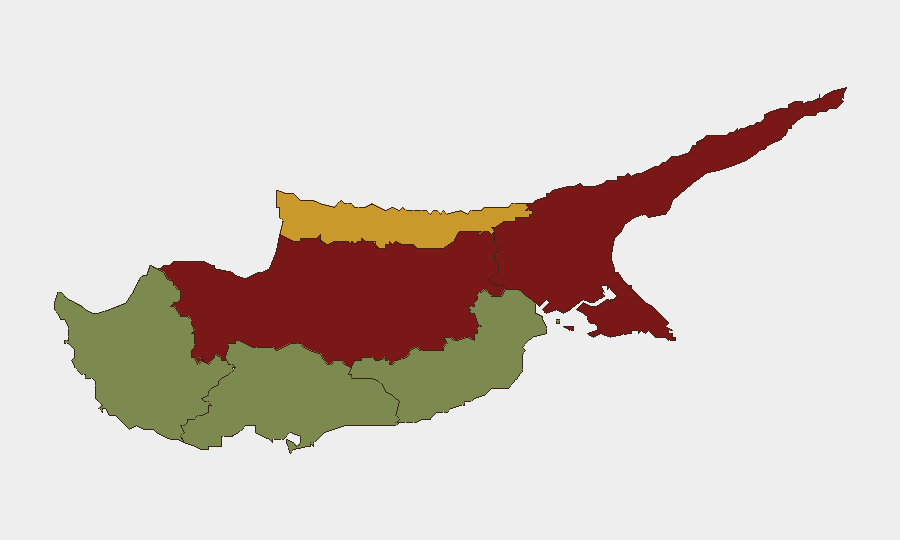
Cyprus remains a low-threat environment globally (ranking #173, composite score 6) with no tracked security events this week. However, significant geographic disparity exists: the Nicosia and Famagusta districts exhibit substantially elevated risk profiles (92 and 88 respectively), driven primarily by financial crime and cybercrime activity rather than physical security threats. Law enforcement response remains active and visible across the island.
Key Developments
- Nicosia, 16 October: Police, emergency services, and Central Bank security personnel conducted the full-scale "Chrysos 2026" counter-terrorism exercise, testing crisis procedures and critical infrastructure protection at the Central Bank.
- Nicosia, 16 October: The Central Bank exercise included police, ambulance service, fire brigade, and private bank security, simulating a terrorist incident affecting the nation's financial sector.
- Kalo Chorio, 15 October: The National Guard concluded the "Iris 2026" military exercise, which simulated enemy attack interception and territorial counterattack operations, incorporating unmanned drones for the first time.
- Nicosia, 6 October: Police arrested a 24-year-old in connection with SMS-phishing cases targeting elderly victims; two individuals aged 76 and 68 lost €3,963 and €770 respectively.
- Nicosia, 6 October: A 23-year-old man was arrested for unauthorized bank account access and theft of €34,600.
- Nationwide, 13–14 October: Preventive police patrols and checks resulted in 10 arrests for theft, illegal employment, criminal damage, fraud, intoxication, and causing alarm; officers stopped and checked 447 drivers and 101 passengers, with 35 premises inspected.
- Nationwide, 16–17 October: A subsequent police operation led to 11 arrests across the Republic for various alleged offenses.
Highest-Risk Areas
Nicosia and Famagusta districts substantially exceed national risk profiles, with composite scores of 92 and 88 respectively—driven almost exclusively by financial crime and cybercrime rather than political instability or organized violence. Kyrenia (72) follows as a secondary risk zone. By contrast, southern coastal regions including Larnaca, Limassol, and Paphos display substantially lower risk (28, 22, and 18 respectively), indicating that elevated threats concentrate in the northern and central island districts. Enterprises and individuals operating in Nicosia should expect elevated financial fraud and phishing activity targeting both consumers and banking infrastructure.
How GeoBit Would Assist
Organizations with personnel or assets in Cyprus should employ AOI Monitoring & Early Warning to track criminal and financial-crime activity in high-risk districts, particularly Nicosia and Famagusta, with real-time alerting on fraud, theft, and cybercrime patterns. OSINT Fusion & Corroboration across local news, police reports, and financial-sector intelligence would enable early detection of emerging phishing campaigns and account-compromise incidents before they affect staff or operations. Risk & Threat Assessment capabilities allow security teams to differentiate genuine infrastructure threats (such as counter-terrorism exercises) from operational risk and to tailor duty-of-care protocols by district.
7-Day Outlook
Law enforcement activity is expected to remain visible, with ongoing preventive patrols and criminal investigations. The completion of major counter-terrorism and military exercises suggests no imminent elevated physical security threat. Financial crime and SMS-phishing activity are likely to continue at current levels absent new disruptive law-enforcement operations; organizations should maintain heightened awareness of employee and customer fraud vectors.
Highest-Risk Areas — Ranked
| # | State / Region | Risk |
|---|---|---|
| 1 | Nicosia | 92 |
| 2 | Famagusta | 88 |
| 3 | Kyrenia | 72 |
| 4 | Larnaca | 28 |
| 5 | Limassol | 22 |
| 6 | Paphos | 18 |
Sources
Previous Weekly Briefs
A new Cyprus brief is written every Monday, covering the week — each with its own risk map and downloadable CSV. Use the calendar to go further back.
- October 12, 2026
- October 5, 2026
- September 28, 2026
- September 21, 2026
- September 14, 2026
- September 7, 2026
- August 31, 2026
📅 Browse past briefs by calendar →
Highlighted days have a brief. Tap a day for that day's map & analysis, or “csv” for that day's dataset ($5).
Atlas — our AI intelligence desk — emails them this snapshot personally. Nothing else, no list.