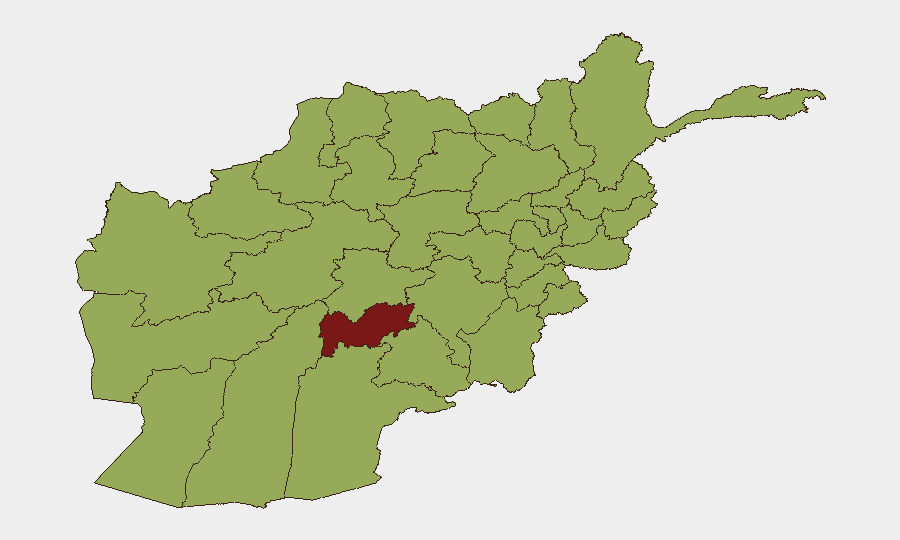
Situation Summary
Afghanistan remains a persistently fractious environment with composite threat rank #17 globally (score 75), driven primarily by active insurgency and Taliban governance instability. Recent developments signal simultaneous pressures on multiple fronts: civil-rights friction within Taliban-controlled territory, cross-border military escalation with Pakistan, and sustained international concern over terrorism emanating from Afghan soil. The security picture is neither rapidly deteriorating nor stabilizing; rather, it reflects chronic fragmentation across regional, factional, and civil-governance lines.
Key Developments
- Herat Province, 16 June (reported): Taliban authorities arrested at least 30 women for alleged dress-code violations; a rare public protest was forcibly dispersed, resulting in one death and multiple injuries. This marks visible civil unrest and potential flashpoint for broader dissent in a key urban center.
- Kabul / UN Security Council, 16 June: The UN Security Council unanimously renewed UNAMA's mandate through March 2027, explicitly tasking the mission with counterterrorism, human-rights monitoring (with specific focus on women and girls), and humanitarian-aid coordination. Council statements underscored Afghanistan as a regional terrorism source, signaling sustained international concern.
- Eastern/Southeastern Border (Khost, Paktika, Kunar), 16 June (reporting 10 June events): Pakistani airstrikes on Afghan territory targeting alleged militants marked a sharp escalation along the Afghanistan–Pakistan frontier, with regional analysts characterizing tensions as approaching "open war." This represents the most acute cross-border military risk in the current reporting window.
- Kabul / International Forum, 16 June: Russia and Taliban representatives publicly confirmed a new agreement to repair and maintain Soviet-era weapons systems in Afghanistan, signaling deepening security-sector cooperation and potential enhancement of Taliban military capacity.
- UN General Debate, 16 June: Pakistan's UN representative cited over 2,170 alleged terrorist incidents supported by actors based in Afghanistan, reinforcing international pressure on Taliban de facto authorities to suppress militant groups using Afghan territory for regional operations.
Highest-Risk Areas
Uruzgan Province stands as the singular highest-risk jurisdiction (82.5), followed by a cluster of four provinces at 54–54.8 (Herat, Ghazni, Kunduz) and a broader band of eight provinces at 52.5–53. Herat's elevated position reflects recent visible civil unrest and Taliban administrative friction; eastern and southeastern border provinces (Paktika, Khost, Kunar—not individually ranked in top 12 but implicit in recent events) carry acute cross-border conflict risk following Pakistani military action. The southern and western zones (Uruzgan, Helmand, Kandahar, Farah, Nimruz) remain associated with entrenched insurgency and drug-trafficking networks; northern provinces (Balkh, Jowzjan, Kunduz) face Taliban consolidation challenges and residual anti-Taliban militia activity.
How GeoBit Would Assist
Security teams should employ AOI Monitoring & Early Warning on Herat, Uruzgan, and eastern border zones to detect civil unrest, militant activity, or cross-border incidents in near-real time. Network & Actor Analysis combined with OSINT fusion (X/Telegram/YouTube intelligence, multi-language search) would track Taliban factional dynamics, Pakistani military posture changes, and militant-group communication shifts. Routing & Network Analysis supports duty-of-care teams in identifying alternative transit corridors and safe havens as cross-border tension escalates.
7-Day Outlook
Cross-border volatility with Pakistan will likely remain elevated; further Pakistani airstrikes or Taliban retaliation cannot be ruled out. Internal Taliban governance friction—evident in Herat's crackdown and civil response—may intensify as de facto authorities attempt to consolidate control. Humanitarian and NGO operations should anticipate restricted movement in border provinces and potential secondary impacts on Kabul access routes.
Highest-Risk Areas — Ranked
| # | State / Region | Risk |
|---|---|---|
| 1 | Uruzgan Province | 82.5 |
| 2 | Herat Province | 54.8 |
| 3 | Ghazni Province | 54.5 |
| 4 | Kunduz Province | 54.5 |
| 5 | Zabul Province | 53 |
| 6 | Helmand Province | 53 |
| 7 | Kandahar Province | 52.5 |
| 8 | Paktika Province | 52.5 |
| 9 | Farah Province | 52.5 |
| 10 | Nimruz Province | 52.5 |
| 11 | Jowzjan Province | 52.5 |
| 12 | Balkh Province | 52.5 |
Sources
Previous Daily Briefs
A new Afghanistan brief is written every day — each with its own risk map and downloadable CSV. Here's the last week; use the calendar to go further back.
📅 Browse every day by calendar →
Highlighted days have a brief. Tap a day for that day's map & analysis, or “csv” for that day's dataset ($5).