Situation Summary
Argentina's composite threat score of 46 places it at rank #44 globally, reflecting moderate-intensity political-institutional strain, localized labor unrest, and sporadic small-arms incidents concentrated in specific provinces. Recent signals (29 June–1 July) indicate escalating prosecutor–government conflict, inter-branch institutional friction, and worker mobilization overlaid on an already fractious political environment. The trajectory shows volatility rather than systemic collapse, but with acute flashpoints in Córdoba and Entre Ríos that warrant continuous monitoring.
Key Developments
- 2026-07-01 · Córdoba Province (implied primary locus): Small-arms combat involving student actors reported; Córdoba maintains highest sub-national risk score (62.4). No casualty or location specificity available from signal data.
- 2026-06-30 · National (government level): Small-arms combat reported involving government actors; context and location unconfirmed. This is the second armed incident flagged in 48 hours.
- 2026-06-29 · National (judiciary–executive): Mutual rejection and disapproval signals between prosecutor and government offices; indicates unresolved constitutional or investigative dispute. Prosecutor has rejected government position; government has reciprocated rejection.
- 2026-07-01 · National (labor/worker sector): Public statement by worker representatives flagged; consistent with earlier strike or mobilization signals from late June.
- 2026-07-01 · National (presidential/government communications): Public statements issued by both President and government; messaging suggests direct public engagement in response to pressure, typical of crisis communication.
- 2026-06-30 · National (legislature): Disapproval registered by representatives toward President; legislative–executive alignment fracturing.
Note: Signal data confirms event *occurrence* and *actor type* but does not provide granular incident narratives, casualty counts, or specific street-level locations. Live web research did not yield corroborating news reporting within the 24–48-hour window.
Highest-Risk Areas
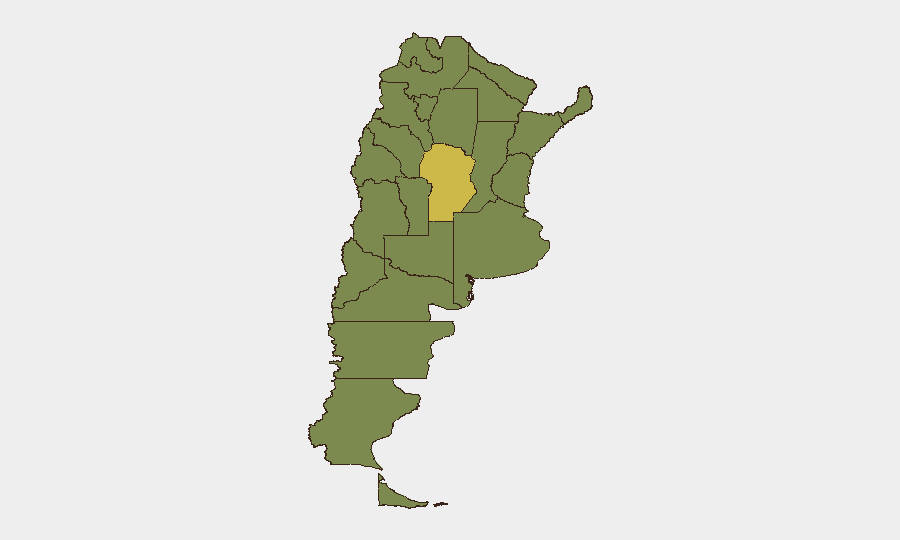
Córdoba Province (risk 62.4) is the dominant outlier, scoring nearly 30 points above the second-ranked Entre Ríos (35), suggesting concentrated institutional weakness, crime prevalence, or labor unrest in that jurisdiction. Entre Ríos, Buenos Aires (city), and the Buenos Aires Province cluster (scores 33.7–35) represent the secondary risk band; these regions encompass the capital, its metropolitan hinterland, and a northern corridor prone to criminal networks and contraband trafficking. Peripheral provinces (Chubut, Misiones, Santa Fe, Chaco) score between 32.6 and 32.8, indicating endemic but not acutely escalating risk. The interior concentration in Córdoba suggests either a localized institutional crisis or a reporting/event density artifact.
How GeoBit Would Assist
Security teams managing people or assets in Argentina should employ persistent area-of-interest (AOI) monitoring & early warning for Córdoba, greater Buenos Aires, and Rosario (Santa Fe), configured to trigger on small-arms incidents, strike activity, and prosecutor or judicial statements. Network & actor analysis would clarify the prosecutor–government dispute and identify which officials or factions are driving institutional friction. Multi-language OSINT fusion (X, Telegram, local news feeds, radio SIGINT) across these provinces would fill the current gap between signal detection and ground narrative, enabling duty-of-care teams to contextualize incidents and refine routing & alternative-transport planning for personnel.
7-Day Outlook
Institutional friction is likely to persist without signs of compromise; prosecutor–government disputes typically require weeks or months to resolve in Argentine politics. Labor mobilization may escalate if austerity or fiscal measures advance. Small-arms incidents appear sporadic rather than part of an organized campaign, but any escalation in Córdoba warrants immediate re-assessment of sub-national risk thresholds.
Highest-Risk Areas — Ranked
| # | State / Region | Risk |
|---|---|---|
| 1 | Córdoba | 62.4 |
| 2 | Entre Ríos Province | 35 |
| 3 | Autonomous City of Buenos Aires | 33.9 |
| 4 | Salta Province | 33.7 |
| 5 | Jujuy Province | 33.7 |
| 6 | Buenos Aires Province | 33.7 |
| 7 | Santiago del Estero Province | 33.3 |
| 8 | Mendoza Province | 32.8 |
| 9 | Chubut Province | 32.8 |
| 10 | Misiones | 32.6 |
| 11 | Santa Fe Province | 32.6 |
| 12 | Chaco Province | 32.6 |
Previous Daily Briefs
A new Argentina brief is written every day — each with its own risk map and downloadable CSV. Here's the last week; use the calendar to go further back.
📅 Browse every day by calendar →
Highlighted days have a brief. Tap a day for that day's map & analysis, or “csv” for that day's dataset ($5).