Situation Summary
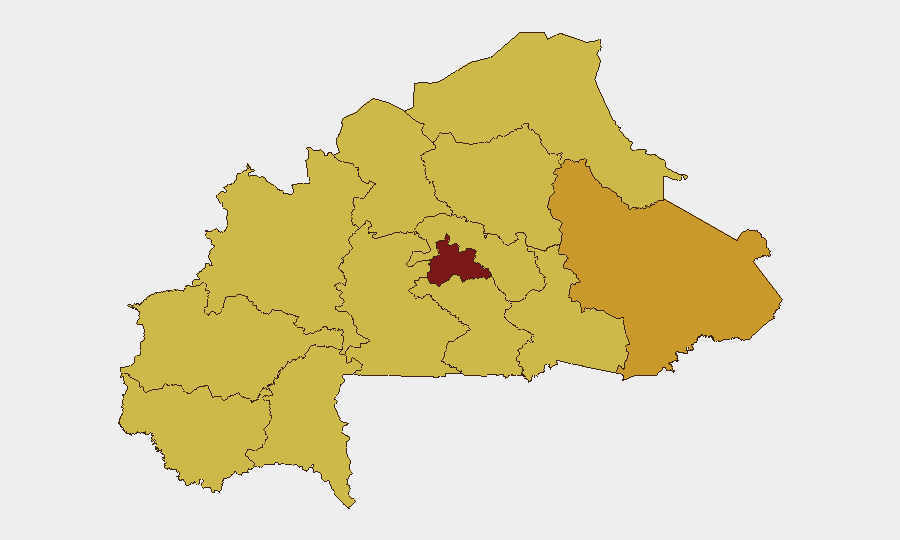
Burkina Faso remains at elevated security risk (composite threat score 91, rank #18 globally) with significant political and diplomatic friction surfacing in the last 24–48 hours. Centre region continues to dominate risk concentration (score 94), while 11 other regions cluster at elevated baseline (scores 64–71.5). Recent event signals indicate tension between domestic institutions (PM vs Parliament), US–Burkina relations strain (arrest/detain event), and deteriorating France–Burkina diplomatic posture, alongside security incidents involving unconventional violence and military activation. The trajectory reflects compounding institutional and geopolitical stress rather than acute singular crisis.
Key Developments
- 07-03 · Diplomatic friction (national): Burkina Faso–France relations formally reduced; event type indicates formal diplomatic downgrade or public statement of reduced cooperation.
- 07-03 · Digital/institutional dispute (national): Website vs Google investigation event recorded; context unclear but flagged as notable institutional or digital-domain tension.
- 07-02 · Governance strain (national): Prime Minister vs Parliament public statements recorded; indicates institutional disagreement on government direction or policy without resolution clarity.
- 07-02 · Military/security incident (location unspecified): Conventional military force deployed against activist(s); suggests law-enforcement or state response to protest or organized opposition activity.
- 07-02 · International relations (US–Burkina): US citizen or entity arrest/detain event; escalates bilateral friction and may signal immigration, diplomatic immunity, or security-related detention.
- 07-02 · Institutional conflict (unspecified): Unconventional violence between Prosecutor and Police recorded; indicates internal state security apparatus friction, possible arrest disputes or investigative conflict.
- 07-02 · Public dissent (multiple): Disapproval statement (UK), Bahama vs Parliament statement, and Airway sector statement; reflects broadening domestic and international criticism of current government posture.
Data limitation: Event summaries derive from GeoBit event signals; specific locations, actor identities, and causal details unavailable without live open-source corroboration. Security teams requiring granular incident detail should activate live OSINT and X/Twitter/Telegram monitoring.
Highest-Risk Areas
Centre region (risk 94) drives the national threat profile and warrants priority duty-of-care review; it encompasses the capital and core state institutions, making governance instability and security force activity operationally consequential for corporate presence. East region (71.5) represents secondary concentration, likely driven by armed group activity and cross-border spillover. The 10 remaining regions cluster uniformly at 64, indicating geographic distribution of underlying armed conflict, banditry, or jihadist presence rather than localized hotspots. Centre's institutional and diplomatic turbulence combined with persistent regional insurgency across the periphery suggests systemic rather than episodic threat.
How GeoBit Would Assist
Security teams should activate AOI Monitoring & Early Warning with persistent watch on Centre region (capital, government facilities, key infrastructure) and East region entry/exit routes; X/Twitter & Telegram OSINT and multi-language event feed monitoring would flag political statements, arrests, and military movements in real-time. Intel Sweep and conflict/terrorism/regime-stability search would triangulate political instability against armed-group activity, enabling risk-ranked movement and staffing decisions. GIS & spatial analysis of the regional risk ranking would inform route planning and facility siting decisions.
7-Day Outlook
Diplomatic and institutional tensions are likely to persist or deepen absent formal resolution (PM–Parliament, France–Burkina, US–Burkina); watch for escalation signals (further arrests, formal alliance shifts, military mobilization). Armed group activity in Centre and East regions will remain steady-state; any convergence between institutional instability and insurgent opportunity (e.g., security force distraction, territory loss) would escalate composite risk sharply. Personnel and asset movements should remain contingent on institutional stability signals over the next 7 days.
Highest-Risk Areas — Ranked
| # | State / Region | Risk |
|---|---|---|
| 1 | Centre | 94 |
| 2 | East | 71.5 |
| 3 | Upper-Basins | 64 |
| 4 | Boucle du Mouhoun | 64 |
| 5 | Central-West | 64 |
| 6 | Central-South | 64 |
| 7 | Central-East | 64 |
| 8 | Waterfalls | 64 |
| 9 | Southwest | 64 |
| 10 | Sahel | 64 |
| 11 | Central-North | 64 |
| 12 | North | 64 |
Previous Daily Briefs
A new Burkina Faso brief is written every day — each with its own risk map and downloadable CSV. Here's the last week; use the calendar to go further back.
📅 Browse every day by calendar →
Highlighted days have a brief. Tap a day for that day's map & analysis, or “csv” for that day's dataset ($5).