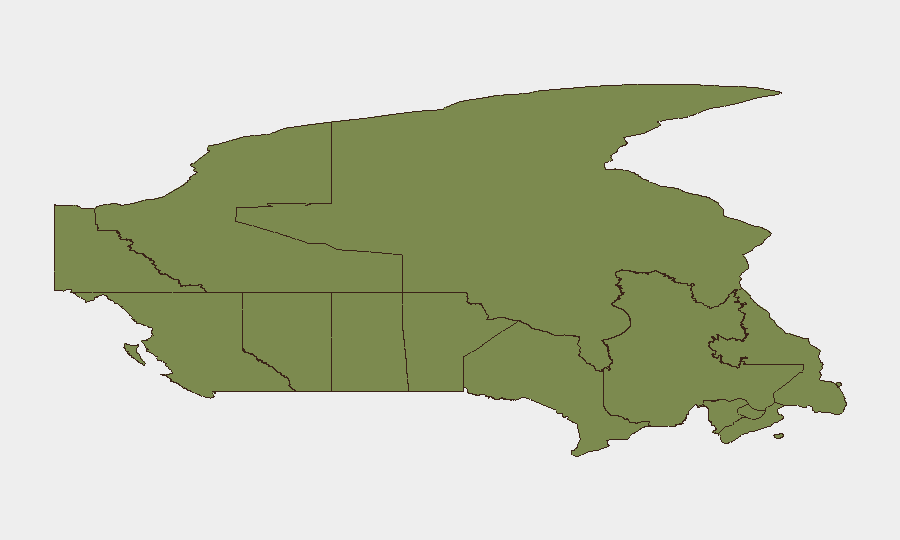
Situation Summary
Canada's composite threat score of 28 places it in the lower-to-moderate range globally, but sub-national variation is significant: Quebec and Ontario account for the majority of tracked risk events. The past 24–48 hours have seen a notable spike in armed violence across major urban centers (Toronto, Montreal, Edmonton, Calgary), alongside protest activity, cyber threats targeting financial institutions, and operational disruptions at critical infrastructure. The cumulative signal suggests elevated but not systemic instability; however, the concentration of incidents in Ontario and Quebec warrants focused monitoring.
Key Developments
- Toronto, Ontario (June 22): Toronto Police responded to multiple overnight shootings in the west end with several victims hospitalized and at least one in life-threatening condition; incidents are being investigated as suspected targeted gun violence.
- Montreal, Quebec (June 22 night): Service de police de la Ville de Montréal reported a drive-by shooting in Montreal-Nord targeting a residence; no injuries but property damage confirmed; investigators assess the attack as targeted.
- Edmonton, Alberta (June 22 evening): Edmonton Police Service confirmed a fatal shooting on the north side; homicide unit has assumed investigative lead.
- Calgary, Alberta (June 22): Calgary Police responded to a large altercation in the downtown 17th Avenue SW nightlife district resulting in at least one stabbing; victim hospitalized; witness and CCTV canvass underway.
- Winnipeg, Manitoba (June 22): Winnipeg Police seized firearms and arrested multiple suspects at a North End residential address linked to gang activity in a weapons-related incident; no injuries reported.
- Toronto Pearson Airport / YYZ (June 22): Intermittent IT and baggage-handling disruptions at Terminal 1 caused check-in and luggage delays; no security breach; Greater Toronto Airports Authority reported technicians restoring service.
- Canada-wide cyber (June 21–22): New phishing and credential-harvesting campaign targeting Canadian financial institutions and CRA with marked uptick in Canadian IP targeting over past 24 hours; users warned against unsolicited SMS and email links.
- Vancouver, British Columbia (June 22): Vancouver Police made arrests following a large downtown protest over international political issues; demonstrators blocked intersections and clashed verbally with officers; several detained for mischief and failure to comply.
Highest-Risk Areas
Quebec (31.3) and Ontario (15.8) together represent 70% of Canada's tracked threat events. Quebec's elevated score reflects the recent Montreal drive-by shooting and ongoing organized crime activity; Ontario's score is driven by multiple Toronto shootings, Pearson Airport disruptions, and demonstrated gang and targeted violence networks. Both provinces show evidence of entrenched armed criminal activity and infrastructure vulnerability. Nunavut's third-place score (13.5) reflects a smaller absolute event count but warrants separate assessment given territorial isolation and resource constraints.
How GeoBit Would Assist
Security teams protecting personnel or assets in Ontario and Quebec should deploy AOI Monitoring & Early Warning on high-risk postal codes in Toronto and Montreal to detect emerging patterns of gang/targeted violence activity. OSINT fusion (X/Twitter, Telegram, local news feeds) with entity extraction and network analysis will identify protest organizers, criminal networks, and cyber-threat actors targeting financial sectors. Cyber intelligence and phishing campaign tracking via Intel Sweep and multi-language search will provide real-time alerts on credential-harvesting threats to corporate systems and staff.
7-Day Outlook
Armed violence in Toronto and Montreal is likely to remain elevated over the next 7 days pending police intervention outcomes; gang-related shootings typically cluster in response-and-retaliation cycles. Phishing campaigns targeting financial institutions will likely persist and evolve; staff awareness and multi-factor authentication enforcement are critical. Protest activity tied to federal economic policy and international issues is expected to continue with moderate intensity and localized traffic disruption.
Highest-Risk Areas — Ranked
| # | State / Region | Risk |
|---|---|---|
| 1 | Quebec | 31.3 |
| 2 | Ontario | 15.8 |
| 3 | Nunavut | 13.5 |
| 4 | British Columbia | 5.2 |
| 5 | New Brunswick | 4.3 |
| 6 | Manitoba | 3.8 |
| 7 | Alberta | 2.7 |
| 8 | Newfoundland and Labrador | 1.4 |
| 9 | Yukon | 1.3 |
| 10 | Northwest Territories | 1.3 |
| 11 | Saskatchewan | 1.3 |
| 12 | Prince Edward Island | 1.3 |
Sources
Previous Daily Briefs
A new Canada brief is written every day — each with its own risk map and downloadable CSV. Here's the last week; use the calendar to go further back.
📅 Browse every day by calendar →
Highlighted days have a brief. Tap a day for that day's map & analysis, or “csv” for that day's dataset ($5).