Situation Summary
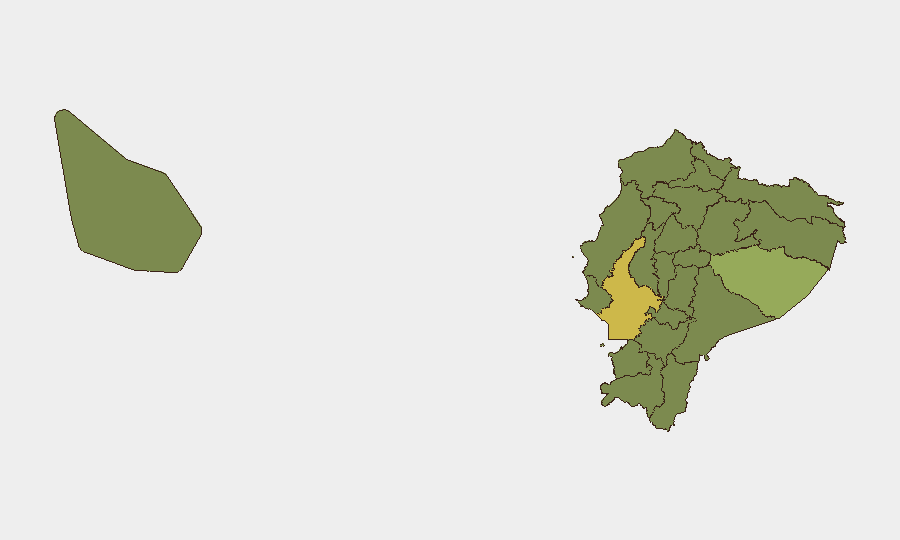
Ecuador faces elevated organized-crime and institutional instability pressures, with a composite threat score of 48 (rank #42 globally) driven by narcotrafficking, gang violence, and recent state-of-exception declarations. Guayas Province—home to the port city of Guayaquil and critical economic infrastructure—remains the highest-risk sub-national zone (score 63.5) and is the focus of intensified security responses. Intelligence signals from 16–18 June indicate friction between military and police structures, demands directed at mayors and companies, and rejection of institutional directives, suggesting coordination breakdowns during crisis response. The trajectory is tightening rather than de-escalating.
Key Developments
- National | 2026-06-18 — President Daniel Noboa declared a new state of exception across multiple provinces and cantons (exact jurisdictions pending confirmation) in response to organized-crime escalation. This supersedes or augments prior emergency measures and signals government recognition of worsening control in high-risk zones.
- Guayaquil (Guayas Province) | 2026-06-17–18 — Reports of surging violence in Guayaquil align with the province's #1 risk ranking; specific incident details remain under investigation, but the spike correlates with cartel activity and turf disputes in the port district.
- Institutional | 2026-06-17 — Military and police structures issued conflicting directives and threats toward one another (per event signal), suggesting operational friction during emergency response and potential command-coordination failures at the tactical level.
- Local governance | 2026-06-16 — Mayors and companies received formal demands from government and military entities; simultaneous rejections of directives by corporate actors indicate non-compliance or resource constraints in compliance.
- Executive level | 2026-06-17 — Presidential demand directed at Ecuador (broad national scope) suggests senior-level intervention on an unspecified priority; context hints at narcotrafficking, defense policy, or institutional restructuring.
- Military activity | 2026-06-16 — Military investigation initiated; scope and targets not yet detailed in available signals, but timing aligns with state-of-exception activation.
Highest-Risk Areas
Guayas Province dominates the risk landscape (63.5), driven by Guayaquil's role as Ecuador's primary port, dense urban population, and entrenched cartel logistics networks competing for cocaine and precursor-chemical transit. Pastaza Province (50.5)—in the Amazon region—ranks second, reflecting border instability, illegal mining, and cross-border trafficking from Peru and Colombia. Together, these two provinces account for disproportionate violence and criminal organization activity. Carchi, Napo, Sucumbíos, and Orellana provinces border Colombia and Peru, amplifying transit-route risk and armed-group presence. Pichincha Province (34.3, home to Quito) shows moderate-to-elevated risk driven by gang consolidation in urban peripheries and political volatility at the national seat.
How GeoBit Would Assist
Security teams should deploy persistent area-of-interest monitoring on Guayaquil port, major transit corridors in Pastaza and Sucumbíos, and key corporate facilities to detect movement, checkpoints, and gang activity in real time. OSINT fusion (X, Telegram, local news, radio SIGINT) will disambiguate fragmented signals from military, police, and government actors and clarify the scope and enforcement timeline of the state-of-exception order. Network & actor analysis will map cartel command structures and identify which gangs are consolidating or fracturing during the current pressure campaign, enabling duty-of-care teams to assess exposure by location and supplier/partner profile.
7-Day Outlook
The state-of-exception declaration and military-police coordination tensions suggest a 7–10 day period of heightened enforcement activity, checkpoints, and potential collateral disruption to commerce and movement. Further gang violence or cartel retaliation is probable as organizations test state capacity and compete for control. Escalation risk is moderate to high if military operations encounter armed resistance or if institutional friction prevents unified response.
Highest-Risk Areas — Ranked
| # | State / Region | Risk |
|---|---|---|
| 1 | Guayas Province | 63.5 |
| 2 | Pastaza Province | 50.5 |
| 3 | Carchi Province | 36.2 |
| 4 | Napo Province | 35.1 |
| 5 | Pichincha Province | 34.3 |
| 6 | Cañar Province | 34.1 |
| 7 | Manabí Province | 33.9 |
| 8 | Santa Elena Province | 33.9 |
| 9 | Los Ríos Province | 33.7 |
| 10 | Azuay Province | 33.7 |
| 11 | Sucumbíos Province | 33.5 |
| 12 | Orellana Province | 33.5 |
Sources
Previous Daily Briefs
A new Ecuador brief is written every day — each with its own risk map and downloadable CSV. Here's the last week; use the calendar to go further back.
📅 Browse every day by calendar →
Highlighted days have a brief. Tap a day for that day's map & analysis, or “csv” for that day's dataset ($5).