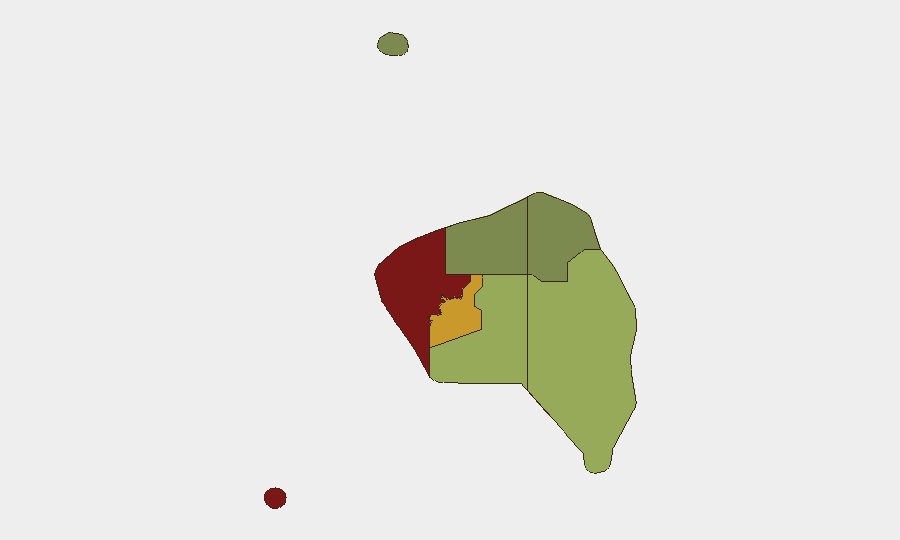
Situation Summary
Fiji remains at low overall threat, with no verified security incidents, civil unrest, major crime events, or travel disruptions recorded in the past 24–48 hours. Political and constitutional discourse continues to characterize the risk environment, but without escalation into protests or widespread disorder. Seismic activity (M4.6–M5.8) in offshore waters poses a background natural-hazard risk but has generated no tsunami alerts, casualties, or port disruptions. The country's security posture remains stable under standard precautions.
Key Developments
- Countrywide (last 24–48 hours): No verified security incidents, civil unrest, major crime spikes, infrastructure failures, or travel disruptions reported; threat level remains low with no new official advisories or restrictions issued.
- Offshore Fiji region (recent seismic window): M4.6 earthquake recorded south of the Fiji Islands, consistent with broader M5.8 and M4.5 undersea seismic activity in the region; no tsunami warnings, coastal disruptions, or operational impact to ports or maritime traffic.
- Countrywide (online environment, last 24–48 hours): Political and constitutional debate continues in open-source discourse and media; no escalation into organized protests, social mobilization, or violence during the current monitoring window.
- Law-and-order posture (ongoing, last 24–48 hours): Standard emergency services remain operational; regional and travel advisories maintain "exercise normal safety precautions" guidance with no heightened alerts.
Highest-Risk Areas
Western region (risk 85) and Central region (risk 72) drive the majority of Fiji's sub-national risk profile, reflecting a combination of factors including persistent political sensitivity, historical governance tensions, and socioeconomic conditions that create baseline vulnerability to civil unrest. Eastern (45), Northern (38), and Rotuma (12) carry materially lower risk scores. The concentration in Western and Central regions indicates that corporate security teams with personnel or assets in those areas should maintain heightened situational awareness and contingency protocols, while Eastern and Northern operations face comparatively lower incident probability.
How GeoBit Would Assist
Security teams operating in Fiji should employ Intel Sweep and multi-language OSINT feeds to monitor political discourse, constitutional debate, and early signals of social mobilization before public escalation. AOI Monitoring & Early Warning capability, paired with sentiment and temporal analysis, enables persistent watch on Western and Central regions with real-time alerting if event signals shift. Conflict and regime-stability search, combined with maritime and aviation tracking, can support duty-of-care assessment for personnel transit, asset movement, and contingency routing—particularly valuable if seismic activity intensifies or political temperatures rise.
7-Day Outlook
No significant change in threat trajectory is forecast for the next 7 days. Political discourse is expected to continue without major escalation into organized unrest or violence. Seismic activity remains a secondary monitoring concern; while offshore earthquakes are routine in the region, any notable increase in magnitude or coastal impact would warrant rapid reassessment. Corporate operations should maintain baseline precautions and continue routine monitoring of political and natural-hazard developments.
Highest-Risk Areas — Ranked
| # | State / Region | Risk |
|---|---|---|
| 1 | Western | 85 |
| 2 | Central | 72 |
| 3 | Eastern | 45 |
| 4 | Northern | 38 |
| 5 | Rotuma | 12 |
Sources
Previous Daily Briefs
A new Fiji brief is written every day — each with its own risk map and downloadable CSV. Here's the last week; use the calendar to go further back.
📅 Browse every day by calendar →
Highlighted days have a brief. Tap a day for that day's map & analysis, or “csv” for that day's dataset ($5).
Atlas — our AI intelligence desk — emails them this snapshot personally. Nothing else, no list.