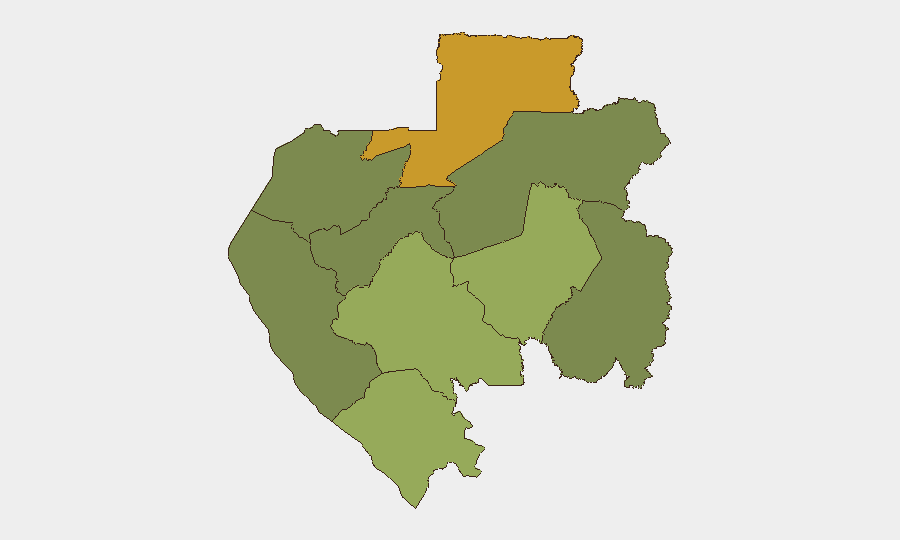
Situation Summary
Gabon remains a stable, low-threat environment regionally, ranking #41 globally with a composite threat score of 48. No active conflict, widespread civil unrest, or security crises are currently documented. The security landscape is shaped by historical factors—including the August 2023 military coup and subsequent political consolidation—but day-to-day risks to corporate operations and personnel remain contained and localized to specific provinces in the northeast and interior regions.
Key Developments
No reliably verified, location-specific security incidents in Gabon were identified in the last 24–48 hours from cross-confirmed open-source reporting. A single signal tagged 2026-06-30 references unconventional violence involving a police officer; however, additional details (location, context, corroboration) are not available in current feeds to support operational briefing. Web research covering the past two days yielded development, governance, and trade-focused content but no confirmed civil unrest, crime spikes, infrastructure disruptions, or conflict events meeting verification thresholds.
Organizations are advised to monitor local media and diplomatic channels for any updates, but no actionable alerts are warranted at this time.
Highest-Risk Areas
Woleu-Ntem Province (risk 72) in the far northeast presents the highest composite threat score, driven by border adjacency, remoteness, and historical trafficking and smuggling activity. Ogooué-Lolo Province (58) in the central-interior region presents secondary risk from similar geography and limited state presence. These two provinces account for the majority of Gabon's subnational risk; all other provinces score significantly lower, with Estuaire Province (home to the capital, Libreville) at only 15 and Ogooué-Ivindo at 0.
Risk in the northeast is primarily associated with criminal networks and informal cross-border movement rather than organized political violence or civil unrest. Personnel and assets in Libreville, coastal zones, and southern provinces face minimal threat relative to the national average.
How GeoBit Would Assist
Security teams with ongoing presence in Gabon should deploy AOI (Area-of-Interest) Monitoring & Early Warning focused on Woleu-Ntem and Ogooué-Lolo to detect emerging trafficking, criminal, or cross-border incidents in real time. Multi-language OSINT (X/Twitter, Telegram, local radio SIGINT, and YouTube intelligence) would surface local-language alerts and official announcements before they reach international media, enabling faster duty-of-care response. Network & Actor Analysis can map criminal and smuggling organizations operating in border zones to support travel-restriction and supply-chain decisions.
7-Day Outlook
No major security inflection points are forecast for the coming week. Gabon's post-coup political transition remains stable; routine criminal activity (trafficking, petty crime) will persist in border provinces but poses manageable risk to corporate operations. Teams should maintain standard security postures and leverage persistent monitoring tools to detect any deviation from the current baseline.
Highest-Risk Areas — Ranked
| # | State / Region | Risk |
|---|---|---|
| 1 | Woleu-Ntem | 72 |
| 2 | Ogooué-Lolo Province | 58 |
| 3 | Ngounié Province | 48 |
| 4 | Nyanga Province | 42 |
| 5 | Haut-Ogooué Province | 35 |
| 6 | Moyen-Ogooué Province | 28 |
| 7 | Ogooué-Maritime Province | 25 |
| 8 | Estuaire Province | 15 |
| 9 | Ogooué-Ivindo | 0 |
Sources
Previous Daily Briefs
A new Gabon brief is written every day — each with its own risk map and downloadable CSV. Here's the last week; use the calendar to go further back.
📅 Browse every day by calendar →
Highlighted days have a brief. Tap a day for that day's map & analysis, or “csv” for that day's dataset ($5).