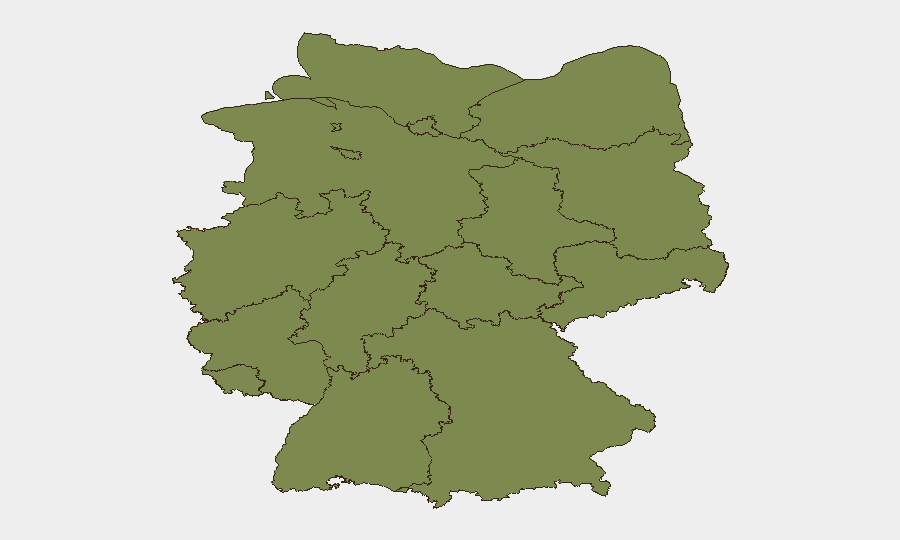
Situation Summary
Germany remains a moderate-risk environment (global rank #125, composite score 6) with 104 tracked threat events. The security picture is characterized by a sharp geographic concentration of risk in Thuringia (score 33.6), which significantly outpaces all other regions and signals localized instability, alongside baseline civil-unrest and protest activity. Recent signals (2026-07-05) indicate police-protester confrontations, public statements by multiple actors including employees and congressional figures, arrests linked to Russian activity, and military-adjacent incidents. The overall trajectory suggests episodic rather than systemic instability, but with notable geographic disparities requiring targeted monitoring.
Key Developments
- Thuringia — 2026-07-05: Multiple incidents including police-protester confrontations (Conventional Military Force signals, both directions), arrests by Russian-linked entities, and garrison-level investigations. This represents the primary driver of Germany's elevated threat score and warrants urgent clarification of underlying causes.
- Hamburg & Berlin — 2026-07-05: Congressional demonstrations and related public statements recorded; Hamburg ranks second nationally in regional risk (6.6), suggesting sustained protest/political tension in northern urban centers.
- Multi-state — 2026-07-05: Obstruction of passage by protesters against Deutschland entities, coupled with demands directed at banking sector and presidential disapproval signals, indicate coordinated or copycat civil action.
- Stade (Northern Germany) — date uncertain: DW reporting indicates a firearms incident resulting in multiple fatalities, described as an "extended family tragedy" with two arrests. Precise date and motive remain unclear from available sources.
- Russia-linked arrests — 2026-07-05: Arrest/detain events attributed to Russian actors on German soil may indicate espionage, sabotage, or state-sponsored operations consistent with BfV warnings (as of 2026-06-30).
- Cyber/infrastructure signals — 2026-07-05: Server-related public statements suggest possible IT incident, breach, or outage affecting a corporate or governmental entity; motive and scope unconfirmed.
Note: Web research coverage for the last 24–48 hours is incomplete. The above reflects GeoBit event signals dated 2026-07-05 and one unverified firearms incident. Additional source confirmation is recommended.
Highest-Risk Areas
Thuringia's risk score of 33.6 is exceptional and approximately five times higher than Hamburg (6.6) and Berlin (6.0), the next-highest regions. This concentration suggests a localized political, social, or security crisis rather than diffuse national instability. Lower Saxony, Bavaria, and North Rhine-Westphalia show moderate baseline risk (3.6–5.5), typical of large, urban-industrial states with periodic protest activity. Western and southern regions (Baden-Württemberg, Rhineland-Palatinate) remain comparatively stable. Risk assessment teams should treat Thuringia as a discrete area of heightened concern, while maintaining standard monitoring protocols for Hamburg and Berlin due to their capital and port status.
How GeoBit Would Assist
Corporate security teams would employ Intel Sweep and multi-language OSINT (Twitter, Telegram, local news feeds) to track emerging protest activity and extremist signaling in real time, with sentiment and temporal analysis to forecast escalation. AOI Monitoring with persistent alerting on Thuringia, Hamburg, and Berlin would provide early warning of new incidents before they affect operations. Network and Actor Analysis would clarify Russian involvement in recent arrests and assess supply-chain or intelligence-collection risks to assets.
7-Day Outlook
Near-term risk is likely to remain episodic, with Thuringia requiring continuous monitoring for further police-protester clashes or security operations. If Russian or foreign-linked arrests indicate coordinated espionage or sabotage activity, escalation pressure may increase in Berlin and other federal centers. Protest activity across northern and central regions may persist around unresolved political or labor grievances; widespread disruption is not anticipated absent major triggering events.
Highest-Risk Areas — Ranked
| # | State / Region | Risk |
|---|---|---|
| 1 | Thuringia | 33.6 |
| 2 | Hamburg | 6.6 |
| 3 | Berlin | 6 |
| 4 | Lower Saxony | 5.5 |
| 5 | Bavaria | 4.7 |
| 6 | North Rhine-Westphalia | 4.3 |
| 7 | Mecklenburg-Vorpommern | 4 |
| 8 | Saxony | 4 |
| 9 | Baden-Württemberg | 3.8 |
| 10 | Rhineland-Palatinate | 3.6 |
| 11 | Schleswig-Holstein | 3.6 |
| 12 | Saxony-Anhalt | 3.6 |
Sources
Previous Daily Briefs
A new Germany brief is written every day — each with its own risk map and downloadable CSV. Here's the last week; use the calendar to go further back.
📅 Browse every day by calendar →
Highlighted days have a brief. Tap a day for that day's map & analysis, or “csv” for that day's dataset ($5).
Atlas — our AI intelligence desk — emails them this snapshot personally. Nothing else, no list.