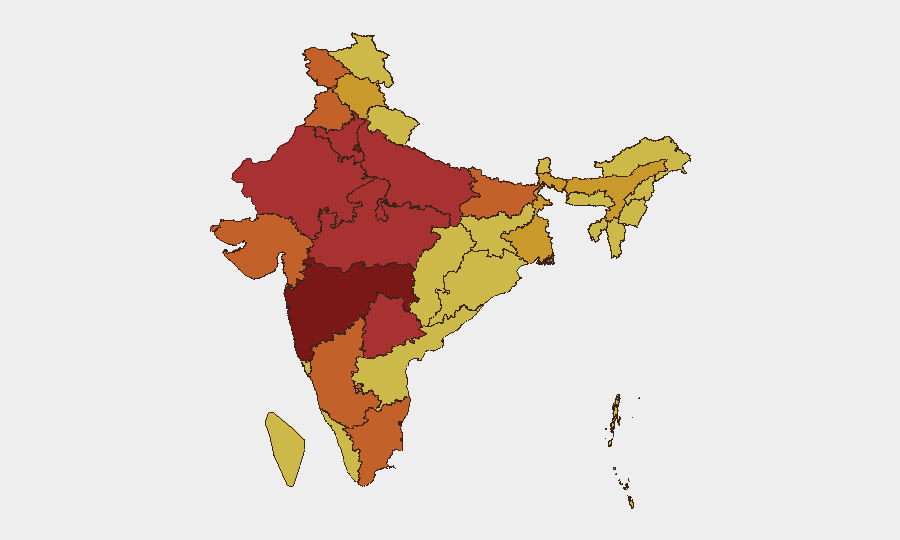
Situation Summary
India remains the highest-ranked threat environment globally (composite score 100), with 1,338 tracked events reflecting elevated operational, civil, cyber, and security-service activity across major population centers. The past 48 hours have seen convergence of hoax-based threats (school bomb threats), critical cyber vulnerabilities affecting enterprise infrastructure, alleged data breaches at high-technology firms, heightened official security protocols around defence meetings, and localized civil unrest near university areas. The threat picture is volatile and geographically dispersed rather than concentrated, with both transient hoax activity and structural cyber-risk escalation warranting active monitoring.
Key Developments
- Bengaluru, Karnataka – 27 June: Approximately 40 bomb-threat emails received across multiple schools; police investigation found no credible threat, but enhanced security and monitoring remain in place at affected institutions.
- Nationwide IT sector – 26–27 June: New Splunk product vulnerabilities disclosed and actively incorporated into exploit toolchains; Indian cybersecurity bodies warned of urgent patching requirement for organizations relying on Splunk for logging and monitoring to avoid detection and response capability compromise.
- Major Indian cities (online) – 26–27 June: Following claimed data breach at Tata Electronics involving sensitive design and trade-secret information for global clients, security analysts flagged elevated cyber risk for Indian high-tech and manufacturing sectors and heightened vigilance for follow-on attacks and data leakage.
- New Delhi – 27 June: Government of India confirmed high-level defence and maritime security meetings with Seychelles leadership (27–29 June) focused on Indian Ocean sea-lanes security; heightened security postures implemented at related official venues.
- University and central urban areas – 27 June: Youth-led street protests documented against central government policies in several cities; civil unrest risk identified near university districts and central commercial areas where marches and demonstrations were organized.
Highest-Risk Areas
Maharashtra (risk 100) and Delhi (83.6) remain the epicenters of tracked threat activity, driven by police investigations, government scrutiny of business and hospital operations, and public-statement escalation. The tier-two cluster—Uttar Pradesh (77.6), Haryana (77.4), Telangana (76.7), and Rajasthan (76.5)—reflects sustained operational friction, investigative activity, and demand-based civil signals. Jammu and Kashmir (73.9) and Karnataka (73.9) round the critical-risk set, with Karnataka's recent bomb-threat wave adding acute but likely short-term tactical risk. The consistency of risk across the top 12 states suggests systemic rather than localized drivers: government accountability scrutiny, civil-society mobilization, and police/investigative activity are national phenomena, while cyber vulnerabilities affect all major IT hubs simultaneously.
How GeoBit Would Assist
Real-time AOI Monitoring & Early Warning on Maharashtra, Delhi, and Uttar Pradesh would provide persistent detection of escalating civil unrest, police activity, and demand signals before tactical harm occurs. Intel Sweep and multi-language OSINT fusion across X/Twitter, Telegram, and local media channels would corroborate hoax-threat attribution and identify copycat or follow-on bomb-threat campaigns affecting schools or corporate offices. Cyber threat tracking (via monitored Splunk vulnerability chatter and vendor bulletins) combined with entity extraction and network analysis would map which Indian enterprises remain unpatched and at risk of data breach, enabling proactive duty-of-care escalation.
7-Day Outlook
School threat activity will likely diminish as investigation concludes and hoax attribution solidifies, but enterprise Splunk patching cycles will lag, sustaining cyber-compromise risk through early July. Defence meetings (27–29 June) and related official security protocols will subsume for three days; civil unrest near universities is expected to persist in low-intensity form absent major policy reversal. Cyber-incident fallout from Tata Electronics breach may generate secondary leaks or copy-cat targeting of other technology firms mid-week.
Highest-Risk Areas — Ranked
| # | State / Region | Risk |
|---|---|---|
| 1 | Maharashtra | 100 |
| 2 | Delhi | 83.6 |
| 3 | Uttar Pradesh | 77.6 |
| 4 | Haryana | 77.4 |
| 5 | Telangana | 76.7 |
| 6 | Rajasthan | 76.5 |
| 7 | Madhya Pradesh | 76 |
| 8 | Punjab | 75.8 |
| 9 | Gujarat | 75.3 |
| 10 | Jammu and Kashmir | 73.9 |
| 11 | Karnataka | 73.9 |
| 12 | Tamil Nadu | 73.7 |
Sources
Previous Daily Briefs
A new India brief is written every day — each with its own risk map and downloadable CSV. Here's the last week; use the calendar to go further back.
📅 Browse every day by calendar →
Highlighted days have a brief. Tap a day for that day's map & analysis, or “csv” for that day's dataset ($5).