Situation Summary
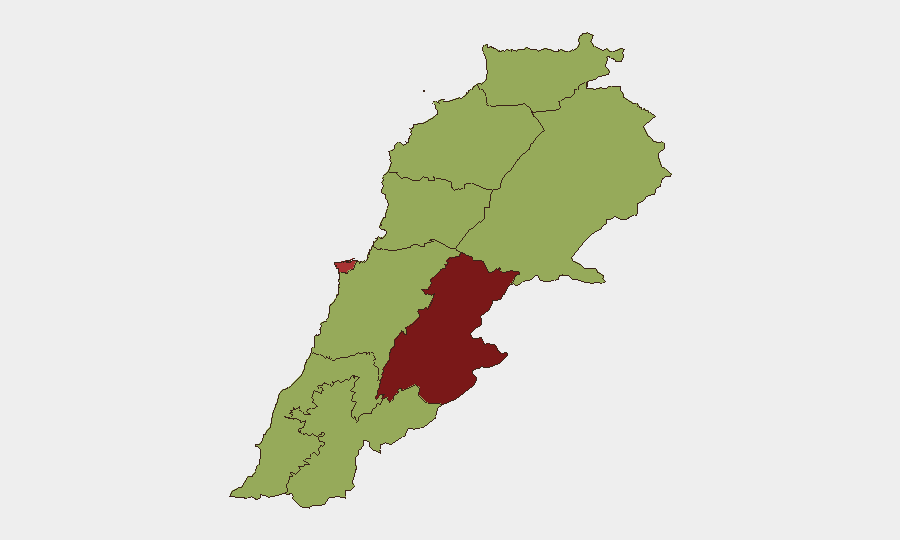
Lebanon remains under acute military pressure, with Israel conducting sustained strikes and ground operations in the south while Hezbollah and other actors maintain retaliatory fire. The Beqaa Governorate and Beirut carry the highest composite risk scores (89.4 and 76.2 respectively), reflecting both direct military activity and systemic instability. Displacement in border-adjacent areas is ongoing, and political fractures are widening as external actors—Iran, Yemen, and Israel—signal competing demands on Lebanese state and non-state actors.
Key Developments
- Southern Lebanon (South Governorate) – 16 June 2026 – Israeli airstrikes killed at least four people; Hezbollah responded with rocket fire toward IDF positions, followed by Israeli strikes on launcher sites.
- Southern border villages – 16 June 2026 – Lebanese army messaging advised displaced residents to delay return due to sustained security risk and ongoing IDF operations in declared security zones.
- Southern Lebanon (general) – 15 June 2026 – GeoBit reported intensified Israeli airstrikes and ground combat over the prior 48 hours, including airspace violations, projectile activity, and structure demolitions.
- Lebanon (national level) – 16 June 2026 – Official source and presidential statements issued; content and intent not fully resolved in available reporting but signal official-level engagement on security posture.
- Iran and Yemen signaling – 17 June 2026 – Iran issued an appeal and Yemen issued a threat directed at Lebanon, indicating external pressure and potential attempts to expand or exploit the conflict.
Highest-Risk Areas
The Beqaa Governorate (89.4) dominates the risk ranking and reflects both direct military activity and historically entrenched militant infrastructure. Beirut (76.2) follows, driven by proximity to strike zones, displacement influxes, and political volatility. The remaining seven governorates cluster at 59.4, with South Governorate, Nabatieh, and Baalbek-Hermel emerging as acute theaters due to sustained Israeli strikes, Hezbollah infrastructure, and displacement. Northern and Akkar regions face elevated spillover risk and cross-border instability.
How GeoBit Would Assist
Security teams managing personnel or assets in Lebanon would benefit from Intel Sweep and multi-language OSINT fusion to track daily military activity, statements, and displacement patterns across affected regions in real time. AOI Monitoring & Early Warning on the Beqaa, South Governorate, and border zones would provide persistent watch and alerting on strike patterns, movement, and civilian impact. Battle Mapping and force-structure tracking would enable situational awareness of Israeli, Lebanese, and non-state actor positioning, while Routing & Network Analysis would support duty-of-care decisions on evacuation routes and safe corridors for personnel.
7-Day Outlook
Israeli operations are likely to continue in southern Lebanon with sporadic Hezbollah and other actor responses; de-escalation signals are absent. Displacement pressures will mount if strikes persist, and external actors (Iran, Yemen, potentially others) will likely continue rhetorical or material pressure. The risk of accidental or deliberate escalation involving civilian infrastructure or cross-border incidents remains elevated.
Highest-Risk Areas — Ranked
| # | State / Region | Risk |
|---|---|---|
| 1 | Beqaa Governorate | 89.4 |
| 2 | Beirut Governorate | 76.2 |
| 3 | North Governorate | 59.4 |
| 4 | Akkar Governorate | 59.4 |
| 5 | Keserwan-Jbeil Governorate | 59.4 |
| 6 | Mount Lebanon Governorate | 59.4 |
| 7 | South Governorate | 59.4 |
| 8 | Nabatieh Governorate | 59.4 |
| 9 | Baalbek-Hermel Governorate | 59.4 |
Sources
Previous Daily Briefs
A new Lebanon brief is written every day — each with its own risk map and downloadable CSV. Here's the last week; use the calendar to go further back.
📅 Browse every day by calendar →
Highlighted days have a brief. Tap a day for that day's map & analysis, or “csv” for that day's dataset ($5).