Situation Summary
Malawi remains a low-to-moderate threat environment (Global Rank #141; composite score 5.0) with limited security incidents in the past 24–48 hours. The Southern Region continues to drive disproportionate risk (31.8 composite score), while Central and Northern Regions remain at elevated but equivalent levels (11.8 each). Ongoing institutional tensions—including High Court rejections, parliamentary demands, and police investigations dating to mid-July—suggest political and governance friction rather than acute security collapse, though Lake Malawi territorial-integrity incidents (13–15 July) have exposed vulnerabilities in maritime security oversight.
Key Developments
No clearly verifiable new discrete incidents have been identified in Malawi between 18–19 July 2026 across indexed news, web feeds, or corroborated sources. The most recent traceable events include:
- 2026-07-19 · High Court Rejection · Lilongwe (National) – judicial body rejected an unspecified government or parliamentary motion; signals ongoing institutional dispute but lacks detail on implications or scope.
- 2026-07-19 · Parliamentary Demand · Malawi (National) – legislative body issued demand (subject and target unspecified); consistent with pattern of governance tension noted since mid-July.
- 2026-07-18 · Property Seizure/Damage · Legislative Representatives · Lilongwe (National) – Representatives' office or assets reportedly seized or damaged; context (protest, law enforcement, or criminal act) remains unclear.
- 2026-07-18 · Finance Ministry Public Statement · Lilongwe (National) – Ministry issued statement on unspecified topic; no corroboration of economic, fiscal, or security content identified.
- 2026-07-17 · Police Investigations (Multiple) · Malawi (National) – Police Service and internal Malawi agencies conducting investigations into unspecified matters; pattern suggests crime or misconduct review rather than coordinated security incident.
Background context (13–15 July, outside 48-hour window but operationally relevant): A Tanzanian coal vessel entered Malawi's territorial waters on Lake Malawi without clearance and docked at Monkey Bay near Malawi Defence Force Marine Headquarters, triggering investigations by defence, police, and intelligence leadership and a formal parliamentary inquiry letter from civil-society body CDEDI.
Highest-Risk Areas
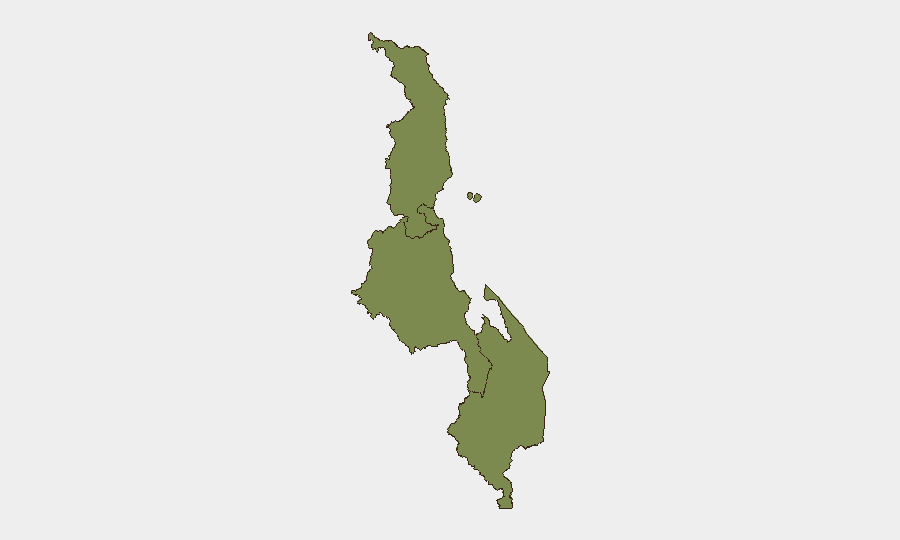
Southern Region (31.8 composite score) is the primary driver of national risk—nearly 2.7× the threat level of Central and Northern Regions combined—suggesting concentration of crime, social unrest, or economic fragility in the south. Blantyre has appeared in public statements and event signals, pointing to urban security or governance friction. Central and Northern Regions, while equal in score (11.8 each), remain secondary concerns; their relative stability may reflect lower population density or reporting gaps rather than genuine security advantage. The Southern Region concentration warrants targeted asset and personnel risk assessment for any corporate or expatriate presence.
How GeoBit Would Assist
Teams should deploy AOI (Area-of-Interest) Monitoring & Early Warning on Southern Region hotspots—particularly Blantyre and Lake Malawi zones—to detect escalation in crime, protest, or institutional breakdown before it reaches crisis. Intel Sweep and multi-language OSINT fusion (X/Twitter, Telegram, local radio SIGINT, YouTube) would close the current 24–48-hour intelligence gap and surface political/security signals ahead of news indexing. Entity extraction and network analysis across police, defence, and parliamentary statements would map governance disputes and identify flashpoint actors or decisions affecting personnel or supply chains.
7-Day Outlook
Institutional and governance tensions are expected to persist through late July without evidence of imminent security collapse or mass mobilization. Lake Malawi diplomatic resolution and parliamentary accountability processes will likely dominate political narrative. Absent new intelligence on the substance of recent High Court rejections, police investigations, or parliamentary demands, the risk trajectory remains stable but requires continuous monitoring of Southern Region and institutional friction points.
Highest-Risk Areas — Ranked
| # | State / Region | Risk |
|---|---|---|
| 1 | Southern Region, Malawi | 31.8 |
| 2 | Central Region, Malawi | 11.8 |
| 3 | Northern Region, Malawi | 11.8 |
Sources
Previous Daily Briefs
A new Malawi brief is written every day — each with its own risk map and downloadable CSV. Here's the last week; use the calendar to go further back.
📅 Browse every day by calendar →
Highlighted days have a brief. Tap a day for that day's map & analysis, or “csv” for that day's dataset ($5).
Atlas — our AI intelligence desk — emails them this snapshot personally. Nothing else, no list.