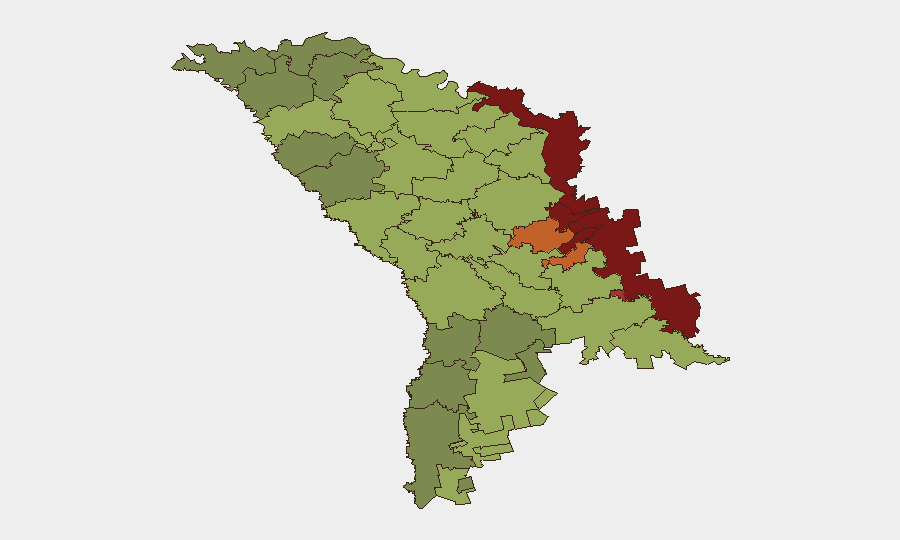
Situation Summary
Moldova faces escalating indirect exposure to the Russia–Ukraine conflict, with Russian airstrikes and drone operations now regularly crossing into Moldovan airspace and causing ground damage. Since 2026-08-09, at least four separate drone incidents have been recorded across southern and central Moldova, resulting in property damage, vegetation fires, and confirmed Geran-2/Shahed-type drone fragments. President Maia Sandu has condemned the violations as threats to sovereignty; the government recalled its ambassador to Russia for consultations on 2026-08-10. The trajectory indicates persistent risk of further airspace incursions and collateral damage as Russian aerial operations against Ukraine continue.
Key Developments
- Crocmaz, Ștefan Vodă District (2026-08-09): A drone-missile fell and ignited a fire near the village, damaging several houses. Moldovan police recovered combat-drone wreckage; no casualties reported.
- Văleni, Cahul District (2026-08-10): Police recovered UAV fragments identified as a Russian Geran-2/Shahed-type drone and opened a forensic investigation.
- Căușeni District (2026-08-10): A drone crash was reported near a residential building; preliminary analysis identified it as a Geran-2-type drone carrying a large explosive payload.
- Priozerne, Slobozia District (2026-08-10, late evening): Moldovan air defenses detected a drone that entered national airspace from Ukraine during a Russian strike on Odesa, then exited back into Ukraine—confirming active airspace penetration during cross-border operations.
- Chișinău / Presidential Statement (2026-08-10): President Sandu publicly condemned the airspace violations and announced prioritization of airspace surveillance and defense-capability strengthening.
- Chișinău / Diplomatic Response (2026-08-10): Moldova's Foreign Ministry recalled the ambassador to Russia for consultations, characterizing the Crocmaz incident as a serious sovereignty violation and citizen threat.
- Cross-border Infrastructure Damage (2026-08-09): Russian overnight strikes on Ukraine's energy infrastructure damaged Moldova's primary electricity interconnection with Romania, creating potential power-supply disruptions.
Highest-Risk Areas
The Left Bank of the Dniester (risk 85), Dubăsari (82), and Bender (79) remain the highest-risk sub-national zones due to proximity to active Ukrainian territory and Russian-backed military presence. However, recent drone incidents in Ștefan Vodă (51), Slobozia, and Cahul districts demonstrate that central and southern Moldova now face direct spillover risk during Russian aerial campaigns. Chișinău itself (49) carries moderate risk given its role as the capital and diplomatic hub, as well as its location on primary cross-border infrastructure corridors. The expansion of incidents beyond the traditional Transnistrian-adjacent zones indicates that no region is immune to collateral damage from cross-border drone and strike operations.
How GeoBit Would Assist
Security teams should employ AOI (Area-of-Interest) Monitoring & Early Warning with persistent watch over Ștefan Vodă, Cahul, Slobozia, and border districts to receive real-time alerts on drone activity and strikes. Conflict & Military battle-mapping and Aviation tracking capabilities enable teams to correlate Russian air-operation timing and routes with cross-border incursion probability, allowing advance positioning of personnel and assets. Intel Sweep and multi-language OSINT fusion across Ukrainian and Russian military channels, Telegram, and regional media provide early signals of planned strikes that may affect Moldovan airspace and critical infrastructure.
7-Day Outlook
Russian aerial operations against Ukrainian energy and military targets will likely continue, with 40–60% probability of additional drone transits through Moldovan airspace. Collateral damage to populated areas in southern and central Moldova remains plausible, particularly in Ștefan Vodă, Cahul, and Slobozia districts. Infrastructure interdependencies (electricity, water, telecommunications) tied to cross-border connections with Romania and Ukraine should be monitored for cascading outages.
Highest-Risk Areas — Ranked
| # | State / Region | Risk |
|---|---|---|
| 1 | Administrative-Territorial Units of the Left Bank of the Dniester | 85 |
| 2 | Dubăsari | 82 |
| 3 | Bender | 79 |
| 4 | Criuleni | 75 |
| 5 | Rezina | 58 |
| 6 | Taraclia | 55 |
| 7 | Gagauzia | 54 |
| 8 | Căușeni | 53 |
| 9 | Soroca | 52 |
| 10 | Ștefan Vodă | 51 |
| 11 | Orhei | 50 |
| 12 | Chișinău | 49 |
Sources
Previous Daily Briefs
A new Moldova brief is written every day — each with its own risk map and downloadable CSV. Here's the last week; use the calendar to go further back.
📅 Browse every day by calendar →
Highlighted days have a brief. Tap a day for that day's map & analysis, or “csv” for that day's dataset ($5).
Atlas — our AI intelligence desk — emails them this snapshot personally. Nothing else, no list.