Situation Summary
Mongolia remains a low-threat country globally (composite score 2), with no tracked security events in the current reporting window. However, active public-health and environmental hazards—suspected bubonic plague in rural Bayan-Ölgii and ongoing river flooding across multiple provinces—pose direct risk to personnel in remote areas. A violent antisemitic attack on foreign tourists reported in late July underscores sporadic but credible personal-security risks in isolated travel zones, particularly where alcohol consumption and ethnic tensions intersect.
Key Developments
- Ulaankhus soum, Bayan-Ölgii – Suspected bubonic plague case (reported 27 July 2026)
A person suspected of bubonic plague following marmot consumption underwent PCR testing; the National Center for Zoonotic Diseases declared 17 of 21 provinces at epidemiological risk during summer, with illegal marmot hunting cited as a primary exposure vector in rural areas.
- Nationwide river systems – Flood advisory (status 27 July 2026)
Multiple rivers remain 5–30 cm above flood stage; the Khalkh River exceeds danger level by ~15 cm. Authorities warn of continued rises and urge avoidance of riverbanks and low-lying transport routes.
- Northern Mongolia – Antisemitic assault on Israeli tourists (occurred last week; reported 24–28 July 2026)
Six Israeli nationals, including three former military personnel, were attacked at a remote campsite by an intoxicated assailant with an axe who shouted antisemitic slogans; one victim sustained a fractured jaw and was evacuated to Israel. Mongolian officials issued a public condemnation.
- Nationwide – Zoonotic disease prevention advisory (issued 27 July 2026)
The National Center for Zoonotic Diseases issued a nationwide bubonic plague prevention alert, explicitly warning travelers and residents against marmot hunting and contact with potentially infected wildlife in rural and remote zones.
- Ulaanbaatar & Sainshand – Aviation infrastructure modernisation contract (announced late July 2026)
France's Thales was awarded a contract to upgrade Mongolia's air traffic management infrastructure, including dual Area Control Centers with enhanced cybersecurity and resilience; represents a shift in critical-infrastructure cyber-risk posture.
Highest-Risk Areas
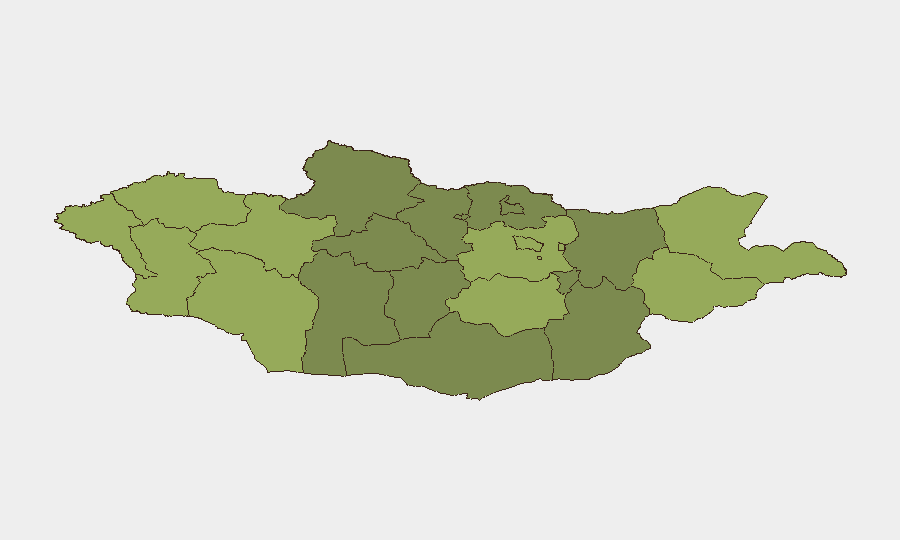
Dornod (risk 58), Sükhbaatar (55), and Uvs (52) provinces rank highest, with Bayan-Ölgii (48) and surrounding western and eastern border regions showing elevated composite risk. The concentration of threat in remote, sparsely governed border and rural areas reflects exposure to zoonotic disease, inter-ethnic and cross-border tensions, and limited emergency-response capacity. Ulaanbaatar (45), while lower-ranked, remains relevant for corporate and diplomatic personnel due to its role as a transit hub and regional focal point.
How GeoBit Would Assist
Teams with personnel in Mongolia should deploy Environmental & Health monitoring to track plague distribution and seasonal outbreak patterns across the 17 at-risk provinces, combined with AOI (Area-of-Interest) Monitoring & Early Warning on Bayan-Ölgii, Dornod, and western border regions to flag zoonotic and civil-security signals in real time. Routing & Network Analysis can identify alternative travel corridors around flood-affected river crossings and high-risk soums, while multi-language OSINT (social media, local news, Telegram channels) will surface emerging ethnic or security tensions in remote tourist zones before they escalate.
7-Day Outlook
Bubonic plague risk will remain elevated through August as marmot season continues; flood risk is expected to persist or worsen if rainfall continues. No major political or security escalation is currently forecast, but remote-area travel—particularly to Bayan-Ölgii, Khovd, and northern soums—should be managed with heightened health and personal-security protocols.
Highest-Risk Areas — Ranked
| # | State / Region | Risk |
|---|---|---|
| 1 | Dornod | 58 |
| 2 | Sükhbaatar | 55 |
| 3 | Uvs | 52 |
| 4 | Khovd | 50 |
| 5 | Bayan-Ölgii | 48 |
| 6 | Govi-Altai | 46 |
| 7 | Ulaanbaatar | 45 |
| 8 | Zavkhan | 44 |
| 9 | Töv | 42 |
| 10 | Dundgovi | 40 |
| 11 | Darkhan-Uul | 38 |
| 12 | Ömnögovi | 37 |
Sources
Previous Daily Briefs
A new Mongolia brief is written every day — each with its own risk map and downloadable CSV. Here's the last week; use the calendar to go further back.
📅 Browse every day by calendar →
Highlighted days have a brief. Tap a day for that day's map & analysis, or “csv” for that day's dataset ($5).
Atlas — our AI intelligence desk — emails them this snapshot personally. Nothing else, no list.