Situation Summary
Nepal remains a low-to-moderate regional security concern (global rank #92, composite threat score 12) with fragmented incident activity and no imminent national crisis. Administrative tensions, alleged detention complaints, and routine public-order friction characterized the past 48 hours, alongside elevated road-traffic casualties. The security environment is stable but requires targeted monitoring in Bagamati Province, where institutional friction and occasional civil unrest concentrate the majority of tracked risk.
Key Developments
- Nationwide, 22–23 June 2026 – Road-traffic casualties. Nepal Police recorded at least 8 fatalities and 105 injuries across multiple road accidents within a 24-hour period. Exact district locations not specified in available reporting; reflects systemic road-safety risk rather than a discrete incident. Relevant for duty-of-care teams managing ground transport.
- Kathmandu (alleged), 22 June 2026 – NHRC complaint filed against Home Minister. Social-media reporting claims a complaint was lodged at the National Human Rights Commission against Home Minister Sudhan Gurung alleging detention. Sourcing is single and unconfirmed; major Nepal news outlets have not independently corroborated details. Status: unverified.
- Administrative and legislative friction, 22 June 2026. Multiple event signals indicate government rejection of proposals, international disapproval (The Hague, SAFTA trade context), and presidential/parliamentary public statements. No specific violence or disruption reported, but signals low-level institutional tension.
- Activist disapproval noted, 23 June 2026. Civil-society reaction recorded on social platforms; no organized protests, blockades, or property damage reported.
Highest-Risk Areas
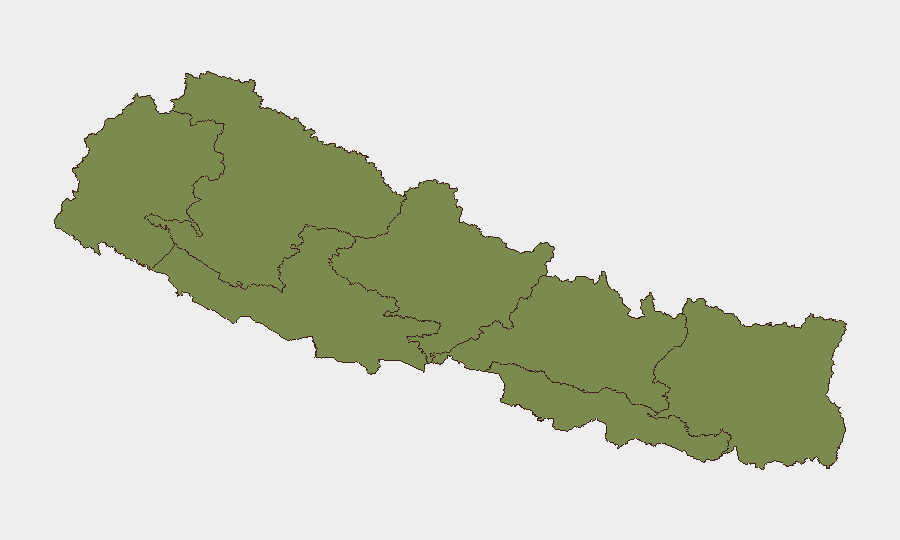
Bagamati Province (risk score 31.9)—which includes Kathmandu—concentrates nearly 80% of Nepal's tracked security events and drives the national composite score. Administrative bodies, law enforcement, and civil-society actors are concentrated there; detention complaints and human-rights friction are typical of this urban, governance-heavy environment. Gandaki Province (26.3) ranks second, though incident density and severity remain substantially lower. Remaining provinces (Lumbini, Karnali, Koshi, Sudurpashchim, Madhesh) collectively account for <20 risk points, indicating that security risk is highly centralized in the capital region and does not suggest nationwide instability.
How GeoBit Would Assist
AOI Monitoring & Early Warning on Bagamati Province and Kathmandu would provide persistent watch for escalation in administrative disputes, protest activity, or detention-related incidents, with alerting thresholds. Multi-language OSINT and social-media intelligence (X/Twitter, Instagram, Telegram, local news aggregation) would enable rapid corroboration of unverified claims—such as the Home Minister complaint—and filter signal from noise. Risk & Threat Assessment modules would help security teams model exposure to road-travel casualties and civic friction, informing travel policies and duty-of-care protocols for Nepal-based personnel.
7-Day Outlook
No significant escalation is anticipated in the near term. Administrative and legislative friction may continue, but organized violence or nationwide disruption remains improbable absent a major political trigger (e.g., judicial ruling, election announcement). Road-safety incidents will likely persist at baseline rates; routine security awareness remains the primary mitigation.
Highest-Risk Areas — Ranked
| # | State / Region | Risk |
|---|---|---|
| 1 | Bagamati Province | 31.9 |
| 2 | Gandaki Province | 26.3 |
| 3 | Lumbini Province | 5.6 |
| 4 | Karnali Province | 4.7 |
| 5 | Koshi Province | 2.8 |
| 6 | Sudurpashchim Province | 1.9 |
| 7 | Madhesh Province | 1.9 |
Sources
Previous Daily Briefs
A new Nepal brief is written every day — each with its own risk map and downloadable CSV. Here's the last week; use the calendar to go further back.
📅 Browse every day by calendar →
Highlighted days have a brief. Tap a day for that day's map & analysis, or “csv” for that day's dataset ($5).