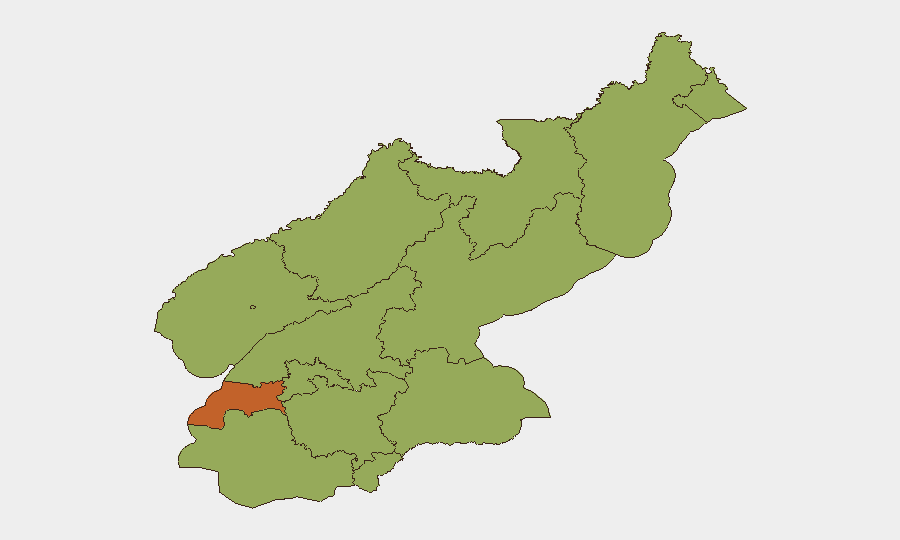
Situation Summary
North Korea remains at composite threat rank #37 globally (score 63) with no confirmed new security incidents, conflict escalations, or acute travel risks reported inside DPRK territory in the last 24–48 hours. Open-source reporting over the past day centers on nuclear policy commentary and South Korean domestic border-access decisions rather than new DPRK actions. The absence of recent verifiable incidents does not indicate reduced baseline risk; persistent political isolation, restricted movement, and limited independent reporting mean genuine security events may not surface immediately in open channels.
Key Developments
No discrete security incidents time-stamped to 2026-06-17 or 2026-06-18 with independent cross-verification have been identified in North Korea proper. Recent reporting attributed to "North Korea" in web feeds and social media primarily reflects:
- Nuclear policy and regional security analysis (non-incident commentary; no specific new event in the 24–48 hour window).
- South Korea's Civilian Control Line adjustment near the DMZ (2026-06-16–17): A South Korean internal decision affecting civilian access on the *South Korean side* of the border; not a new North Korean action, though relevant to Korean Peninsula stability monitoring.
- DPRK–Russia–China cooperation analysis: Ongoing discussion of infrastructure and political alignment, not tied to a specific recent incident.
Recommendation: GeoBit's persistent AOI monitoring and early-warning capability should flag any cross-border military activity, missile/satellite tests, or detention announcements affecting foreign nationals in real time once they surface.
Highest-Risk Areas
Nampo (risk 74.2) stands significantly above all other provinces and warrants focused attention; its elevated score reflects port infrastructure, foreign trade exposure, and historical precedent as a flashpoint for sanctions enforcement and maritime incidents. Pyongyang (49.6) carries typical capital-city risks—political sensitivity, restricted access, and concentration of state security apparatus—while South Pyongan (48.5) shares port-related and trade-dependent vulnerabilities. All remaining provinces cluster at 44.2, suggesting either more uniform baseline risk or less-differentiated reporting; this uniform secondary tier should be treated with caution, as it may reflect data saturation rather than true equivalence. Organizations with personnel or assets in Nampo and Pyongyang should prioritize enhanced duty-of-care protocols and communication redundancy.
How GeoBit Would Assist
GeoBit's Intel Sweep and multi-language OSINT fusion provide real-time corroboration of any emerging incident claims against independent sources, countering single-source noise or disinformation. AOI Monitoring with alerting on Nampo and Pyongyang enables immediate notification of border activity, detention announcements, or infrastructure disruptions. Network & Actor Analysis and regime-stability assessment tools allow security teams to contextualize political statements and assess whether rhetorical escalation signals operational risk to foreign personnel. Routing & Network Analysis supports contingency planning for evacuation or asset relocation should incidents escalate.
7-Day Outlook
No imminent acute threat is evident over the next week absent a sudden military provocation or cross-border incident. However, the lack of current incident reporting should not be conflated with low risk; restricted information flows mean significant developments may be delayed 48–72 hours before reaching open channels. Continued monitoring of DMZ activity, DPRK statements toward allied powers, and any new sanctions or travel advisories remains essential for duty-of-care compliance.
Highest-Risk Areas — Ranked
| # | State / Region | Risk |
|---|---|---|
| 1 | Nampo | 74.2 |
| 2 | P'yŏngyang | 49.6 |
| 3 | South Pyongan | 48.5 |
| 4 | Ryanggang | 44.2 |
| 5 | North Hamgyong | 44.2 |
| 6 | North Pyongan | 44.2 |
| 7 | Chagang | 44.2 |
| 8 | South Hwanghae | 44.2 |
| 9 | North Hwanghae | 44.2 |
| 10 | South Hamgyong | 44.2 |
| 11 | Kaesong | 44.2 |
| 12 | Kangwon | 44.2 |
Sources
Previous Daily Briefs
A new North Korea brief is written every day — each with its own risk map and downloadable CSV. Here's the last week; use the calendar to go further back.
📅 Browse every day by calendar →
Highlighted days have a brief. Tap a day for that day's map & analysis, or “csv” for that day's dataset ($5).