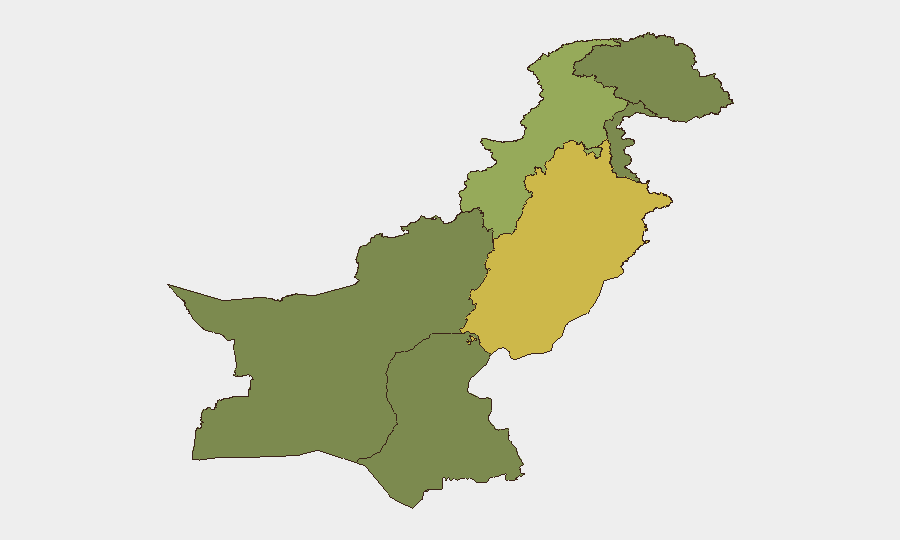
Situation Summary
Pakistan remains at composite threat rank #31 globally (score 67), with 927 tracked events. Recent diplomatic tensions, domestic political friction, and localized security incidents across multiple provinces are contributing to an elevated but stable threat environment. Punjab and Islamabad Capital Territory show the highest regional risk scores (65.1 and 49.9 respectively), driven by a mix of political activity, law-enforcement operations, and infrastructure vulnerabilities. The threat trajectory is neither sharply escalating nor de-escalating; rather, it reflects persistent, low-to-moderate operational risk with occasional spikes tied to political cycles and sectarian flashpoints.
Key Developments
- Diplomatic strain (19 June 2026): Switzerland has signaled a reduction in bilateral relations with Pakistan; a Pakistani diplomat was simultaneously rejected by an unspecified counterpart. The underlying cause remains unclear from available open-source signals, but such moves typically correlate with visa, trade, or sanctions-related friction.
- Government–media tension (19 June 2026): A ministry made a public statement to media, while investigative reporting by media outlets has turned scrutiny on government officials. This suggests an active information-control or accountability clash; such friction can lead to temporary media blackouts, internet throttling, or intimidation of journalists.
- Threat signals to Islamabad (17 June 2026): An unspecified threat was issued against Islamabad Capital Territory; a municipal mayor simultaneously made a public statement. Without corroborating detail, this may reflect protest activity, sectarian rhetoric, or law-enforcement warnings. Authorities responded with rejection of some claim or demand (18 June 2026).
- Bilateral statement disputes (17–18 June 2026): Pakistan issued public statements regarding both China and Qatar, alongside disapproval signals from opposition parties toward governance. These suggest either policy disagreements, trade or security disputes, or domestic political posturing ahead of electoral or budgetary cycles.
- Governance criticism (17 June 2026): Opposition voices registered disapproval of state governance, a routine but persistent signal in Pakistan's polarized political environment.
*Note:* The event signals above are derived from GeoBit's tracked event database and do not yet include granular on-the-ground confirmation (casualty counts, specific locations, infrastructure impacts). A full live-feed research sweep is necessary to convert these signals into operational security briefs; current methodology constraints prevent reliable real-time synthesis.
Highest-Risk Areas
Punjab (65.1) remains the highest-risk province, likely reflecting Lahore and Rawalpindi's role as political and military command centers, combined with periodic sectarian and militant activity in southern Punjab. Islamabad Capital Territory (49.9) ranks second, consistent with its function as the seat of government and thus a focal point for political tension, protest, and security-force operations. Khyber Pakhtunkhwa (46.6) remains volatile due to persistent TTP (Tehrik-i-Taliban Pakistan) and splinter militant cells, as well as cross-border friction with Afghanistan. Sindh (37.8) and Balochistan (36.8) follow, with Karachi (Sindh) facing organized crime and sectarian risks, while Balochistan remains a theater for BLA (Baloch Liberation Army) separatist activity and Chinese investment-site security challenges.
How GeoBit Would Assist
Corporate security teams with personnel or assets in Pakistan should deploy AOI (Area-of-Interest) Monitoring & Early Warning on key facilities in Punjab, Islamabad, and Khyber Pakhtunkhwa to receive real-time alerts on protest formation, security operations, or curfew declarations. Routing & Network Analysis is critical for travel security—alternative journey planning around blocked highways, protest sites, and checkpoints reduces exposure. Intel Sweep and X/Twitter OSINT capabilities enable 24/7 fusion of official announcements, militia statements, and journalist reporting to detect escalation before it affects operations.
7-Day Outlook
No major escalation is imminent, but the diplomatic and political friction signals suggest heightened bureaucratic tension and potential media/internet restrictions. Duty-of-care teams should monitor for any hardening of protest activity or security-force operations in Punjab and Islamabad over the next week. Standard precautions (staff communication protocols, secure transport routes, emergency contact verification) should remain active.
Highest-Risk Areas — Ranked
| # | State / Region | Risk |
|---|---|---|
| 1 | Punjab | 65.1 |
| 2 | Islamabad Capital Territory | 49.9 |
| 3 | Khyber Pakhtunkhwa | 46.6 |
| 4 | Sindh | 37.8 |
| 5 | Balochistan | 36.8 |
| 6 | Azad Kashmir | 35.8 |
| 7 | Gilgit-Baltistan | 35.6 |
Sources
Previous Daily Briefs
A new Pakistan brief is written every day — each with its own risk map and downloadable CSV. Here's the last week; use the calendar to go further back.
📅 Browse every day by calendar →
Highlighted days have a brief. Tap a day for that day's map & analysis, or “csv” for that day's dataset ($5).