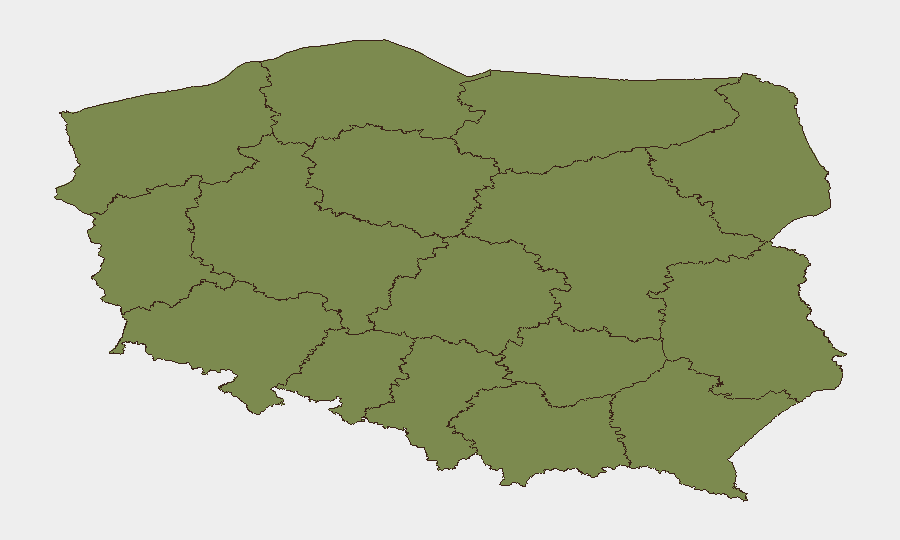
Situation Summary
Poland faces a composite threat score of 9 (rank #103 globally) driven by concentrated security incidents in Warsaw and Łódź, coupled with persistent Russian military probing along the Baltic and Belarus borders. Recent official warnings from Polish leadership indicate credible concern over potential Russian hybrid or limited kinetic operations targeting critical infrastructure. Overall threat trajectory remains elevated but manageable within Poland's institutional response capacity, with near-term risk concentrated in border regions and major urban centers.
Key Developments
- Russian reconnaissance aircraft intercept, Baltic Sea (15 July, ~12:00 local). Polish fighter jets intercepted a Russian Il‑20 reconnaissance aircraft approximately 30 km off Ustka in international airspace. Confirmed by Poland's defence minister and national news agency, signaling continued Russian intelligence-gathering operations near Polish territory.
- Official warning of Russian hybrid/kinetic infrastructure threats (16 July). Polish officials and Lithuanian President issued statements based on intelligence assessments warning of potential Russian operations targeting energy and transport systems in Poland and Baltic states, with explicit reference to possible provocations on Polish soil.
- Organized crime arrests in Warsaw Wola district (16–17 July). Police announced arrest of four suspects linked to organized property-crime gang, facing 31 combined charges and three-month pre-trial detention. Indicates ongoing organized criminal activity in the capital's high-value residential areas.
- Gas-cylinder threat and detention (16–17 July). Man arrested after deliberately opening gas cylinder in multi-family building and threatening ignition; faces up to eight years in prison. Case reflects emerging volatile-incident risk in residential infrastructure.
- Migrant-smuggling arrest near Hajnówka, Poland–Belarus border (16–17 July). Ukrainian national detained transporting four Afghan and one Pakistani national who illegally crossed the border; driver faces up to eight years' imprisonment. Underscores ongoing border vulnerability and migrant-facilitation networks.
- Storm system "Bernadette" infrastructure risk (16–17 July). Severe-weather warning issued across Poland featuring strong winds, heavy rainfall, and thunderstorms. Poses short-term disruption risk to power, transport, and travel safety nationwide.
- Armed-threat incident in Sopot (16–17 July). Bulgarian national arrested after threatening shop staff with gun-like object while demanding vodka. Illustrates petty violent-crime risk in tourist areas along Pomeranian coast.
- Violent assault in Poznań (targeting city mayor, 17 July). Perpetrators threw cake at Mayor Jacek Jaśkowiak; suspects face up to three years' imprisonment. Political-tinged incident indicating potential low-level civic polarization in major cities.
Highest-Risk Areas
Masovian Voivodeship (Warsaw and surroundings) dominates the risk ranking at 31.9, accounting for the vast majority of Poland's tracked incidents—organized crime, infrastructure threats, and government activity. Łódź Voivodeship (18.5) represents the secondary concentration of urban crime and civil unrest risk. Border regions—particularly Podlaskie and Warmian-Masurian Voivodeships—carry elevated but lower-scored risk linked to migrant smuggling and Russian military proximity, while remaining voivodeships show minimal recorded threat activity, suggesting either better stability or lower reporting density.
How GeoBit Would Assist
Security teams should deploy AOI Monitoring & Early Warning on Masovian and Łódź regions to track organized crime and infrastructure incidents with alerting; combine Intel Sweep and multi-language OSINT (X, Telegram, Polish media) to detect emerging Russian hybrid-operation signals and border-crossing networks; and use Routing & Network Analysis to plan personnel travel avoiding high-incident corridors in Warsaw's Wola district and border transit zones during weather disruptions.
7-Day Outlook
Storm Bernadette will create short-term infrastructure vulnerability across Poland through 18–19 July, increasing power-outage and transport-disruption risk. Russian military probing and hybrid-operation warnings remain elevated, warranting heightened monitoring of critical infrastructure and border areas. Organized crime and petty violent-crime activity in major cities is expected to persist at current levels without escalation signals.
Highest-Risk Areas — Ranked
| # | State / Region | Risk |
|---|---|---|
| 1 | Masovian Voivodeship | 31.9 |
| 2 | Łódź Voivodeship | 18.5 |
| 3 | Warmian-Masurian Voivodeship | 2.3 |
| 4 | Lubusz Voivodeship | 2.3 |
| 5 | Greater Poland Voivodeship | 2.3 |
| 6 | Subcarpathian Voivodeship | 1.9 |
| 7 | Podlaskie Voivodeship | 1.9 |
| 8 | Lublin Voivodeship | 1.9 |
| 9 | West Pomeranian Voivodeship | 1.9 |
| 10 | Lower Silesian Voivodeship | 1.9 |
| 11 | Pomeranian Voivodeship | 1.9 |
| 12 | Kuyavian-Pomeranian Voivodeship | 1.9 |
Sources
Previous Daily Briefs
A new Poland brief is written every day — each with its own risk map and downloadable CSV. Here's the last week; use the calendar to go further back.
📅 Browse every day by calendar →
Highlighted days have a brief. Tap a day for that day's map & analysis, or “csv” for that day's dataset ($5).
Atlas — our AI intelligence desk — emails them this snapshot personally. Nothing else, no list.