Situation Summary
Rwanda remains stable across most of the country with no acute armed conflict, civil unrest, terrorism, or major crime reported in the past 24–48 hours. The primary security driver is the ongoing Marburg virus outbreak and associated public-health border controls, which constrain movement and duty-of-care operations but do not constitute direct physical security threats. Kigali continues to account for the majority of measurable risk (32.7 composite score), while four peripheral provinces remain at baseline (2.7 each). The overall threat trajectory is flat, with operational impact concentrated on health screening, cross-border restrictions, and internal movement protocols rather than violent incidents.
Key Developments
- Kigali International Airport & DRC land borders, 26–27 July 2026: Reinforced Ebola screening and entry denial remain in force. Foreign nationals transiting or present in DRC within the prior 30 days are barred entry; Rwandan nationals and residents with equivalent travel history face mandatory quarantine. This measure directly affects personnel movement and supply-chain routing.
- Nationwide, 26–27 July 2026: No new Marburg virus cases confirmed in the past 24–48 hours, though the outbreak remains an active driver of operational constraints. Public health directives remain in place.
- Rwanda–DRC diplomatic posture, 26 July 2026: Kinshasa and Kigali exchanged disapproval statements on the same date; concurrently, Congolese authorities issued a demand toward Rwanda. These signals reflect ongoing diplomatic tension but have not escalated into border incidents or military activity in the current 24–48-hour window.
- Kigali City, 26–27 July 2026: No protests, demonstrations, or public unrest reported.
- All provinces, 26–27 July 2026: Infrastructure (power, transport, telecom) remains operational. No major disruptions to essential services documented.
Highest-Risk Areas
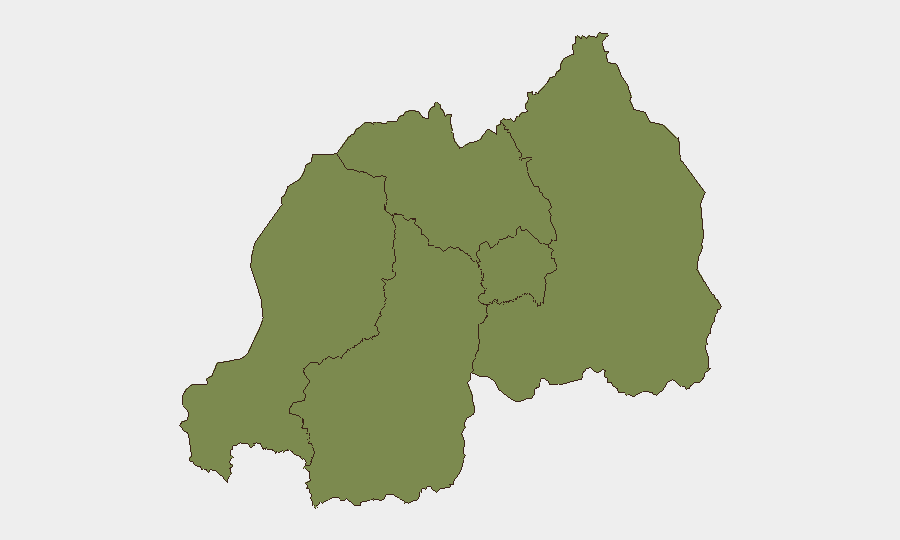
Kigali City stands significantly apart with a composite risk score of 32.7—approximately twelve times higher than any other Rwandan region. This reflects the capital's concentration of government, commercial, international presence, and transportation hubs (airport, border posts), where health-screening measures and cross-border restrictions have the greatest operational footprint. Western, Northern, Southern, and Eastern provinces each register 2.7, indicating baseline risk levels with no acute drivers. For corporate and duty-of-care planning, Kigali remains the primary focus for contingency, movement protocols, and health-compliance coordination; peripheral provinces present minimal incremental risk beyond standard operational due diligence.
How GeoBit Would Assist
Security and risk teams operating in Rwanda should leverage AOI Monitoring & Early Warning on Kigali, border regions (Rubavu, Rusizi), and key transport nodes to detect any escalation in cross-border tensions or health-related restrictions in real time. Intel Sweep and multi-language OSINT fusion on Congolese official statements and Rwandan Ministry of Health directives will surface changes to entry rules, quarantine protocols, or diplomatic incidents within hours. Routing & Network Analysis can identify alternative supply, personnel, and evacuation corridors that avoid congested border crossings and health checkpoints, critical for duty-of-care continuity during border restrictions.
7-Day Outlook
The near-term trajectory is likely to remain stable, with no indication of armed escalation or internal unrest. Health screening and entry restrictions will persist as the dominant operational constraint; any movement of Marburg case clusters or renewed DRC–Rwanda diplomatic friction would trigger rapid changes to border controls and travel advisories. Monitoring of Ministry of Health public updates and cross-border diplomatic signals should remain continuous.
Highest-Risk Areas — Ranked
| # | State / Region | Risk |
|---|---|---|
| 1 | Kigali City | 32.7 |
| 2 | Western Province | 2.7 |
| 3 | Northern Province | 2.7 |
| 4 | Southern Province | 2.7 |
| 5 | Eastern Province | 2.7 |
Sources
Previous Daily Briefs
A new Rwanda brief is written every day — each with its own risk map and downloadable CSV. Here's the last week; use the calendar to go further back.
📅 Browse every day by calendar →
Highlighted days have a brief. Tap a day for that day's map & analysis, or “csv” for that day's dataset ($5).
Atlas — our AI intelligence desk — emails them this snapshot personally. Nothing else, no list.