Situation Summary
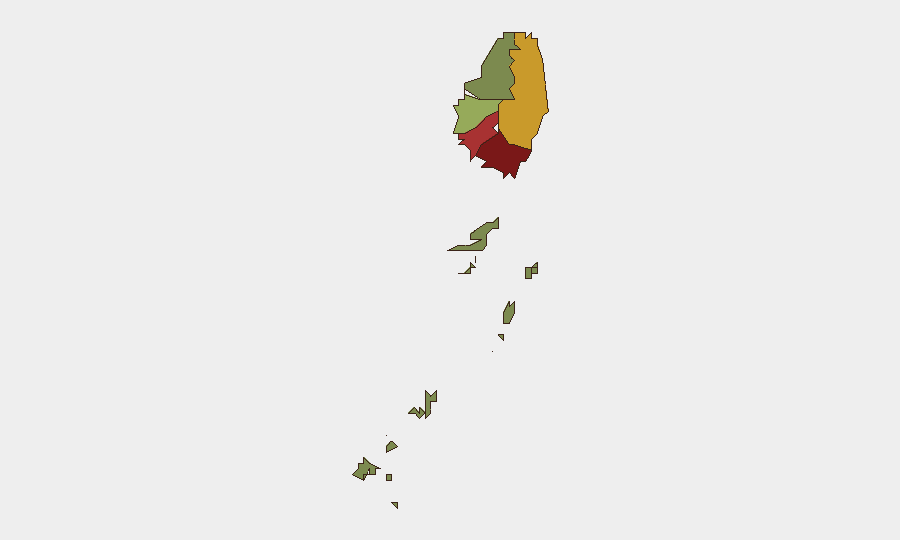
Saint Vincent and the Grenadines remains a low-threat jurisdiction (global rank #128, composite score 12) with no corroborated security incidents reported in the past seven days. The security environment is stable, characterized by regulatory activity rather than physical-security emergencies or civil unrest. Risk remains concentrated in Saint George parish, which substantially outranks other administrative divisions.
Key Developments
- Kingstown, nationwide – 2026-09-01 (effective): The Financial Services Authority halted acceptance of new virtual asset business applications as a "precautionary administrative measure" to strengthen supervisory oversight of the digital-asset sector. Existing submissions prior to the September 1 deadline will continue processing. This increases regulatory risk exposure for crypto and virtual-asset businesses and may affect financial operations linked to offshore jurisdictions.
- Nationwide – week ending 2026-09-06: Digicel announced major expansion of end-to-end fiber network infrastructure across Saint Vincent, targeting service to an additional 11,000+ households. No linked security incidents, vandalism, or civil-unrest events are reported; the development is infrastructure-positive and may improve communications redundancy.
- Nationwide – week ending 2026-09-06: The Ministry of Agriculture is reviewing the Farmers' ID system, with Cabinet proposals for potential replacements under consideration. No protests, strikes, or civil unrest related to this administrative review are documented in the reporting period.
- All regions – 2026-09-01 to 2026-09-07: No corroborated reports of violent crime spikes, organized gang activity, large-scale protests, civil unrest, terrorist activity, or major infrastructure disruption are present in available sources.
Highest-Risk Areas
Saint George parish dominates the sub-national risk profile (score 92), more than double the national composite and warranting focused attention by security teams with personnel or assets in the capital region. Saint Andrew (78) and Charlotte (71) represent secondary concentrations, while the Grenadines (12) align with the national baseline. The disparity suggests that criminogenic activity, enforcement challenges, or incident density concentrate in the urban Kingstown area and immediate surroundings, with risk declining sharply in outer parishes and island communities. Organizations should apply heightened situational awareness and access controls in Saint George while maintaining standard precautions elsewhere.
How GeoBit Would Assist
Organizations operating in Saint Vincent should employ AOI Monitoring & Early Warning focused on Saint George parish to detect emerging protests, gang activity, or infrastructure incidents in near-real time. Intel Sweep and OSINT fusion (including X/Twitter, Telegram, and multi-language search) would provide corroboration and context for any future crime reports or political developments, compensating for the limited local reporting baseline. Risk & Threat Assessment modeling can help security teams evaluate regulatory changes—such as the FSA virtual-asset freeze—against exposure to offshore financial operations and downstream reputational or operational risk.
7-Day Outlook
No acute escalation is forecast over the next seven days. The regulatory tightening in virtual assets and ongoing infrastructure investment suggest continued administrative-level activity without indicative physical-security deterioration. Teams should monitor for any public reaction to the Farmers' ID review and maintain standard protocols; the low baseline threat and absence of incident signals support continuation of routine security postures.
Highest-Risk Areas — Ranked
| # | State / Region | Risk |
|---|---|---|
| 1 | Saint George | 92 |
| 2 | Saint Andrew | 78 |
| 3 | Charlotte | 71 |
| 4 | Saint Patrick | 58 |
| 5 | Saint David | 34 |
| 6 | Grenadines | 12 |
Sources
Previous Weekly Briefs
A new Saint Vincent brief is written every Monday, covering the week — each with its own risk map and downloadable CSV. Use the calendar to go further back.
- September 1, 2026
- August 30, 2026
- August 28, 2026
- August 26, 2026
- August 24, 2026
- August 22, 2026
- August 20, 2026
📅 Browse past briefs by calendar →
Highlighted days have a brief. Tap a day for that day's map & analysis, or “csv” for that day's dataset ($5).
Atlas — our AI intelligence desk — emails them this snapshot personally. Nothing else, no list.