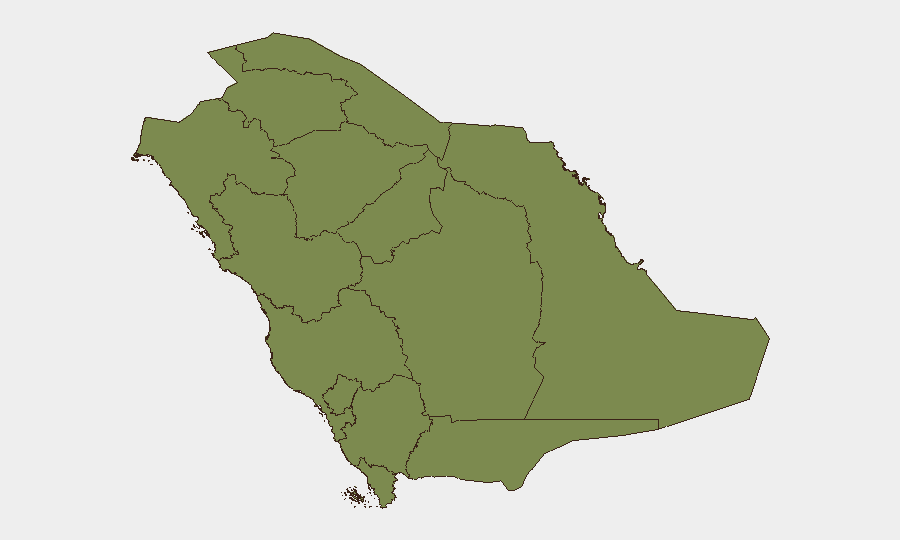
Situation Summary
Saudi Arabia faces an elevated security environment driven by concurrent regional military tensions, cross-border attack activity, and transient domestic alerts. The U.S. Embassy's 17 July travel advisory remains active, and multiple governments have issued "high caution" guidance. Over the last 24–48 hours, Houthi missile and drone strikes on civilian aviation infrastructure, simultaneous emergency alerts in two major cities, and ongoing conventional military activity across regional borders have raised the composite threat trajectory. The kingdom remains at rank 72 globally, but internal concentration of risk in Riyadh Region (score 35.3) reflects the capital's exposure to both direct and indirect cross-border escalation.
Key Developments
- Abha International Airport, 'Asir Region (Monday, within past 48h). Yemen's Houthi movement announced missile and drone strikes on the civilian airport in retaliation for airstrikes on Sanaa International Airport earlier that day; no casualties reported, but the attack signals direct cross-border strike capability against Saudi civilian infrastructure.
- Sanaa International Airport, Yemen (Monday, linked to Saudi–Yemen escalation). Saudi-backed airstrikes struck Sanaa's runway, reportedly targeting an Iranian aircraft carrying a Houthi delegation; the action triggered immediate Houthi retaliation and underscores Saudi Arabia's exposure to reciprocal attacks.
- Al-Kharj, Riyadh Province (early Saturday, 18 July). Saudi Civil Defense issued and then cleared an emergency alert within minutes, citing unspecified "potential danger"; no details released, but indicates heightened national alert posture.
- Yanbu, Al Madinah Province (early Saturday, 18 July). Simultaneous emergency alert and all-clear on the same timeframe as Al-Kharj; the dual alerts suggest either a transient infrastructure or security concern affecting multiple regions.
- U.S. Embassy Security Alert (active since 17 July, ongoing). American citizens advised to reconsider travel to Saudi Arabia due to high Middle East tensions and potential for unforeseen escalation; remains the baseline for international corporate risk posture.
- Gulf Airspace Restrictions (current, through 29 July). European Aviation Safety Agency advised operators to avoid Gulf airspace; Saudi airspace affected by short-notice closure and cancellation risk.
- Asir Region Border Security (recent, timestamp unspecified). Border Guard arrested three Ethiopian nationals attempting to smuggle 17 kg hashish and 7,500 amphetamine tablets in Raboua Sector near Yemen border; reflects ongoing frontier vulnerability during escalation.
Highest-Risk Areas
Riyadh Region dominates the sub-national ranking at 35.3—nearly four times the next-highest region (Medina, 8.3)—reflecting the capital's concentration of government, foreign missions, aviation hubs, and commercial assets. Medina's elevated score reflects pilgrimage-season population density and Houthi cross-border strike reach. Southwest regions (Makkah, 'Asir, Jazan, Najran) all score 5.3–6.2, driven by proximity to the Yemen border and demonstrated missile/drone attack capability. Northern Borders, Al Jawf, Tabuk, and Hail regions cluster at 5.3, reflecting lower-frequency but persistent cross-border militia and smuggling activity from Iraq and Yemen.
How GeoBit Would Assist
Security teams would deploy AOI Monitoring & Early Warning on Riyadh and southwest airports to detect credible strike indicators; Intel Sweep and entity extraction on Houthi/Iran/Iraqi militia channels (X, Telegram, regional media) to triangulate retaliation timelines; and Aviation tracking to cross-reference airspace closures and flight-risk routing. Conflict mapping and force-structure analysis would clarify Iranian/Saudi/proxy positioning and likely escalation vectors over the next operational window.
7-Day Outlook
Regional military activity is expected to remain elevated through the EU's 29 July airspace advisory. Houthi and militia messaging suggests further cross-border strikes are likely if Saudi-backed operations continue. Domestic emergency alerts may recur. Corporate teams should assume flight disruption, reinforce restricted-travel policies for Riyadh and 'Asir, and monitor late-breaking incident reporting closely.
Highest-Risk Areas — Ranked
| # | State / Region | Risk |
|---|---|---|
| 1 | Riyadh Region | 35.3 |
| 2 | Medina Province | 8.3 |
| 3 | Makkah Region | 6.2 |
| 4 | Northern Borders Province | 5.3 |
| 5 | Al-Bahah Province | 5.3 |
| 6 | 'Asir Province | 5.3 |
| 7 | Jazan Province | 5.3 |
| 8 | Najran Region | 5.3 |
| 9 | Tabuk Province | 5.3 |
| 10 | Al Jawf Region | 5.3 |
| 11 | Ḥa'il Province | 5.3 |
| 12 | Al-Qassim Province | 5.3 |
Sources
Previous Daily Briefs
A new Saudi Arabia brief is written every day — each with its own risk map and downloadable CSV. Here's the last week; use the calendar to go further back.
📅 Browse every day by calendar →
Highlighted days have a brief. Tap a day for that day's map & analysis, or “csv” for that day's dataset ($5).
Atlas — our AI intelligence desk — emails them this snapshot personally. Nothing else, no list.