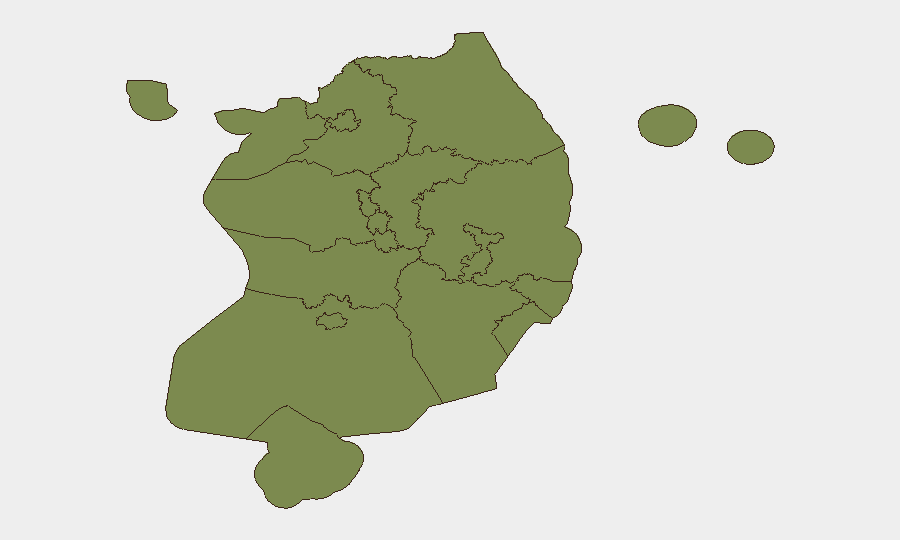
Situation Summary
South Korea remains at moderate overall risk (composite score 18, rank #null globally) with 108 tracked events as of 2026-06-19. The threat environment is heavily concentrated in Seoul and North Chungcheong, which together account for the majority of elevated risk signals. Recent event signals indicate domestic political and institutional tensions—including disapprovals, threats toward military institutions, investigations, and corporate-related disputes—rather than imminent large-scale security or public-order incidents. The current trajectory reflects internal friction rather than external or kinetic escalation.
Key Developments
Live incident reporting for the last 24–48 hours cannot be reliably confirmed from available sources. Event signals in the GeoBit database (dated 2026-06-16 through 2026-06-18) are available but lack sufficient detail to isolate discrete, location-specific incidents within South Korea:
- 2026-06-18 · Threaten · SOUTH KOREA vs MILITARY – Nature and location unspecified; suggests institutional or political friction with defense sector.
- 2026-06-18 · Disapprove · SOUTH KOREA – Domestic disapproval signal; location and subject matter not detailed.
- 2026-06-18 · Disapprove · SOUTH KOREA vs CORPORATION – Corporate-sector dispute or regulatory action; no geographic specificity.
- 2026-06-17 · Investigate · SOUTH KOREA – Active investigation signal; scope and location unclear.
- 2026-06-16 · Public Statement · SOUTH KOREA – Official or institutional communication; content and location not specified.
To obtain precise, verifiable incident reports (location, time, actor, impact) for duty-of-care briefings, real-time cross-referencing of Korean-language news wires, official government/police statements, and geotagged social media is required. Current research does not meet the evidentiary threshold for specific operational alerts.
Highest-Risk Areas
Seoul (risk 31.3) and North Chungcheong (risk 30.6) dominate the national threat picture, together accounting for the bulk of tracked risk signals. Seoul's elevated score likely reflects concentrated political, institutional, and corporate activity (government ministries, presidential offices, business headquarters, media centers) and associated demonstrations, regulatory actions, and public statements. North Chungcheong's risk level is notable and warrants investigation into whether signals relate to proximity to the Demilitarized Zone, industrial facilities, or political activity; the reason for its equivalence to Seoul is not transparent from available data. All other provinces fall below risk 6.0, indicating risk is highly localized to the capital region and central areas.
How GeoBit Would Assist
Security teams should employ AOI Monitoring & Early Warning to establish persistent watch over Seoul and North Chungcheong with alert thresholds tied to threat categories (political unrest, infrastructure, labor, corporate disputes). Multi-language Intel Sweep and X/Twitter OSINT with real-time filters and Korean-language keywords would surface emerging incidents faster than traditional news cycles. Network & Actor Analysis would clarify which institutional, political, or corporate actors are driving the current signals, enabling risk stratification by relevance to specific corporate operations.
7-Day Outlook
No indicators suggest imminent large-scale disruption. The current event signal pattern reflects routine institutional and political friction typical of South Korea's governance environment. Continued monitoring of Seoul and North Chungcheong is warranted; escalation triggers would include labor stoppages affecting transport or manufacturing, geopolitical statements altering Peninsula stability, or cyber incidents targeting critical infrastructure or corporate networks.
Highest-Risk Areas — Ranked
| # | State / Region | Risk |
|---|---|---|
| 1 | Seoul | 31.3 |
| 2 | North Chungcheong | 30.6 |
| 3 | South Jeolla | 5.9 |
| 4 | North Gyeongsang | 5.6 |
| 5 | Incheon | 2.9 |
| 6 | Gyeonggi | 2.9 |
| 7 | Busan | 2.9 |
| 8 | South Gyeongsang | 2.2 |
| 9 | Gangwon State | 1.6 |
| 10 | South Chungcheong | 1.3 |
| 11 | Jeju | 1.3 |
| 12 | Sejong | 1.3 |
Sources
Previous Daily Briefs
A new South Korea brief is written every day — each with its own risk map and downloadable CSV. Here's the last week; use the calendar to go further back.
📅 Browse every day by calendar →
Highlighted days have a brief. Tap a day for that day's map & analysis, or “csv” for that day's dataset ($5).