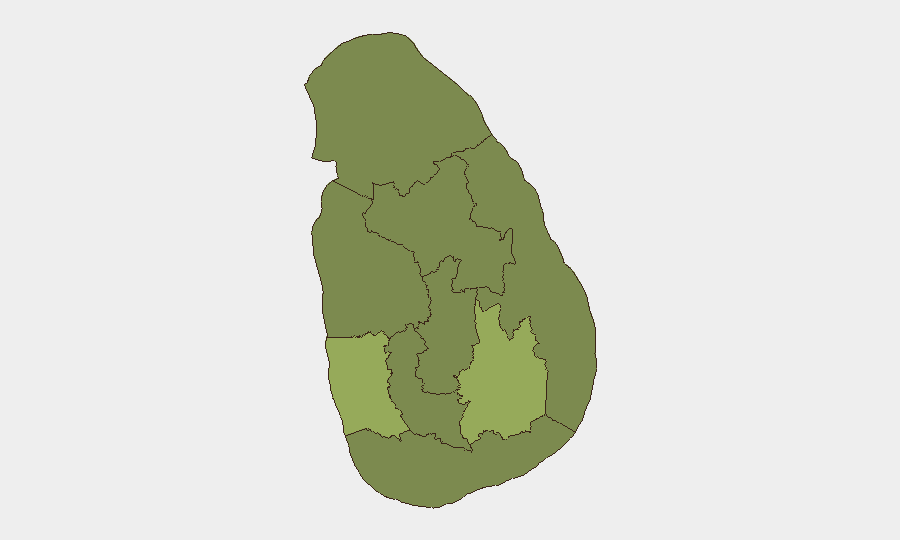
Situation Summary
Sri Lanka's security environment remains relatively stable at the national level as of 27 June 2026, with no acute incidents (major protests, attacks, or political shocks) confirmed in the last 24–48 hours. The country faces long-standing structural challenges—human-rights accountability concerns, military deployment scrutiny, and ongoing economic reform under IMF oversight—but these do not translate into immediate, sharp security deterioration. Sub-national risk concentration in Uva and Western Provinces reflects persistent vulnerabilities; however, open-source reporting confirms no new triggering events in the observation window.
Key Developments
- IMF Engagement (24–30 June). Staff visit underway to review economic-reform programme; no security incidents reported, but macro conditions remain a risk vector for broader stability.
- Human-Rights & Accountability Discourse (ongoing, cited 25–26 June). Civil-society and international advocacy bodies continue statements on long-standing concerns (torture allegations, troop deployments, PTA application), reflecting structural grievances rather than acute new incidents.
- No Verified Major Incidents (last 48 hours). Multi-source search found no time-stamped reports of large-scale protests, clashes, terrorism, or infrastructure failure meeting verification thresholds.
*Note: Event signals from GeoBit platform (arrests, disapprovals, statements) point to sustained civil-society friction and process activity; they do not confirm new violence or mass mobilization in the 24–48-hour window.*
Highest-Risk Areas
Uva Province (risk 58) and Western Province (risk 51.9) together account for the majority of tracked sub-national threat signal. Uva's elevated score likely reflects historical civil-unrest patterns, communal-tension baselines, and economic marginalization; Western Province concentration—which includes the capital region (Colombo, Negombo)—indicates vulnerability to protest activity, crime, and political friction in the most economically and administratively important zone. Central Province (36.4) follows, capturing the tea-growing highlands and associated labour and environmental tensions. Northern and Southern Provinces (35.4, 35.1 respectively) show similar baseline risk, likely linked to post-conflict legacy issues and economic stress. Risk in Eastern, North Western, North Central, and Sabaragamuwa Provinces remains lower but warrants monitoring for communal-tension spillover or economic-driven unrest.
How GeoBit Would Assist
Security teams should employ AOI Monitoring & Early Warning for Uva and Western Provinces to detect protest mobilization, roadblocks, or clashes before they scale. Concurrent X/Twitter & Telegram OSINT with sentiment and temporal analysis will flag emerging civil-society narratives and coordination signals. For duty-of-care teams with personnel in Colombo or other economic hubs, Routing & Network Analysis provides real-time alternative-journey planning to avoid protest zones or security cordons; integration with Intel Sweep (global event feeds) ensures same-day confirmation of any new incidents affecting business continuity.
7-Day Outlook
No acute trigger is visible in the next 7 days; however, IMF programme outcomes (end of month review) and continued human-rights advocacy cycles will sustain low-level civil friction. Economic data releases and any judicial or policing developments related to ongoing detentions and accountability processes could prompt localized protests, particularly in Colombo and Uva Province. Monitoring should remain continuous but no escalation to major unrest is indicated by current trajectories.
Highest-Risk Areas — Ranked
| # | State / Region | Risk |
|---|---|---|
| 1 | Uva Province | 58 |
| 2 | Western Province | 51.9 |
| 3 | Central Province | 36.4 |
| 4 | Northern Province | 35.4 |
| 5 | Southern Province | 35.1 |
| 6 | Eastern Province | 28.3 |
| 7 | North Western Province | 28 |
| 8 | North Central Province | 28 |
| 9 | Sabaragamuwa Province | 28 |
Sources
Previous Daily Briefs
A new Sri Lanka brief is written every day — each with its own risk map and downloadable CSV. Here's the last week; use the calendar to go further back.
📅 Browse every day by calendar →
Highlighted days have a brief. Tap a day for that day's map & analysis, or “csv” for that day's dataset ($5).