Situation Summary
Togo remains a moderate-risk environment (global rank #85) with no active tracked security events as of 13 August 2026, though underlying vulnerabilities persist in the north. The northern Savanes and Kara regions face sustained exposure to cross-border extremist activity and armed criminality, while the capital and southern maritime zone remain relatively stable. A labor strike notice filed by the SYAPAL union (72-hour window from 11 August) and recent arrests of burglary-network suspects indicate localized operational friction rather than systemic instability.
Key Developments
- 11 August, Nationwide (Logistics Sector) — SYAPAL union issued a 72-hour strike notice over labor grievances, affecting cargo handling and port operations; impact on supply chains and movement of goods into/out of Togo expected during notice window.
- 8 August, Kpogan (Central Region) — Three suspected members of an organized burglary network were arrested following a break-in at the MATW Islamic center; police operation indicates ongoing organized property crime in populated urban areas.
- 8 August, Gbatope-Davedi Road Section (Plateaux Region) — Two gendarmes were engaged in nocturnal racketeering targeting road users; incident reflects localized corruption and heightened risk to travelers during night-hour transit.
- 7 August, Lomé (Capital) — Officials oversaw destruction of approximately 1,000 seized firearms as part of a national arms-control initiative; reflects ongoing government effort to reduce illicit weapons circulation.
Highest-Risk Areas
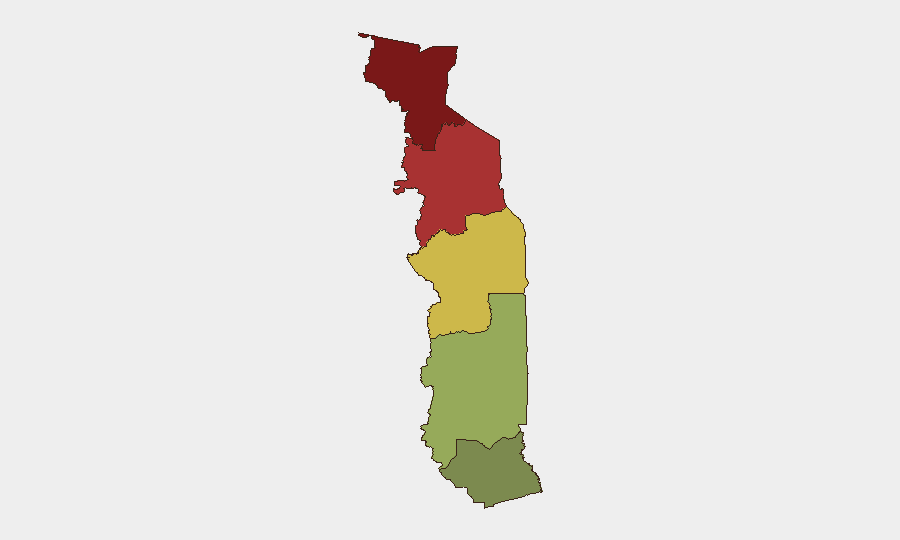
The Savanes Region (composite risk 92) and Kara Region (78) drive the majority of assessed threat in Togo. Both areas share porous borders with Burkina Faso and Mali—regions experiencing active jihadist and armed-group presence—and remain susceptible to cross-border incursions and kidnapping activity. The Centrale and Plateaux regions (65 and 45 respectively) show moderate risk, principally from localized organized crime and road-corridor vulnerabilities. Maritime Region (28) remains the lowest-risk zone and includes the capital, Lomé, where security infrastructure is concentrated.
How GeoBit Would Assist
AOI Monitoring & Early Warning with persistent geofencing of Savanes and Kara checkpoints and border crossings would flag irregular movement patterns and militant activity in real time. Intel Sweep and multi-language OSINT (X, Telegram, local news) would capture labor action escalation, port disruptions, and criminal-network reporting faster than official channels. GIS & Spatial Analysis and Routing & Network Analysis would identify safer transit corridors and real-time alternate routes for staff or asset movement, especially during night hours and across high-risk road sections (e.g., Gbatope-Davedi).
7-Day Outlook
The SYAPAL strike window (expiring mid-August) is the primary near-term operational constraint; resolution or escalation will clarify logistics disruption scope. Northern border vigilance should remain elevated given seasonal patterns of cross-border militant activity and no current indicators of imminent large-scale incursions. Overall risk trajectory remains stable absent fresh triggering events in the north or labor/political escalation in Lomé.
Highest-Risk Areas — Ranked
| # | State / Region | Risk |
|---|---|---|
| 1 | Savanes Region | 92 |
| 2 | Kara Region | 78 |
| 3 | Centrale Region | 65 |
| 4 | Plateaux Region | 45 |
| 5 | Maritime Region | 28 |
Sources
Previous Daily Briefs
A new Togo brief is written every day — each with its own risk map and downloadable CSV. Here's the last week; use the calendar to go further back.
📅 Browse every day by calendar →
Highlighted days have a brief. Tap a day for that day's map & analysis, or “csv” for that day's dataset ($5).
Atlas — our AI intelligence desk — emails them this snapshot personally. Nothing else, no list.