Situation Summary
Turkmenistan remains in a stable security environment with no confirmed incidents in the last 24–48 hours. The country's composite threat ranking (#174 globally, score 4) reflects endemic structural risks—authoritarian governance, limited civil freedoms, and restricted information flows—rather than acute instability or active conflict. Open-source intelligence shows no recent civil unrest, terror activity, infrastructure disruption, or significant crime events requiring immediate corporate attention.
Key Developments
No discrete security, conflict, civil-unrest, crime, or infrastructure incidents have been reliably documented in Turkmenistan during 25–26 June 2026 from open web sources, state media, international news, or social platforms with sufficient specificity and corroboration to report as developments.
State media and government channels in the current reporting window focus on routine economic cooperation, energy sector activity, and diplomatic engagement with no mention of security incidents or disruptions.
Scans of international news outlets, regional security reporting, and Twitter/X yield no incident reports dated to the last 48 hours with specific locations or verified details; older analysis and generic country profiles dominate available content.
Social media posts referencing Turkmenistan in the relevant timeframe either lack precise dating, cite single unverified sources, or refer to long-standing structural issues rather than new developments.
Note: The absence of reported incidents in highly opaque environments can reflect either genuine quiet or effective information control; absence of data is not evidence of security all-clear, but it is also not grounds for synthetic incident reporting.
Highest-Risk Areas
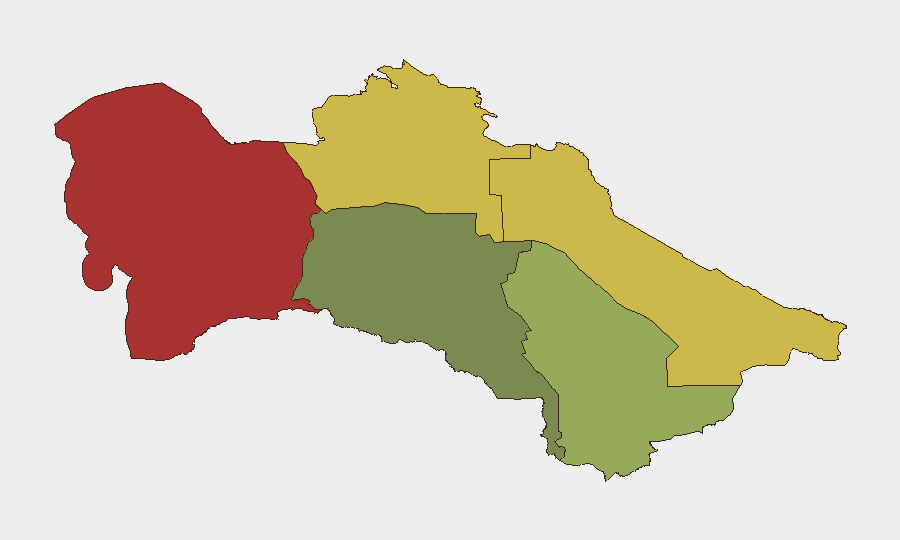
Balkan Region (risk 78) and Lebap Region (risk 68) carry the highest sub-national threat scores, driven by border proximity (Balkan borders Iran and the Caspian; Lebap borders Uzbekistan and Afghanistan), historical trafficking flows, and limited state capacity in remote areas. Dashoguz Region (risk 62) faces similar cross-border pressures in the north. In contrast, Ashgabat City (risk 18) benefits from concentrated state security apparatus and capital-city investment, making it the lowest-risk jurisdiction. Corporate assets and personnel in the southern and western regions should assume elevated baseline exposure to transnational criminal activity, smuggling, and sporadic border incidents, even during periods of surface calm.
How GeoBit Would Assist
Security teams monitoring Turkmenistan should deploy AOI Monitoring & Early Warning on Balkan and Lebap regions to detect emerging unrest, border incidents, or infrastructure disruptions in real time. Intel Sweep, multi-language search, and X/Twitter & Telegram OSINT provide continuous low-noise environmental scanning for protest activity, official announcements, or unofficial reports before they reach mainstream media. Routing & Network Analysis supports duty-of-care journey planning for personnel in cross-border or remote zones by identifying safer corridors and alternative routes around known trafficking or instability hotspots.
7-Day Outlook
No near-term escalation drivers are evident in current intelligence. The country's stable diplomatic posture and focus on energy exports suggest low probability of civil or political crisis in the next week. Routine border incidents in Balkan and Lebap regions remain possible but are unlikely to create widespread disruption; continued baseline vigilance and regional monitoring are warranted.
Highest-Risk Areas — Ranked
| # | State / Region | Risk |
|---|---|---|
| 1 | Balkan Region | 78 |
| 2 | Lebap Region | 68 |
| 3 | Dashoguz Region | 62 |
| 4 | Mary Region | 42 |
| 5 | Ahal Region | 35 |
| 6 | Ashgabat City | 18 |
Previous Daily Briefs
A new Turkmenistan brief is written every day — each with its own risk map and downloadable CSV. Here's the last week; use the calendar to go further back.
📅 Browse every day by calendar →
Highlighted days have a brief. Tap a day for that day's map & analysis, or “csv” for that day's dataset ($5).