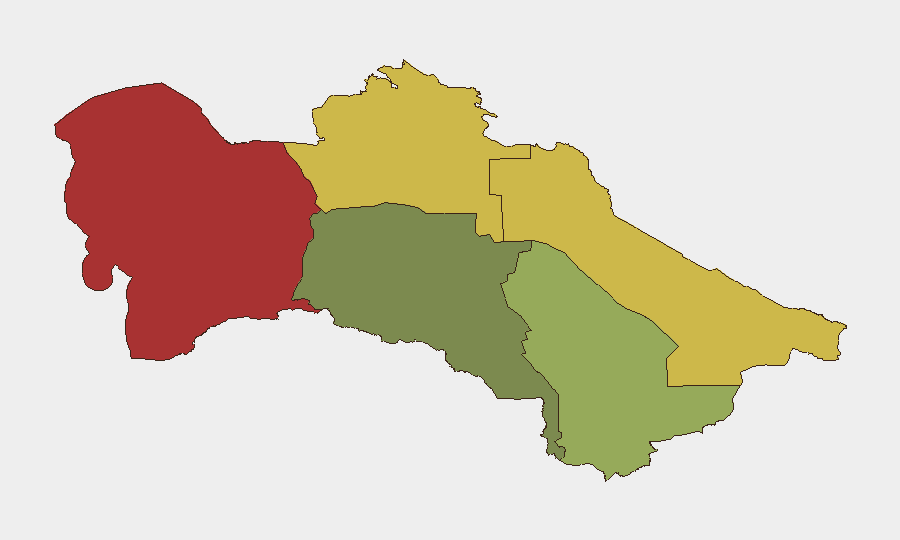
Situation Summary
Turkmenistan remains a low-threat environment regionally, ranked #187 globally with a composite threat score of 3. No discrete security incidents have been reported in the past 24–48 hours, and the country's tight information control limits real-time incident visibility. Overall trajectory is stable, though sub-national risk concentration in the Balkan and Lebap regions warrants targeted monitoring for personnel and asset management.
Key Developments
No credible security, conflict, civil unrest, crime, political instability, infrastructure, or travel incidents have been reported within Turkmenistan during the last 24–48 hours. Open web search, indexed news content, and social media monitoring reveal no verified attacks, protests, infrastructure disruptions, or sudden political changes. Turkmenistan's restricted media environment and limited independent reporting mean that real-time incident confirmation remains constrained. International references to Turkmenistan in current search results are limited to diplomatic participation (e.g., WHO Europe health and emergency management conference, 1–2 July) and do not indicate security events within the country. Assessment confidence is moderate owing to inherent information scarcity, not to evidence of hidden incidents.
Highest-Risk Areas
The Balkan Region (risk 78) and Lebap Region (risk 68) account for the majority of tracked sub-national risk and should be the primary focus for duty-of-care planning. These areas' elevated composite scores reflect historical patterns in border security, resource competition, and cross-border trafficking. Dashoguz Region (risk 62) presents moderate but material risk, while Mary, Ahal, and Ashgabat City carry substantially lower threat profiles. Personnel deployment and supply-chain routing should weight avoidance or enhanced security posture in Balkan and Lebap; Ashgabat City remains the lowest-risk location for corporate operations.
How GeoBit Would Assist
AOI Monitoring & Early Warning with persistent area-of-interest watch and alerting on Balkan and Lebap regions would provide real-time notification of emerging incidents, bridging Turkmenistan's information gap. OSINT fusion (X/Twitter, Telegram, multi-language search, and entity extraction) across diaspora and regional networks can corroborate rumors and detect early signals of unrest or instability that open media does not immediately surface. Routing & Network Analysis supports alternative journey planning for personnel and logistics, enabling avoidance of highest-risk corridors and informed contingency routing during operational changes.
7-Day Outlook
No significant escalation is anticipated over the next 7 days; the security environment is expected to remain stable and consistent with current low-threat baseline. Monitoring should remain focused on Balkan and Lebap regions for any signals of cross-border activity, resource disputes, or trafficking disruptions that could affect corporate operations or supply chains. Corporate teams should maintain standard duty-of-care protocols and sustain real-time AOI monitoring to detect any departure from the current trajectory.
Highest-Risk Areas — Ranked
| # | State / Region | Risk |
|---|---|---|
| 1 | Balkan Region | 78 |
| 2 | Lebap Region | 68 |
| 3 | Dashoguz Region | 62 |
| 4 | Mary Region | 42 |
| 5 | Ahal Region | 35 |
| 6 | Ashgabat City | 18 |
Sources
Previous Daily Briefs
A new Turkmenistan brief is written every day — each with its own risk map and downloadable CSV. Here's the last week; use the calendar to go further back.
📅 Browse every day by calendar →
Highlighted days have a brief. Tap a day for that day's map & analysis, or “csv” for that day's dataset ($5).