Situation Summary
The United Arab Emirates remains a low-threat environment globally (rank #98, composite score 11) with concentrated risk in Dubai. A false missile alert on 26 June—triggered by a technical malfunction in the early warning system rather than a genuine threat—was quickly cleared by authorities. No casualties, injuries, or material damage resulted. The incident underscores infrastructure vulnerabilities in alert systems but does not signal escalation in the broader security posture.
Key Developments
- 26 June, nationwide: Residents received a missile threat alert that was rescinded within minutes as an all-clear. Authorities attributed the warning to a technical malfunction in the early warning system rather than an actual threat or attack. Reuters and local official channels confirmed the false-positive classification.
- 26 June, unspecified locations: The alert occurred amid heightened Gulf regional security tensions, though no direct impact to UAE territory or population beyond the warning itself has been confirmed.
- 25–26 June, event signals: GeoBit event monitoring flagged multiple low-level incidents across the UAE (arrests/detentions, public statements, localized disapproval actions) but none reached the threshold of imminent operational threat to corporate or expatriate personnel.
- Dubai emirate focus: Continued concentration of risk drivers in Dubai (composite risk 31.5) relative to other emirates, reflecting its status as a major international commercial and logistics hub with higher baseline exposure to transnational actors and organized activity.
Highest-Risk Areas
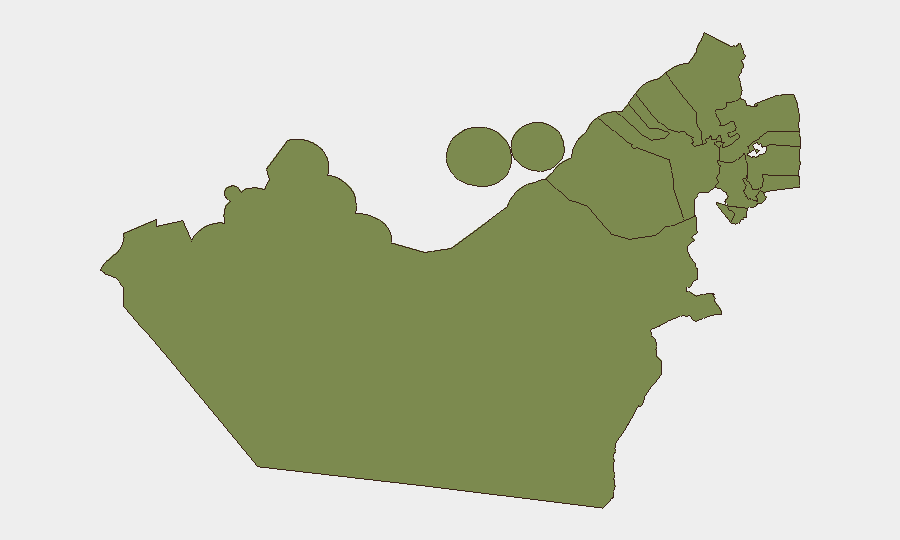
Dubai dominates the sub-national risk profile with a composite score more than double that of Abu Dhabi Emirate (31.5 vs. 12.9). This reflects Dubai's role as a primary logistics, financial, and tourism node, making it a higher-value target for criminal networks, sanctions evasion activity, and transnational organized groups. Abu Dhabi Emirate carries secondary risk, while the northern emirates (Ras al-Khaimah, Sharjah, Ajman, Fujairah, Umm al-Quwain) remain substantially lower-risk. Risk concentration in Dubai drives most corporate duty-of-care planning for the country.
How GeoBit Would Assist
Security teams operating in the UAE would deploy AOI Monitoring & Early Warning on high-value facilities or personnel movements in Dubai and Abu Dhabi to catch emerging incidents in real time. Intel Sweep and OSINT fusion capabilities—including X/Twitter, Telegram, and multi-language feeds—would provide 24-hour corroboration of alerts (as occurred with the 26 June false alert), reducing response time to genuine threats versus false positives. Risk & Threat Assessment and Network & Actor Analysis would map organized crime and sanctions evasion networks operating through UAE maritime and free-zone infrastructure, supporting compliance and threat prioritization.
7-Day Outlook
No imminent operational escalation is forecast for the UAE over the next 7 days. The false alert is unlikely to recur if the early warning system malfunction is remedied; authorities have strong incentive to restore public confidence quickly. Baseline corporate security posture—heightened vigilance in Dubai, standard protocols in lower-risk emirates, and robust supply-chain monitoring—should remain in effect pending confirmation of system repairs and no further alert anomalies.
Highest-Risk Areas — Ranked
| # | State / Region | Risk |
|---|---|---|
| 1 | Dubai | 31.5 |
| 2 | Abu Dhabi Emirate | 12.9 |
| 3 | Ras al-Khaimah | 2.4 |
| 4 | Sharjah Emirate | 1.5 |
| 5 | Ajman Emirate | 1.5 |
| 6 | Fujairah Emirate | 1.5 |
| 7 | Umm al-Quwain | 1.5 |
Previous Daily Briefs
A new United Arab Emirates brief is written every day — each with its own risk map and downloadable CSV. Here's the last week; use the calendar to go further back.
📅 Browse every day by calendar →
Highlighted days have a brief. Tap a day for that day's map & analysis, or “csv” for that day's dataset ($5).