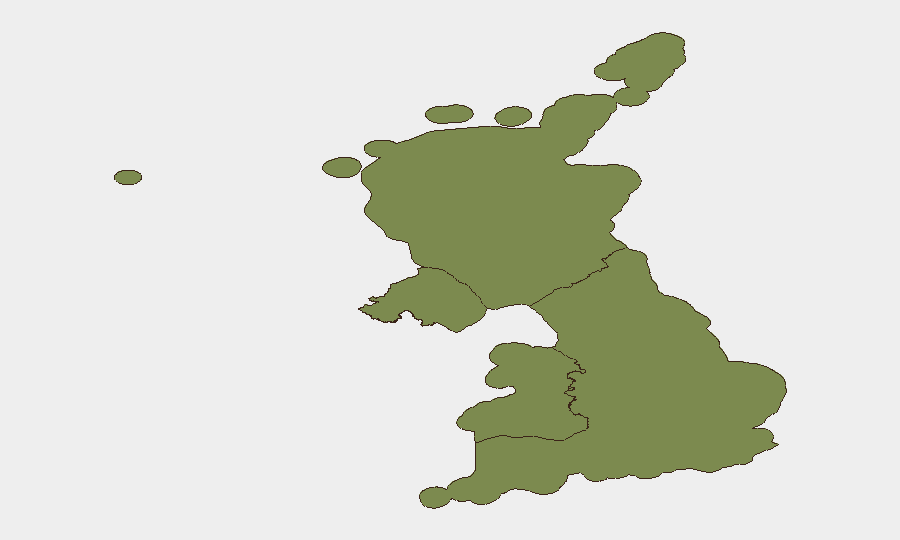
Situation Summary
The United Kingdom presents a composite threat score of 7 (global rank #121), reflecting baseline security risk without acute escalation in the past 24–48 hours. Open-source monitoring and multi-source corroboration have not identified verifiable, location-specific security, civil unrest, crime, infrastructure, or travel incidents meeting reporting thresholds within the last two days. The threat environment remains stable, though sub-national risk concentration in England (33.4) reflects persistent cyber, data-breach, and low-level institutional friction signals tracked since early 2026.
Key Developments
No verifiable, timestamped security, civil unrest, crime, infrastructure, or travel incidents meeting reporting thresholds have been corroborated across multiple independent sources for United Kingdom territory in the past 24–48 hours.
Recent event signals (logged 2026-07-05 and 2026-07-03) include diplomatic friction, cyber-related statements, and institutional rejection events; however, these do not constitute discrete, location-bound security or operational incidents with confirmed casualty, disruption, or asset-impact data. Cyber and data-breach trends documented in January–June 2026 (particularly healthcare sector incidents and June disclosures) remain relevant to ongoing risk posture but do not represent new acute events in the current 48-hour window.
Highest-Risk Areas
England dominates sub-national risk (33.4), driven by concentration of critical infrastructure, financial systems, and digital assets in London and the South East, amplified by sustained cyber-attack patterns and institutional friction signals since early 2026. Northern Ireland (9.8) remains elevated due to historical community and border-related sensitivities, while Scotland (7.2) and Wales (3.4) show lower composite risk. The England-concentrated profile reflects cyber-vulnerability and data-breach exposure rather than acute kinetic or civil-order threats in the current reporting period.
How GeoBit Would Assist
Corporate security and duty-of-care teams would employ GeoBit's Intel Sweep and OSINT fusion capabilities (X/Twitter, Telegram, multi-language feeds, entity extraction) to establish continuous baseline monitoring for emerging signals in England and Northern Ireland—particularly around critical infrastructure, financial, and healthcare sectors where cyber and data-breach risk persists. AOI Monitoring & Early Warning with persistent area-of-interest watch on high-value corporate sites, transport hubs, and financial centres in London and regional centres would provide discrete alerting if conditions shift. Routing & Network Analysis would support alternative journey and supply-chain planning for personnel and assets transiting England's congested South East should situational change require rapid mitigation.
7-Day Outlook
No indicators suggest acute escalation in the next 7 days. Baseline cyber and data-breach risk in the healthcare and critical-infrastructure sectors will remain the primary exposure for corporate assets and personnel; institutional friction signals will likely persist but show no trajectory toward kinetic or civil-unrest triggers. Continued monitoring of diplomatic and cyber-related statements is warranted to detect any shift in institutional posture or cross-border friction that could affect business operations or travel security.
Highest-Risk Areas — Ranked
| # | State / Region | Risk |
|---|---|---|
| 1 | England | 33.4 |
| 2 | Northern Ireland | 9.8 |
| 3 | Scotland | 7.2 |
| 4 | Wales | 3.4 |
Sources
Previous Daily Briefs
A new United Kingdom brief is written every day — each with its own risk map and downloadable CSV. Here's the last week; use the calendar to go further back.
📅 Browse every day by calendar →
Highlighted days have a brief. Tap a day for that day's map & analysis, or “csv” for that day's dataset ($5).
Atlas — our AI intelligence desk — emails them this snapshot personally. Nothing else, no list.