Situation Summary
Vietnam remains a stable operating environment (rank #136 globally; composite threat score 5/10) with no major security incidents reported in the past 24–48 hours. A minor 3.4-magnitude earthquake struck Quang Ngai Province on 14 July with no reported casualties or infrastructure damage. Recent diplomatic statements and a single unconventional violence signal (13 July) involving external actors suggest elevated bilateral tensions, but these have not yet translated into domestic security degradation or measurable risk to international personnel or supply chains.
Key Developments
- Quang Ngai Province — 14 July, ~08:30 local: 3.4-magnitude earthquake at 8.2 km depth in Mang But Commune; standard seismic monitoring indicates minor tremor with no confirmed damage or casualties.
- National-level diplomatic activity — 12–13 July: Multiple public statements involving the Vietnamese President, National Assembly, and external governments (India, US Congress) recorded; a single unconventional violence signal on 13 July and embassy-level "reduce relations" statement on 13 July suggest elevated diplomatic friction, likely linked to contested maritime or trade policy rather than domestic instability.
- No corroborated domestic security, civil unrest, major crime, or infrastructure-disruption incidents were identified in open-source monitoring for the 24–48 hour window (13–15 July).
Highest-Risk Areas
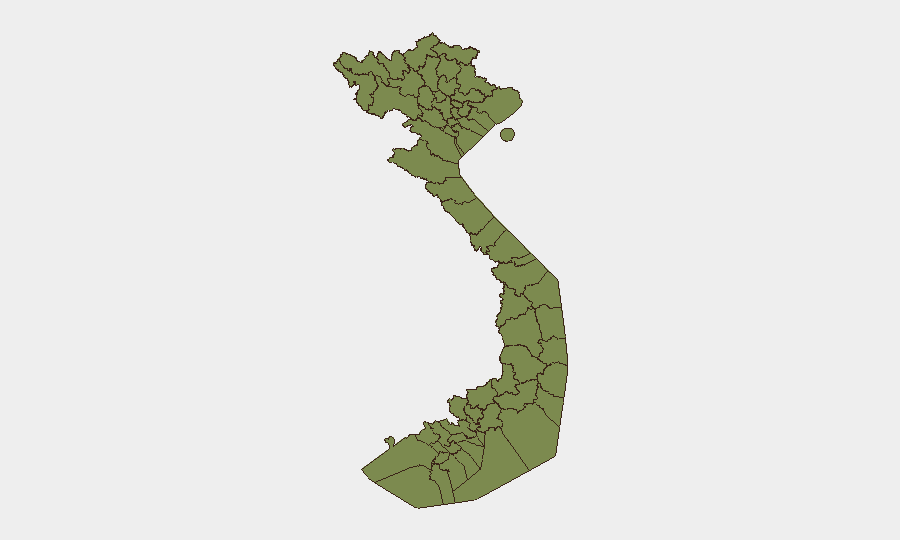
Huế and Kiên Giang Province dominate the sub-national risk ranking (33.3 and 21.4 respectively), followed by Cần Thơ (11.4). These three regions account for the majority of tracked threat signals; Huế's elevated score may reflect border-adjacent sensitivities or ongoing provincial governance tensions, while Kiên Giang's Mekong Delta location correlates with historical smuggling, water-boundary disputes, and transnational criminal networks. Ho Chi Minh City and Hà Nội, despite being the largest urban centers, show relatively low composite scores (3.7 and 5.5), indicating risk is dispersed rather than concentrated in major economic hubs.
How GeoBit Would Assist
Security teams should deploy AOI Monitoring & Early Warning on Huế, Kiên Giang, and Cần Thơ provinces to detect emerging civil unrest, cross-border activity, or supply-chain disruption before escalation. Intel Sweep and multi-language OSINT fusion across Vietnamese-language media, Telegram channels, and regional diplomatic signals would provide 48–72 hour advance notice of policy changes or bilateral incidents affecting business operations. Network & Actor Analysis and border & disputed-territory search capabilities help identify transnational criminal or state-sponsored groups operating in the Mekong Delta and northern border zones that may pose secondary risk to expatriate or logistics personnel.
7-Day Outlook
Barring escalation of the current diplomatic tensions (which remain at public-statement level), Vietnam is expected to remain operationally stable through 22 July. Continued monitoring of bilateral statements and border-zone activity is warranted; seasonal typhoon season (July–September) may increase infrastructure and maritime disruption risk, particularly in the Mekong Delta and central provinces.
Highest-Risk Areas — Ranked
| # | State / Region | Risk |
|---|---|---|
| 1 | Huế | 33.3 |
| 2 | Kiên Giang Province | 21.4 |
| 3 | Cần Thơ | 11.4 |
| 4 | Hà Nội | 5.5 |
| 5 | Ho Chi Minh City | 3.7 |
| 6 | Sóc Trăng Province | 3.7 |
| 7 | Đà Nẵng | 3.7 |
| 8 | Lai Châu Province | 3.3 |
| 9 | Lào Cai Province | 3.3 |
| 10 | Hà Giang Province | 3.3 |
| 11 | Tuyên Quang Province | 3.3 |
| 12 | Cao Bằng Province | 3.3 |
Sources
Previous Daily Briefs
A new Vietnam brief is written every day — each with its own risk map and downloadable CSV. Here's the last week; use the calendar to go further back.
📅 Browse every day by calendar →
Highlighted days have a brief. Tap a day for that day's map & analysis, or “csv” for that day's dataset ($5).
Atlas — our AI intelligence desk — emails them this snapshot personally. Nothing else, no list.