Situation Summary
Zimbabwe's security environment remains characterized by political tension and elevated vigilance ahead of planned protest activity scheduled for 31 July 2026, though no acute, timestamp-verified incidents have been reported in the past 24–48 hours. Law-enforcement operations and police presence in the capital have created a "chilling effect" among activist networks, prompting voluntary caution and displacement rather than direct confrontation. The composite threat score of 13 reflects ongoing systemic risks—including crime, civil unrest potential, and governance friction—rather than an imminent crisis. Risk is heavily concentrated in Harare, which accounts for the majority of tracked threat signals.
Key Developments
- Harare (national) – 28 July 2026: Presidential public statement recorded; specific content and implications remain under analysis via OSINT fusion channels.
- Harare (national) – 27 July 2026: Justice Minister issued public statement in opposition to political opposition; rhetorical escalation noted but no enforcement action timestamped.
- Harare (national) – 27 July 2026: Government-attributed threat issued toward Africa-region actors; classification and target specificity remain unclear pending deeper intelligence sweep.
- Harare (national) – 27 July 2026: Administrative sanctions imposed by police; scope and affected parties under corroboration.
- Pre-event positioning (Harare, national) – as of 27–28 July: Activist and civil-society networks report heightened alert and voluntary operational reduction linked to 31 July protest planning; no new arrests or clashes confirmed within the past 48 hours, but pre-emptive caution is widespread.
- General crime environment (ongoing, not new in past 48h): Foreign travel advisories remain current, citing continued risk of robbery and politically triggered violence, though no specific fresh incidents have been reported.
Highest-Risk Areas
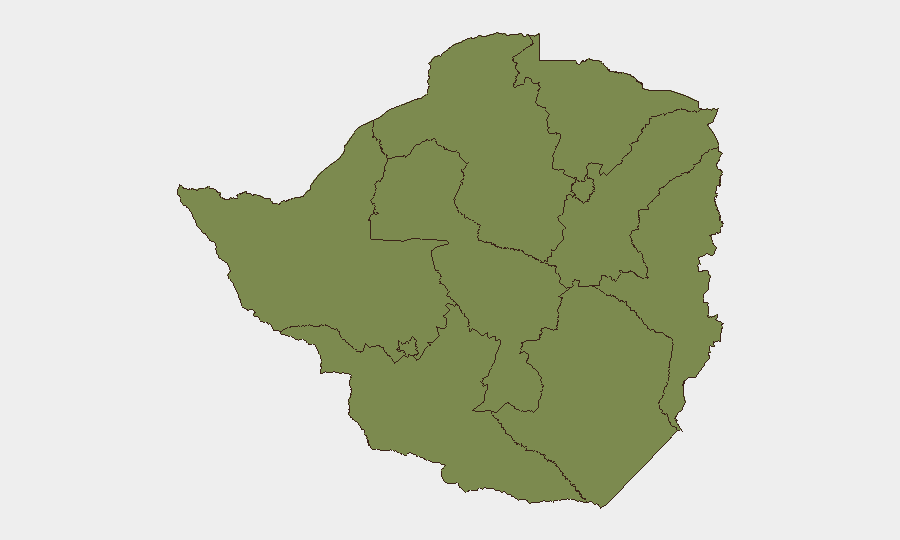
Harare dominates the risk landscape with a composite score of 31.3—more than three times the second-ranked province—reflecting its status as the political, administrative, and security flashpoint. Mashonaland West (9.3) and the southern provinces (Matabeleland South and Masvingo, both 6.3) follow at distance, likely reflecting secondary political activity and resource-related friction. The concentration of presidential statements, police operations, and activist networks in and around Harare explains its outsized ranking; all other provinces register below 6.0, indicating that national risk is fundamentally Harare-centric.
How GeoBit Would Assist
Corporate security teams should deploy AOI Monitoring & Early Warning on Harare and key transport corridors to capture real-time protest mobilization, police checkpoints, and crowd movements ahead of 31 July. OSINT fusion & corroboration across X/Twitter, Telegram, and local news feeds will disambiguate official statements (e.g., presidential and Justice Ministry remarks) and separate rhetorical escalation from operational intent. Early Warning & Prediction modeling, informed by historical protest patterns and police response data, can refine travel advisories and duty-of-care protocols for personnel in the capital.
7-Day Outlook
The planned 31 July protests represent the primary near-term risk inflection point; police posture and activist intent will likely become clearer 48–72 hours before the event. If demonstrations proceed without major incident, pressure may ease into early August; escalated police response or violence could trigger secondary protests and broader civil-unrest cascades. Monitoring of official rhetoric and on-ground activist communications will be critical to anticipate movement in either direction.
Highest-Risk Areas — Ranked
| # | State / Region | Risk |
|---|---|---|
| 1 | Harare | 31.3 |
| 2 | Mashonaland West Province | 9.3 |
| 3 | Matabeleland South Province | 6.3 |
| 4 | Masvingo Province | 6.3 |
| 5 | Manicaland Province | 5.3 |
| 6 | Mashonaland Central Province | 2.3 |
| 7 | Mashonaland East Province | 2.3 |
| 8 | Matabeleland North Province | 1.3 |
| 9 | Midlands Province | 1.3 |
| 10 | Bulawayo Province | 1.3 |
Sources
Previous Daily Briefs
A new Zimbabwe brief is written every day — each with its own risk map and downloadable CSV. Here's the last week; use the calendar to go further back.
📅 Browse every day by calendar →
Highlighted days have a brief. Tap a day for that day's map & analysis, or “csv” for that day's dataset ($5).
Atlas — our AI intelligence desk — emails them this snapshot personally. Nothing else, no list.