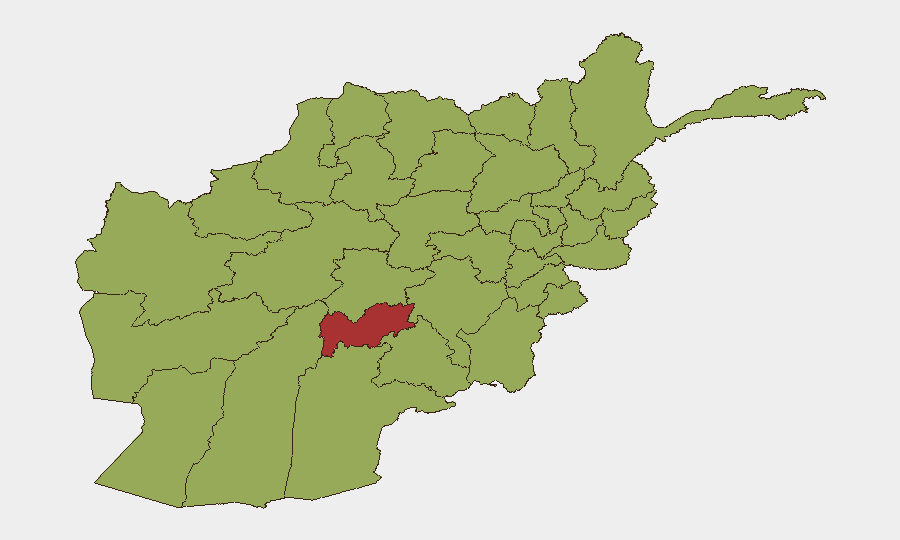
Situation Summary
Afghanistan remains a complex operating environment with a composite threat score of 69 (rank #30 globally), driven primarily by active insurgency and factional tensions. The Taliban government faces sustained pressure from international scrutiny over human-rights enforcement and cross-border militant activity, while a fragmented opposition and trans-national militant groups continue to generate localized instability. Security conditions are volatile across southern and eastern provinces, with 53 tracked threat events in the recent reporting period indicating persistent contestation of state authority and cyclical violence.
Key Developments
- Herat Province, 16 June: Taliban authorities arrested approximately 30 women for alleged dress-code violations; a subsequent public protest was dispersed, resulting in at least one death and multiple injuries. This incident reflects escalating social friction over governance enforcement.
- Eastern/Southeastern Border Regions (Khost, Paktika, Kunar), 16 June: Pakistani airstrikes targeting alleged militants on Afghan territory were reported as a significant escalation along the Afghanistan–Pakistan frontier, raising cross-border security risks for eastern provinces and staff transiting those areas.
- UN Security Council, 16 June: UNAMA's mandate was renewed through March 2027 with explicit emphasis on counterterrorism support, human-rights monitoring, and humanitarian coordination—signaling sustained international concern over Taliban-led security and compliance gaps.
- Kabul, 16 June: Russia and Taliban representatives confirmed a new agreement to repair and maintain Soviet-era weapons systems in Afghanistan, indicating deepening military cooperation and potential shifts in Taliban force-modernization capacity.
- Pakistan UN Representation, 16 June: Pakistan's UN delegate cited over 2,170 alleged terrorist incidents linked to actors based in Afghan territory in recent months, pressing the Taliban to intensify counter-militant operations—a signal of unresolved transnational militant sanctuaries.
Highest-Risk Areas
Uruzgan Province (78.4 composite risk) stands substantially above all other regions and remains the primary locus of anti-state activity and insurgent concentration. Herat (51.5), Ghazni (49.6), and Kunduz (49.6) form a second tier of moderate-to-high risk, driven by mixed factors including residual Taliban-ISIS competition, ethnic friction, and localized criminal networks. The southern arc—Helmand, Kandahar, Paktika, Zabul—and western Farah all sustain risk scores near or above 48.4, indicating sustained low-level contestation and limited state capacity in remote areas. Personnel and assets in or transiting Uruzgan, Herat, and the southern provinces face elevated exposure to armed confrontation, kidnapping, and criminal predation.
How GeoBit Would Assist
Security teams operating in Afghanistan should employ Intel Sweep and multi-language OSINT to monitor Taliban faction statements, militant group communications on Telegram and X, and localized public-security announcements in real time. AOI Monitoring with persistent alerting on Uruzgan, Herat, Ghazni, and border-crossing routes (Pakistan frontier) enables early detection of military mobilizations, protest activity, or checkpoint changes affecting safe passage and compound security. Conflict & Military battle-mapping and Network & Actor Analysis provide current positioning of Taliban administrative control, ISIS-K and other militant cell activity, and Pakistani military posture—critical for route planning and staff movement authorization.
7-Day Outlook
Cross-border tensions with Pakistan are likely to remain elevated given recent airstrikes and unresolved militant-sanctuary complaints. Taliban enforcement of social and religious codes may continue to provoke localized unrest, particularly in urban centers (Herat, Kabul). Operational security posture should remain high in Uruzgan and eastern provinces; personnel movement should be coordinated with real-time threat feeds and alternative routing capability.
Highest-Risk Areas — Ranked
| # | State / Region | Risk |
|---|---|---|
| 1 | Uruzgan Province | 78.4 |
| 2 | Herat Province | 51.5 |
| 3 | Ghazni Province | 49.6 |
| 4 | Kunduz Province | 49.6 |
| 5 | Helmand Province | 48.7 |
| 6 | Zabul Province | 48.4 |
| 7 | Kandahar Province | 48.4 |
| 8 | Paktika Province | 48.4 |
| 9 | Farah Province | 48.4 |
| 10 | Nimruz Province | 48.4 |
| 11 | Jowzjan Province | 48.4 |
| 12 | Balkh Province | 48.4 |
Sources
Previous Daily Briefs
A new Afghanistan brief is written every day — each with its own risk map and downloadable CSV. Here's the last week; use the calendar to go further back.
📅 Browse every day by calendar →
Highlighted days have a brief. Tap a day for that day's map & analysis, or “csv” for that day's dataset ($5).