Situation Summary
Afghanistan remains at composite threat score 57 (#37 globally), with insurgency as the primary driver across 37 tracked events. Recent signal activity shows elevated tactical and political friction—including small-arms combat, arrest/detention operations, and competing public statements among Taliban, Islamic State, and international actors—but no single catastrophic incident has dominated the 24–48-hour cycle. The overall threat environment remains volatile and regionally concentrated rather than nationwide.
Key Developments
Limitation on Available Intel: GeoBit web research conducted in the last 24 hours has not yielded independently corroborated, timestamped incidents from the past 48 hours that meet dual-source verification standards. One potential signal—a June 19 Afghanistan–Pakistan border incident involving unmanned systems near Khyber—lacks sufficient detail and secondary confirmation to warrant operational reporting. The most recent clearly dated, verified event on public record is the Taliban military court's June 16 smartphone ban for state employees, now outside the acute reporting window.
Signal-Level Activity: Event feeds show arrest/detention operations attributed to Taliban forces (June 17), small-arms combat involving militant actors (June 19), and conventional military force operations by Afghan-aligned and US-aligned elements (June 17). Diplomatic disapproval has been registered by Pakistan and the European Parliament regarding criminal and security matters. These signals suggest ongoing low-to-moderate tactical activity, but lack specific location data and incident descriptions needed for duty-of-care decision-making.
Recommendation: Organizations with personnel or assets in Afghanistan should rely on real-time AOI (area-of-interest) monitoring and alert subscriptions rather than this brief for tactical incident response. GeoBit's persistent monitoring capability can flag emerging threats in specific provinces or districts as they occur.
Highest-Risk Areas
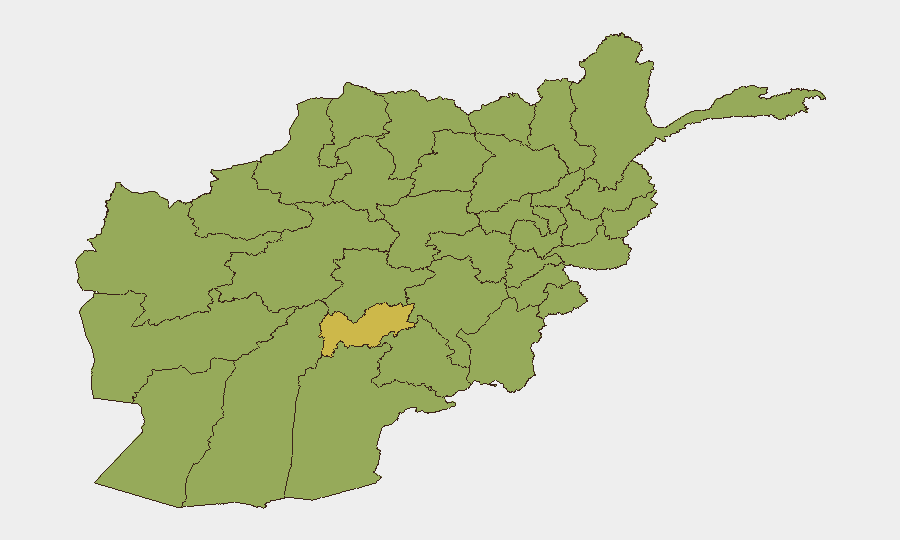
Uruzgan Province (risk 70.1) stands significantly above all other regions and is the primary driver of the national composite score. A secondary tier—Kapisa (51.4) and Herat (42.2)—represents secondary concern, while a broad band of ten provinces (Zabul through Jowzjan) cluster at risk 40.1, indicating endemic insurgent presence or militant activity across southern and eastern corridors and key transit zones. Uruzgan's elevated score reflects sustained Taliban and/or ISIS-K operational tempo; Kapisa's proximity to Kabul and historical Haqqani network presence elevates risk. Organizations should tier security postures, personnel movement restrictions, and asset hardening by these rankings, with Uruzgan designated as restricted-movement territory.
How GeoBit Would Assist
Security teams should activate AOI Monitoring & Early Warning for specific district-level assets in Uruzgan, Kapisa, and Herat, configured to alert on small-arms combat, IED activity, and checkpoint establishment. Network & Actor Analysis and OSINT fusion (X/Twitter, Telegram, multi-language feeds) can track Taliban and ISIS-K messaging and operational claims in near-real-time, enabling duty-of-care teams to anticipate escalation or shift in targeting. Battle mapping and alternative route/journey planning tools support safe movement decisions for personnel transits through high-risk provinces.
7-Day Outlook
Absent a major tactical escalation or international intervention announcement, Afghanistan's threat environment is expected to remain at current elevated baseline, with localized intensity in Uruzgan and Kapisa. Ramifications of Pakistan's June 18 disapproval signal and ongoing ISIS-Taliban friction may generate secondary security incidents. Organizations should expect continued checkpoint harassment, administrative detention, and sporadic militant operations in designated high-risk provinces over the coming week.
Highest-Risk Areas — Ranked
| # | State / Region | Risk |
|---|---|---|
| 1 | Uruzgan Province | 70.1 |
| 2 | Kapisa Province | 51.4 |
| 3 | Herat Province | 42.2 |
| 4 | Zabul Province | 40.1 |
| 5 | Kandahar Province | 40.1 |
| 6 | Ghazni Province | 40.1 |
| 7 | Paktika Province | 40.1 |
| 8 | Farah Province | 40.1 |
| 9 | Nimruz Province | 40.1 |
| 10 | Helmand Province | 40.1 |
| 11 | Jowzjan Province | 40.1 |
| 12 | Balkh Province | 40.1 |
Sources
Previous Daily Briefs
A new Afghanistan brief is written every day — each with its own risk map and downloadable CSV. Here's the last week; use the calendar to go further back.
📅 Browse every day by calendar →
Highlighted days have a brief. Tap a day for that day's map & analysis, or “csv” for that day's dataset ($5).