Situation Summary
Albania remains a low-threat environment globally (#155 composite rank), but faces acute concentrated risk in Tirana County (31.4), driven by sustained street-level protest activity centered on the capital's parliament district. Over 48 hours (23–24 July), police deployed water cannons, tear gas, and riot units against hundreds of demonstrators, resulting in 17 documented injuries across both law enforcement and protesters. The unrest stems from opposition to a major coastal development project linked to U.S. figures and broader anti-government sentiment; while protest intensity has not escalated to organized insurgency or systemic instability, the frequency and scale of police response suggest heightened operational tempo in central Tirana.
Key Developments
- 23 July, Tirana Parliament perimeter (Elbasan Street & Zhan D'Ark Boulevard): Police established tightened security cordons; demonstrators removed metal barricades, threw eggs and tomatoes at officers, and occupied a major intersection. Water cannon trucks deployed on standby; traffic suspended.
- 23 July, Outside Albania's Parliament (evening): Police used tear gas and water cannons to disperse protesters demanding PM Edi Rama's resignation over alleged corruption linked to coastal development. Five officers from Tirana Police Station No. 3 and the "Shqiponja" special unit sustained head, leg, and hand injuries; 11 protesters also injured.
- 23 July, Parliament area (8+ hours): Sustained demonstration with protesters throwing objects and pyrotechnic devices; police responded with pepper spray and water cannons. Health Ministry confirmed six officers and eleven protesters treated in hospital for minor injuries.
- 24 July, Tirana central protest zone: Police arrested two protesters and questioned 30 others on suspicion of unlawful assembly, traffic obstruction, resisting police, and explosives/pyrotechnics offenses. Continued tense demonstrations reported under the banner of the "Flamingo Revolution."
- 24 July, Parliament vicinity: Ongoing police deployment using water cannon and pepper spray to manage crowds. No new injury reports or escalation in tactics documented in final 24 hours, suggesting stabilization after peak confrontations.
Highest-Risk Areas
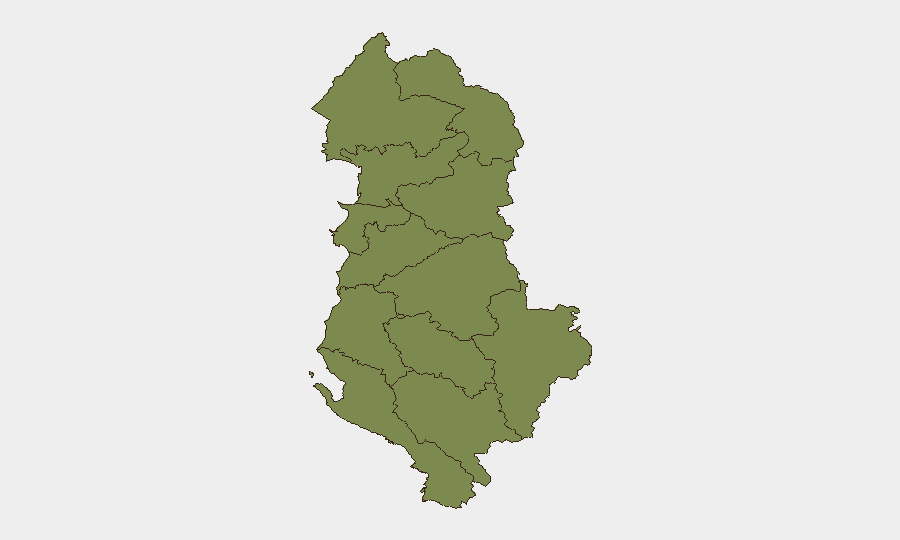
Tirana County dominates the threat landscape with a composite risk score of 31.4—approximately 22 times higher than any other Albanian jurisdiction. The capital's central districts, particularly those surrounding Parliament and major government buildings, are the epicenter of current activity. All remaining 11 counties score 1.4, reflecting that protest and police-response risk are geographically isolated to Tirana's core. This concentration reflects both the symbolic importance of parliament as a protest target and the lack of significant secondary unrest in the hinterland or periphery, constraining systemic instability risk.
How GeoBit Would Assist
Security teams operating in or near Tirana should deploy AOI Monitoring & Early Warning with persistent watch on parliament district and adjacent commercial/government zones to detect protest re-escalation or roadblock formation in real time. OSINT fusion (X/Twitter, Telegram, local media) combined with sentiment & temporal analysis will flag shifts in protest messaging or coordination that precede physical mobilization. Routing & Network Analysis enables rapid alternative-route planning for staff or supply movements if demonstrations block primary arteries near Sheshi Skënderbej or the Durrës highway corridor.
7-Day Outlook
Demonstrations are likely to continue at lower intensity over the next week as opposition consolidates messaging and the government calibrates police deployment. If talks between government and opposition leadership are announced, street activity may subside; conversely, any major policy announcement on the coastal resort or governance will risk renewed large-scale gathering. No indicators suggest imminent transition to organized violence or wider unrest outside Tirana.
Highest-Risk Areas — Ranked
| # | State / Region | Risk |
|---|---|---|
| 1 | Tirana County | 31.4 |
| 2 | Durrës County | 1.4 |
| 3 | Shkodër County | 1.4 |
| 4 | Kukës County | 1.4 |
| 5 | Lezhë County | 1.4 |
| 6 | Dibër County | 1.4 |
| 7 | Elbasan County | 1.4 |
| 8 | Fier County | 1.4 |
| 9 | Berat County | 1.4 |
| 10 | Korçë County | 1.4 |
| 11 | Vlorë County | 1.4 |
| 12 | Gjirokastër County | 1.4 |
Sources
Previous Daily Briefs
A new Albania brief is written every day — each with its own risk map and downloadable CSV. Here's the last week; use the calendar to go further back.
📅 Browse every day by calendar →
Highlighted days have a brief. Tap a day for that day's map & analysis, or “csv” for that day's dataset ($5).
Atlas — our AI intelligence desk — emails them this snapshot personally. Nothing else, no list.