Situation Summary
Algeria faces a compound crisis driven by extreme heat, widespread wildfires, and sustained organized-crime activity in border regions, occurring against a backdrop of recent diplomatic friction with European partners. The past 48 hours have seen 63 confirmed fire incidents nationwide with at least 27 deaths in a mass-casualty transport accident, alongside continued drug-trafficking operations in southern military sectors. While the overall threat ranking remains moderate (composite score 16), the concentration of incidents in northern urban and peri-urban zones—particularly Algiers and surrounding wilayas—reflects immediate risk to populated areas and critical infrastructure. The trajectory suggests sustained pressure on emergency services and elevated hazard risk through the current heatwave cycle.
Key Developments
- Mass-casualty bus crash, El Karma (Blida Wilaya), 31 July 2026: A passenger bus skidded into a ravine en route from Sétif to Algiers, killing at least 27 and injuring 39; incident highlights deteriorating road safety on intercity mountain routes during high-heat operational periods.
- Widespread wildfire campaign, northern Algeria, 31 July 2026: Civil Protection reported 63 separate fire incidents across multiple wilayas in the preceding 24 hours; 45 fires were extinguished or brought under control, but fatalities reported including a municipal worker in Sétif. Arson suspected in multiple cases, with seven suspects detained on judicial orders.
- Heavy emergency-services deployment, nationwide, 30–31 July 2026: The General Directorate of Civil Protection executed hundreds of interventions over 48 hours (wildfire suppression, accident response, medical calls), indicating sustained strain on response capacity and likelihood of localized service delays.
- Large narcotics seizure, Adrar / Béchar / Timimoon (3rd Military Region), 31 July / 1 August 2026: People's National Army detachments arrested five traffickers and seized over 45 kg of cocaine and bulk psychotropic tablets in coordinated cross-border operations, confirming active smuggling corridors in southwestern border zones.
- Diplomatic incident (diplomatic signal), 1 August 2026: Government issued statement reducing relations with a European carrier and public dispute with Spanish counterpart; specific drivers remain under-reported but signal potential diplomatic stress that could affect visa processing, air-transport permits, or consular services for foreign nationals.
- Air quality and travel disruption risk: Concurrent wildfire activity across northern provinces creates ongoing smoke, air-quality degradation, and potential road closures or flight delays in routes serving Algiers and northern hubs.
Highest-Risk Areas
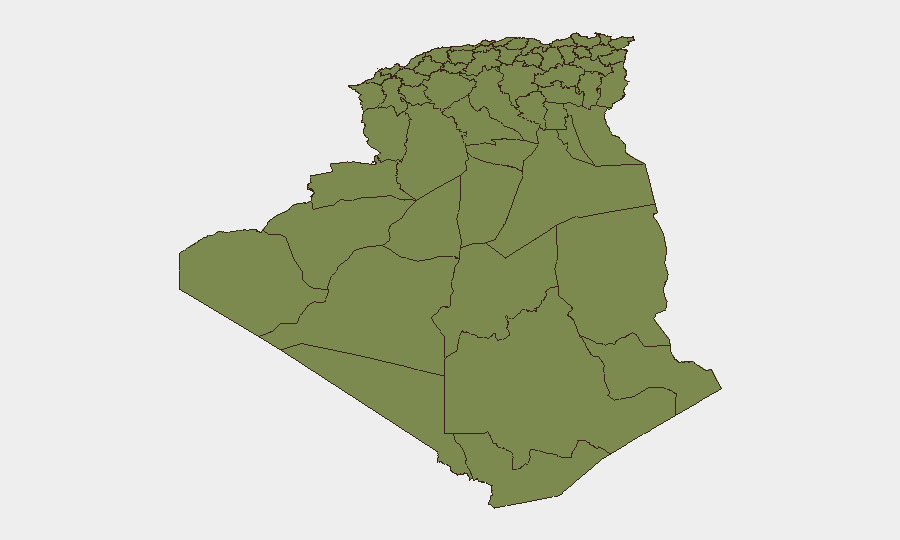
Algiers (risk score 31.3) dominates the sub-national ranking and accounts for the largest concentration of recorded incidents, reflecting both population density and proximity to fire-affected northern wilayas; Boumerdes (11.3) similarly shows elevated risk tied to wildfire and transport corridors. The southern wilayas (Adrar, Béchar, and contiguous regions) register lower composite scores (1.3 each) but carry distinct organized-crime and narcotics-trafficking risk due to continued cross-border smuggling activity and sustained military interdiction operations. The remaining northern and central wilayas show uniform baseline risk (1.3), likely reflecting wildfire exposure rather than conflict or crime drivers.
How GeoBit Would Assist
AOI Monitoring & Early Warning would enable persistent watch on fire activity, casualty trends, and road-transport incidents across high-risk wilayas, with automated alerts on new incidents affecting client locations or travel routes. Routing & Network Analysis would identify alternative intercity routes around fire zones and accident hotspots, critical during this heatwave cycle. OSINT fusion (X/Telegram monitoring, local news feeds, civil-protection channels) would provide real-time situational updates on emergency-service deployment and air-quality changes, informing duty-of-care decisions for outdoor work and travel.
7-Day Outlook
Wildfire activity is likely to persist through the current heatwave; emergency services will remain at elevated operational tempo, potentially delaying response to non-fire incidents. Road-transport risk will remain elevated due to heat-related vehicle failures and driver fatigue. Southern border zones will likely see continued military interdiction of narcotics trafficking, increasing checkpoint frequency and potential delays on cross-border routes.
Highest-Risk Areas — Ranked
| # | State / Region | Risk |
|---|---|---|
| 1 | Algiers | 31.3 |
| 2 | Boumerdes | 11.3 |
| 3 | Bechar | 1.3 |
| 4 | Beni Abbes | 1.3 |
| 5 | Adrar | 1.3 |
| 6 | Bordj Badji Mokhtar | 1.3 |
| 7 | El Bayadh | 1.3 |
| 8 | Ghardaia | 1.3 |
| 9 | Saïda | 1.3 |
| 10 | Tizi Ouzou | 1.3 |
| 11 | Chlef | 1.3 |
| 12 | Relizane | 1.3 |
Sources
Previous Daily Briefs
A new Algeria brief is written every day — each with its own risk map and downloadable CSV. Here's the last week; use the calendar to go further back.
📅 Browse every day by calendar →
Highlighted days have a brief. Tap a day for that day's map & analysis, or “csv” for that day's dataset ($5).
Atlas — our AI intelligence desk — emails them this snapshot personally. Nothing else, no list.