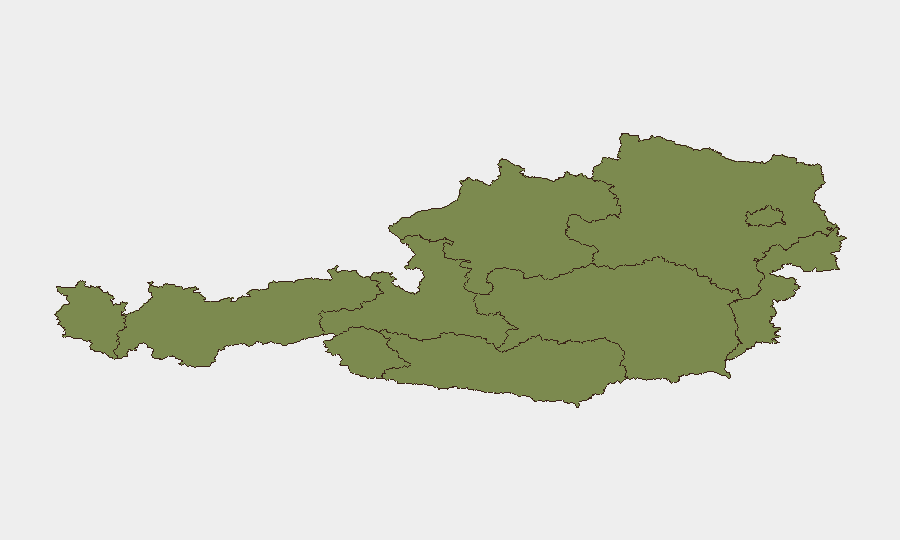
Situation Summary
Austria's overall security posture remains stable with a composite threat score of 21 and no confirmed civil unrest, terrorism, or critical infrastructure disruption in the past 24–48 hours. Vienna dominates the sub-national risk ranking (31.3) and continues to generate the majority of tracked event signals, though most recent incidents fall within routine crime and accident categories. The security environment is characterized by low-intensity baseline activity: localized violent crime, transport accidents, and standard emergency responses, with no indicators of organized instability or coordinated threat activity. A strategic policy announcement on defense posture—extension of mandatory military service to 9 months—reflects regional security realignment rather than acute domestic crisis.
Key Developments
- Vienna – Child welfare incident (27 July evening). A 9-year-old girl was reported missing from a shopping center in Vienna, prompting active police search and public appeal. Ongoing investigation; family-welfare and personal-security concern for residents and visitors.
- Austria (national) – Military service extension announced (28 July morning). Coalition government announced plans to extend mandatory conscription from 6 to 9 months, introduce follow-up reservist training, and increase conscript pay to €1,000/month, framed as response to the Ukraine conflict and changed security environment. This signals increased defense mobilization but poses no acute domestic risk.
- Graz, Styria – Attempted assault, suspect arrested (27–28 July). A 30-year-old male attempted an armed attack with a screwdriver; police arrested the suspect. Isolated violent incident; consistent with baseline urban crime patterns in regional centers.
- Vienna – Serious e-bike accident (27–28 July). An e-bike rider suffered a serious fall requiring intensive medical care, ventilation, and shock-room transfer. Reflects transport-safety hazard in urban areas.
- Graz, Styria – Emergency rescue at Jakominiplatz (27–28 July). Emergency services responded to a medical/rescue operation involving a person requiring on-scene treatment. Classified as medical emergency, not crime or unrest.
- Lower Austria – Fatal truck accident in Hartberg-Fürstenfeld district (recent). A hairdresser died in a truck collision. Routine traffic fatality; no wider security implications.
- Carinthia – Building fire in Hohenthurn, theft in Klagenfurt (recent). Fire services responded to a structure fire; gemstone-shop theft reported. Localized incidents with no coordination or unrest indicators.
Highest-Risk Areas
Vienna's risk score (31.3) substantially exceeds all other federal states, reflecting high population density, capital-city complexity, and concentration of political and economic activity. Lower Austria (16.3) ranks second but at less than half Vienna's score, indicating that risk is highly concentrated in the metropolitan area. The remaining seven states cluster at 1.3, suggesting relatively uniform baseline security conditions in provincial Austria. Vienna's elevation is consistent with patterns typical of capital cities—routine crime, transport incidents, and administrative/political activity—rather than evidence of acute or organized threat.
How GeoBit Would Assist
Security teams with personnel or assets in Austria should employ Area-of-Interest (AOI) Monitoring & Early Warning focused on Vienna and Lower Austria to detect emerging civil unrest, protests, or security-incident escalation before they impact operations. Multi-language OSINT and sentiment analysis across Austrian news feeds, regional social media, and Telegram channels would enable early detection of shifts in public mood or nascent movement activity. Network & Actor Analysis applied to known threat groups or criminal networks would support horizon-scanning for coordination or escalation beyond current isolated incidents.
7-Day Outlook
No significant deterioration in Austria's security posture is anticipated in the next 7 days. Baseline crime, accidents, and routine emergency activity will likely continue; the conscription extension will progress through parliamentary channels without domestic unrest. Monitoring should remain routine, with heightened attention to Vienna as the persistent focal point for sub-national risk.
Highest-Risk Areas — Ranked
| # | State / Region | Risk |
|---|---|---|
| 1 | Vienna | 31.3 |
| 2 | Lower Austria | 16.3 |
| 3 | Vorarlberg | 1.3 |
| 4 | Tyrol | 1.3 |
| 5 | Upper Austria | 1.3 |
| 6 | Salzburg | 1.3 |
| 7 | Carinthia | 1.3 |
| 8 | Styria | 1.3 |
| 9 | Burgenland | 1.3 |
Sources
Previous Daily Briefs
A new Austria brief is written every day — each with its own risk map and downloadable CSV. Here's the last week; use the calendar to go further back.
📅 Browse every day by calendar →
Highlighted days have a brief. Tap a day for that day's map & analysis, or “csv” for that day's dataset ($5).
Atlas — our AI intelligence desk — emails them this snapshot personally. Nothing else, no list.